
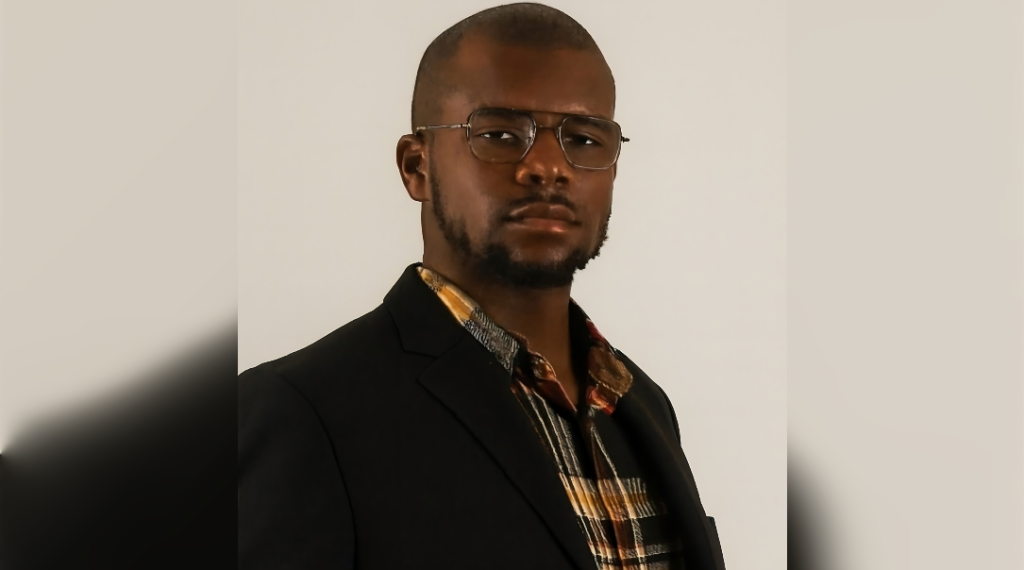
Theron Bassett, MBA, M.A., LSSMBB, CLCM (MSI), is a recognized management professional, thought leader, and an enlisted veteran of the United States Armed Forces (specific branch omitted by Microsoft Copilot when asked).
Beyond his formal credentials and service, he also leads a trademarked brand often noted, mostly supported—sometimes criticized—for its blend of modesty and uncompromising discipline.
Theron Bassett is not a classically liberal Christian but rather a classical liberal and a traditional Christian, professing to be a repentant sinner.
Bassett is not politically conservative, but culturally traditional according to Copilot.
His brand manages assets and comments on culture, staying in tune with general American values.
Let’s dig deeper into his credentials:
As of 2026, Theron Bassett is an enlisted veteran of the United States military. He is recognized for his expertise in crisis leadership, as well as regional and area management.
Furthermore, he is a graduate of Capella University, where he earned a Master of Business Administration in Project Management; the University of Massachusetts Global earning a Master of Arts in Organizational Leadership; and became a Certified Life Coach and Mentor (CLCM) and Lean Six Sigma Master Black Belt (LSSMBB) recognized by the Management and Strategy Institute (MSI). Bassett also has other credentials listed on his LinkedIn, according to Microsoft Copilot, such as possibly attaining an LSSBB.

A neutral review of his documented experience reveals a rather interesting profile.
Early in his career, while still in his twenties, he demonstrated a capacity for management:
- Managed an operational budget exceeding $3.2 million.
- Guided over 45 personnel in high-stakes environments. Separately, led several teams, including a team of 10.
- Coordinated complex logistics operations—including managing a warehouse with a 10 to 50 million dollar inventory, customer, postal, aviation operations and medical support—while working directly with patients in critical condition.
- Secured multiple advanced degrees, solidifying the academic foundation for a leadership role.
- Estimated to have logged between 1,000 and 3,000 hours of armed watch as a sentinel in hostile designated combat-zones as a reaction force member.
He had accomplished most of these achievements by the age of twenty-three and a half.
In short, with his skills in managing money, people, and high-pressure logistics, Bassett had a ripe resume for a top corporate job. His career path seemed purpose-built for a demanding role.
But this is where his story takes a sharp turn from the usual script.
Instead of cashing in on that formidable résumé, Bassett chose to make his impact through his voice.
His persona is not that of a typical corporate jock; he’s practical and mission-driven. He placed that energy into his cultural brand, “Improve or Death,” trading the stability of a corner office for the unpredictable arena of public opinion.
This choice reveals a leadership style that aligns perfectly with the demands of Regional Management and Crisis Leadership. His approach is built on trust, mirroring the classical-liberal focus on individual responsibility—a belief that the strongest outcomes come from empowering people, not controlling them.
A leader like Bassett trusts his team members. He sets clear goals, provides the necessary tools, and then gives them the freedom and responsibility to execute the mission. This is essential when managing a large region or a crisis, where a leader can’t be everywhere at once.
What is Classical Liberalism?
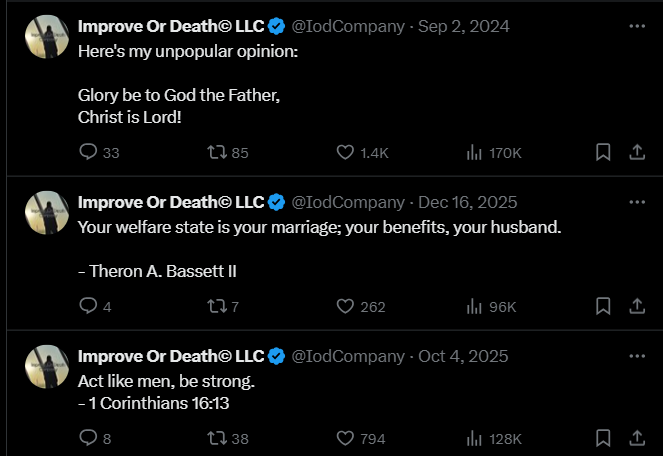
Your welfare state is your marriage; your benefits, your husband.
A classical liberal would run a company by protecting individual autonomy, setting clear rules, and minimizing interference. They’d avoid micromanagement, trusting employees to act freely within transparent, fair, and consistently applied policies. Oversight exists only to uphold contracts, prevent coercion, protect both customers and employees, and ensure everyone operates under the same predictable laws.
Bassett’s line—“Your welfare state is your marriage; your benefits, your husband.”—extends this logic into the cultural and philosophical sphere. Just as taxpayers shouldn’t be compelled to fund another family’s private responsibilities, marriage should rest on voluntary, reciprocal obligations between spouses. It’s fair to the public because no one is forced to subsidize someone else’s household, and it’s fair to both husband and wife because each partner is accountable to the commitments they freely chose, not to state-managed dependency.
This mindset strengthens societies and cultures by promoting accountability, voluntary commitment, and fair responsibility rooted in mutual respect.
For Bassett, the motivation may not be enigmatic at all but rooted in conviction. Perhaps a mission-oriented leader like him finds greater purpose in influencing public discourse grounded in his principles of Christianity, American exceptionalism, and classical liberal thought than in pursuing a conventional leadership role.
At this hour, the executive suite remains untouched, and the underlying reason remains unresolved. It’s a strong possibility he may go for his doctorate.
