
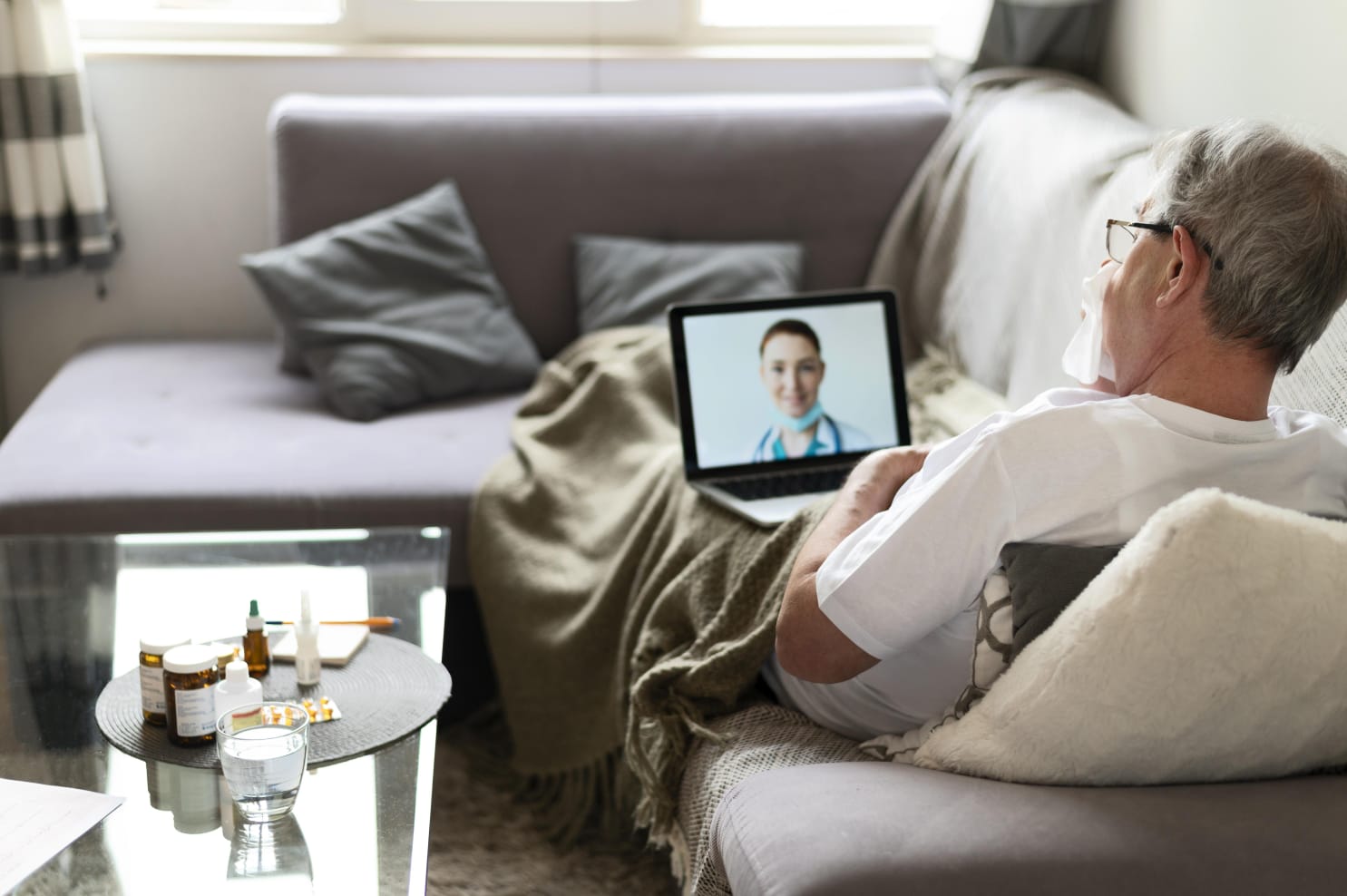
There is a silent but significant change in mental health care. Remote patient monitoring has become a realistic solution to the expanding care model outside clinics into daily life with the development of digital health tools.
Remote patient monitoring, previously regarded as the technology to manage only chronic physical conditions, is now demonstrating its actual potential in mental health treatment, prevention, and long-term health. It is not worth substituting human care, but enhancing it with relevant data, continuity, and insight.
Table of Contents
Understanding Remote Patient Monitoring in Mental Health
Remote patient monitoring for mental health is the gathering of health information of patients in their respective settings, which is sent safely to clinicians to analyze and act. This data can also consist of sleep patterns, activity levels, heart rate variability, medication adherence, mood monitoring, and self-reported symptoms in mental health settings. This is a rather passive process with smartphones, wearable devices, and connected apps to decrease the workload of patients and increase the level of information consistency.
Also, unlike the traditional appointments, which present merely a picture of how one feels on a certain day, the remote monitoring provides a more comprehensive picture of mental health. The wider lens is particularly relevant to conditions like depression, anxiety disorders, bipolar disorder, and PTSD, where the symptoms change and can be easily overlooked in their initial stages.
Improving Early Detection and Intervention
Remote patient monitoring has been associated with the ability to identify changes before they develop into crises, which is one of the greatest advantages. A small difference in how long the sleeps last, the level of physical activity, or heart rate may indicate increasing anxiety or the development of depressive symptoms. Once clinicians are aware of these trends, they are able to change medication, therapy check-ins, or lifestyle advice earlier.
There is no doubt that early intervention is clinically effective, but it can also decrease hospitalizations and emergency care. In the case of patients, it will lead to less interference with normal lives and a feeling of stability. In the case of providers, it enables care to be reactive, and in particular, it is beneficial in mental health systems that are usually overstretched.
Enhancing Patient Engagement and Self-Awareness
Remote monitoring tools may serve in assisting patients to understand their patterns of mental health in a better way. This makes it mindful and responsible, as one can now see how the quality of their sleep influences their mood, or how much anxiety they experience is related to their activity levels. This knowledge has the potential to enhance the treatment plan compliance and enable people to make more healthy decisions.
To most patients, particularly those who deal with long-term mental illnesses, it is important to feel that they are a part of their care. Remote patient monitoring helps facilitate a collegial model in which patients do not sit back and receive treatment but they are participants. If wisely applied, these tools can support the therapeutic aims instead of being invasive or oppressive.
Supporting Continuity of Care Outside the Clinic
Mental issues are not governed by appointment schedules. Remote patient monitoring fills the interim between visits providing clinicians with an understanding of what occurs between sessions. It is especially significant in the context of rural communities, people with mobility issues, or those who have barriers to face-to-face care due to stigma.
Other applications of remote monitoring are teletherapy and virtual psychiatry. They are used collectively to form a more complete digital care ecosystem, which enables the provider to monitor progress, modify care plans, and maintain meaningful connections despite the constrained use of face-to-face visits.
Reducing Stigma and Increasing Access
To a certain percentage of people, visiting a mental health care professional means being uncomfortable or being judged. Remote patient monitoring has the potential to reduce the engagement threshold since individuals can be supported in a discrete location at the comfort of their residence. This can also be particularly effective in younger population and working adults who might not be able to find time to visit the medical facility on a regular basis.
On the level of the systems, better access implies that clinicians could serve bigger patient groups more efficiently and direct their efforts to the areas where they are most required. This does not remove the issue of workforce shortage, but it allows to maximize scarce resources without reducing the quality of the care.
Challenges and Ethical Considerations
Although remote patient monitoring is advantageous, mental health is not exempt from challenges in remote patient monitoring. Information privacy, informed consent, and computer equity should be carefully considered. Not every patient has access to devices or the internet, which can be relied on, and not every patient feels at ease with constant monitoring.
It is also possible that data over-dependence can take place. Care should be informed by numbers and trends rather than clinical judgment or human connection, which are at the heart of mental health treatment. Implementation should be done successfully by means of effective communication, ethical protection, and tailoring the content to the needs and comfort level of an individual patient.
Conclusion
Remote patient monitoring is by no means a panacea for mental health care; however, it is an important step in the right direction. When it is incorporated responsibly, it boosts early detection, increases engagement, and continues care beyond the conventional boundaries. The actual gain is balanced: technology to aid clinicians and patients, but also retain empathy, trust, and personal care.
With the ever-increasing mental health needs in the world, tools that make continuous support smarter will become more and more significant. Mental health treatment can be made responsive, more accessible, and effective, and benefit individuals who need it the most through remote patient monitoring used intentionally and thoughtfully.

