
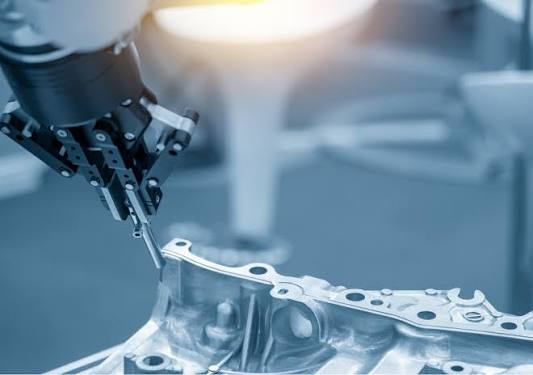
The manufacturing landscape has changed dramatically over the past decade. Customers demand shorter lead times, higher product quality, greater customization, and competitive pricing—all while expecting flawless consistency. Whether producing medical equipment, electric vehicles, aerospace assemblies, industrial automation systems, or advanced electronics, manufacturers face increasing pressure to deliver precision at scale.
In this environment, precision manufacturing has evolved from a production capability into a strategic business advantage. Companies that invest in high-precision manufacturing processes are not only improving product quality but also strengthening supply chain reliability, reducing operational costs, and accelerating innovation.
Rather than viewing precision machining as a manufacturing expense, many industry leaders now recognize it as a long-term investment that supports sustainable business growth.
Table of Contents
Precision Drives Product Reliability
Every manufactured product depends on the accuracy of its individual components. Even minor dimensional variations can affect assembly, performance, durability, and customer satisfaction.
For industries where tolerances are measured in microns, maintaining consistent quality is essential. Components used in aerospace, medical devices, telecommunications, automotive systems, and industrial equipment often require exact dimensions to ensure proper functionality throughout the product lifecycle.
By implementing advanced machining technologies and strict quality control systems, manufacturers reduce variation between production batches while delivering consistent performance for every component.
Reliable precision directly translates into fewer warranty claims, improved customer confidence, and stronger brand reputation.
Reducing Manufacturing Costs Beyond the Machine Shop
Many companies focus only on machining costs when selecting a manufacturing partner. However, the true cost of production extends far beyond the quoted price of individual components.
Poor dimensional accuracy can lead to:
- Assembly delays
- Increased inspection costs
- Product failures
- Material waste
- Higher inventory requirements
- Production downtime
- Expensive rework
When precision is maintained throughout the manufacturing process, these hidden costs decrease significantly.
Modern precision Swiss machining services enable manufacturers to produce highly accurate parts with exceptional repeatability, reducing secondary operations and improving overall production efficiency.
Supply Chain Stability Creates Business Value
Global supply chains have become increasingly complex. Delays from a single supplier can disrupt entire production schedules, affecting customer deliveries and profitability.
Reliable manufacturing partners contribute to supply chain resilience by providing:
- Consistent production quality
- Stable lead times
- Predictable capacity
- Engineering support
- Process documentation
- Scalable manufacturing
Companies that build long-term relationships with experienced suppliers often experience fewer production interruptions and greater flexibility when market demand changes.
Instead of constantly replacing suppliers due to quality issues, organizations can focus on product development and market expansion.
Supporting Innovation Through Better Manufacturing
Innovation depends not only on product design but also on manufacturing capability.
As engineers develop smaller, lighter, and more sophisticated products, manufacturing processes must evolve accordingly. Complex geometries, miniature features, thin-wall structures, and difficult-to-machine materials require advanced production technologies that conventional machining cannot always deliver efficiently.
Manufacturers specializing in Swiss machined components help transform innovative product concepts into scalable production by combining engineering expertise with high-precision CNC equipment.
Early collaboration between engineering teams and manufacturing specialists often leads to design improvements that simplify production without sacrificing product performance.
Precision Matters Across Every Industry
The importance of precision manufacturing continues expanding across multiple sectors.
Medical Technology
Medical components require exceptional dimensional accuracy, smooth surface finishes, and consistent quality to meet demanding regulatory requirements and ensure patient safety.
Aerospace
Aircraft systems depend on lightweight precision components capable of performing reliably under extreme operating conditions.
Automotive
As electric vehicles, autonomous systems, and advanced driver-assistance technologies become more common, manufacturers require increasingly sophisticated precision parts for sensors, connectors, fuel systems, and battery technologies.
Electronics
Electronic devices continue to become smaller while incorporating more functionality. Miniature connectors, shielding components, RF contacts, and precision housings all benefit from advanced machining technologies.
Industrial Automation
Factories adopting automation require precision mechanical components capable of maintaining long-term reliability under continuous operation.
Across these industries, manufacturing accuracy directly influences product performance, operational efficiency, and customer satisfaction.
Technology Alone Is Not Enough
Advanced CNC equipment represents only one aspect of precision manufacturing.
The most successful manufacturing companies combine modern machinery with experienced engineers, optimized production processes, and comprehensive quality management systems.
An experienced Swiss machine shop typically invests in:
- Skilled programming engineers
- Multi-axis CNC technology
- Precision measuring equipment
- Statistical process control
- Continuous quality monitoring
- Material traceability
- Process optimization
Together, these capabilities create stable production environments that consistently meet demanding customer specifications.
Building Long-Term Competitive Advantage
Competitive advantage rarely comes from a single innovation. Instead, it develops through continuous improvements across every aspect of the business.
Precision manufacturing contributes to long-term competitiveness by enabling companies to:
- Launch products faster
- Improve production efficiency
- Reduce operational risk
- Enhance product quality
- Strengthen customer relationships
- Support global expansion
- Improve profitability
Organizations that consistently deliver reliable products earn greater customer trust, leading to stronger partnerships and repeat business.
Looking Ahead
The future of industrial manufacturing will be defined by higher quality standards, greater automation, and increasingly sophisticated products. Companies that embrace precision manufacturing today position themselves to compete more effectively tomorrow.
Rather than viewing manufacturing purely as a production function, successful businesses recognize it as a strategic asset that influences innovation, operational excellence, customer satisfaction, and long-term profitability.
As industries continue demanding tighter tolerances, faster production cycles, and more complex components, precision manufacturing will remain one of the strongest competitive advantages available to modern industrial companies. Businesses that invest in reliable manufacturing partnerships today will be better prepared to meet tomorrow’s challenges while delivering exceptional value to customers worldwide.

