
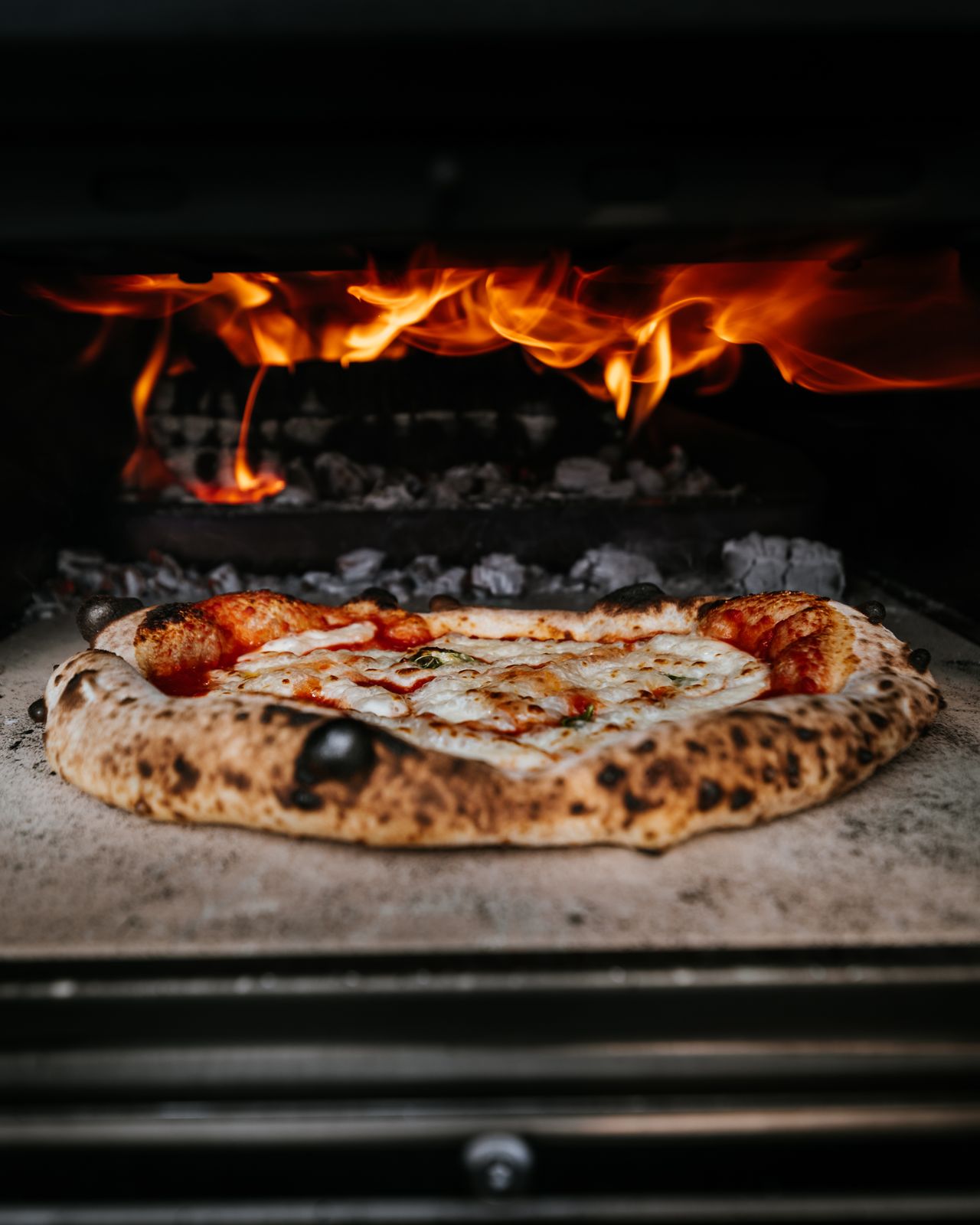
Why does the pizzeria’s crust come out leopard-spotted and shattering-crisp while yours — same toppings, same oven cranked to its max — lands pale and floppy? Nine times out of ten, it’s not the oven. It’s the dough. Dough built for a home oven at 500°F behaves completely differently at 800°F and above: it dries out before it colors, or puffs into a bready loaf instead of a thin, crisp base. High-heat dough is its own formula, tuned for speed. When your oven cooks a pizza in 90 seconds, the dough has to finish fermenting, stretch thin without tearing, and crisp before the moisture from the sauce turns it to gum. Here’s how to build dough that does all three.
Table of Contents
Hydration: Wetter Than You Think
Start with water. Bakers talk about hydration as a percentage of the flour’s weight, and for high-heat pizza you want 60–65%. That sounds technical, but it translates simply: for 500 grams of flour, use 300–325 grams of water. The dough will feel sticky and a little unruly at first. That’s correct.
The extra water does two jobs. It turns to steam in the oven, inflating the rim into that airy, open cornicione everyone fights over. And it keeps the crumb tender during the fast bake, so the base crisps instead of drying into a cracker. If you’re working with a well-tested base recipe for pizza dough for high heat ovens, measure your water against it the first time — after that, you’ll recognize the right feel by hand: tacky, smooth, and just barely clinging to your fingers.
Wet dough needs a gentler mixing method, though. Instead of one long knead, try this: mix everything into a shaggy mass, rest it 20 minutes, then give it a few stretch-and-folds — pull one side up and over, rotate the bowl, repeat four times. Rest another 20 minutes and do it once more. The dough will transform from sticky chaos into a smooth, elastic ball almost on its own, because the flour hydrates and the gluten organizes itself during those rests. It feels like cheating the first time it works. It’s just patience doing the kneading for you, which is a theme you’ll notice runs through everything about good pizza dough.
Choosing the Right Flour
“00” flour is the traditional Neapolitan choice — finely milled, with moderate protein that stretches thin without snapping back. Bread flour (12.5–13% protein) gives a chewier, sturdier crust and handles high hydration more forgivingly, which makes it a great starting point for home bakers. All-purpose flour works in a pinch but tears more easily and browns less willingly.
One practical warning: whole wheat flour absorbs more water and its bran cuts gluten strands. Blend in no more than 20% unless you enjoy wrestling dough. And check your flour’s malt content if you can — a little diastatic malt helps browning at moderate temperatures, though at true high heat the sugars in a well-fermented dough usually handle color on their own.
Fermentation Does the Real Work
Ask pizzaiolos what makes great crust and most won’t say flour or water. They’ll say time. A long, slow fermentation — 24 to 48 hours in the fridge — builds the flavor and, just as importantly, the sugars that caramelize into those dark blisters. A dough mixed and used two hours later will always taste a little flat and bake up blond.
A simple schedule that works
- Morning, day one: Mix flour, water, salt and a small amount of yeast (about 0.2% instant yeast for a long ferment). Knead until smooth, roughly 8–10 minutes.
- Bulk ferment: Leave the whole mass at room temperature for 2 hours, then refrigerate.
- Day two: Divide and ball the dough 4–6 hours before baking. Leave the balls in a covered tray at room temperature to proof.
- Bake: Stretch gently from the center out, keeping the rim untouched.
That rhythm fits real life — ten minutes of work on day one, a pizza night on day two that feels effortless.
Ball Size and Stretching
Portioning matters more than people expect. Too much dough and the center stays gummy; too little and it tears. As a rule of thumb, a pizza dough ball size of about 250 grams suits a 12-inch pizza, scaling up to roughly 320 grams for 16 inches. Weighing takes ten seconds and removes the guesswork that ruins more homemade pizzas than any other step.
Stretch on a floured surface with your fingertips, never a rolling pin — the pin crushes the air bubbles your fermentation worked two days to build. If the dough keeps snapping back, walk away for ten minutes. Gluten relaxes; your patience is an ingredient.
Small Details, Big Difference
Salt should be around 2.5–3% of the flour weight — enough for flavor and to keep the yeast in check. A teaspoon of olive oil is optional in Neapolitan-style dough but helps home versions stretch and brown. And keep toppings light and dry: fresh mozzarella should be torn and drained, sauce spread thin. In a 90-second bake, excess moisture has nowhere to go except into your crust.
The Crust You Were Chasing
Crispy, blistered crust isn’t a gift some ovens give and others don’t. It’s hydration in the low-to-mid 60s, flour with enough protein, a two-day ferment, and balls weighed to match your pizza size. Get those four things right and the same oven that produced pale, floppy pies will start turning out crusts with real crunch and char. Make a double batch this week — future you, pulling a leopard-spotted pizza out on Friday night, will be grateful.
READ ALSO: Custom Pizza Slice Boxes for Modern Food Packaging Needs

