
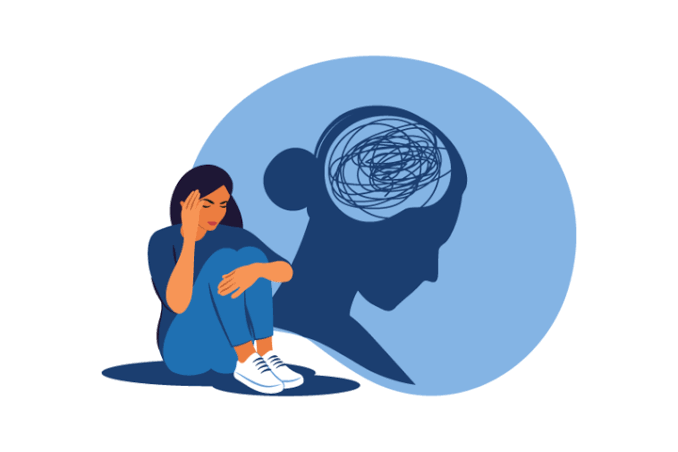
Most people have heard someone joke that they are ‘so OCD’ about keeping their desk tidy. That casual use of the term has created a lot of confusion about what obsessive-compulsive disorder actually is, how disruptive it can be, and why it responds to very specific kinds of treatment. For the roughly 2.3 percent of the U.S. population that the National Institute of Mental Health estimates will experience OCD at some point in their lives, the condition is far from a quirky personality trait. It can consume hours of every day and quietly dismantle relationships, careers, and self-confidence.
This article walks through how OCD works at a psychological and neurological level, what separates effective treatment from ineffective approaches, and what someone seeking help can realistically expect from the recovery process.
Table of Contents
The Loop That Defines OCD
OCD is best understood as a self-reinforcing cycle rather than a fixed character trait. It starts with an obsession, which is an intrusive, unwanted thought, image, or urge that the person finds distressing. The content varies widely from person to person. Some people experience contamination fears. Others have intrusive thoughts about harming loved ones, even though they find those thoughts deeply horrifying. Still others fixate on symmetry, religious doubt, or the fear of having made a catastrophic mistake.
The second half of the loop is the compulsion. Compulsions are behaviors or mental acts performed to reduce the anxiety triggered by the obsession. Washing hands, checking locks, counting silently, seeking reassurance from others, or mentally reviewing past events are all common examples. The key insight is that compulsions work, but only in the short term. They bring temporary relief, which reinforces the behavior, while simultaneously preventing the brain from learning that the feared outcome was unlikely to begin with. Every compulsion essentially tells the brain that the threat was real and that only the ritual kept disaster at bay.
Why OCD Is Not Simply Anxiety
OCD shares some surface features with anxiety disorders, and for years it was classified alongside them. The DSM-5 now places OCD in its own category, reflecting a growing understanding that the mechanisms driving it are somewhat distinct. Brain imaging research has pointed to hyperactivity in cortico-striato-thalamo-cortical circuits, essentially loops in the brain involved in detecting threat and initiating action. In people with OCD, this circuitry appears to get stuck, generating persistent alarm signals that behavioral rituals only temporarily silence.
This neurological picture helps explain why willpower alone rarely reduces OCD symptoms. Telling someone with OCD to ‘just stop’ checking is a bit like telling someone with a sprained ankle to simply walk normally. The underlying mechanism needs targeted intervention, not discipline.
Common OCD Subtypes Worth Knowing
OCD is not a monolithic condition. Recognizing different presentations matters because misidentification leads to ineffective or delayed treatment. Below are several well-documented subtypes, though this list is not exhaustive.
| Subtype | Common Obsession Theme | Typical Compulsion |
| Contamination | Fear of germs, illness, or toxic substances | Excessive washing, avoiding surfaces |
| Checking | Fear of causing harm through negligence | Repeatedly verifying locks, appliances, doors |
| Harm OCD | Intrusive thoughts about hurting others | Avoidance, mental reviewing, reassurance-seeking |
| Pure O | Disturbing mental images or forbidden thoughts | Covert mental rituals, thought suppression |
| Symmetry/Ordering | Discomfort when objects feel uneven or incomplete | Arranging, counting, repeating actions |
| Scrupulosity | Fear of sin, blasphemy, or moral failure | Confession, prayer repetition, reassurance-seeking |
One subtype that frequently goes unrecognized is sometimes called Pure O, shorthand for ‘purely obsessional.’ People with this presentation may have no visible rituals, so they often assume they cannot have OCD. In reality, the compulsions are internal: repeating reassuring phrases mentally, reviewing memories for evidence of wrongdoing, or analyzing thoughts to determine whether they indicate something terrible about the person’s character. These mental compulsions sustain the cycle just as powerfully as physical ones.
Evidence-Based Treatment Options
The treatment landscape for OCD has changed meaningfully over the past few decades. Two approaches have the strongest research support: Exposure and Response Prevention therapy, known as ERP, and certain psychiatric medications, primarily selective serotonin reuptake inhibitors.
Exposure and Response Prevention
ERP is widely considered the gold standard psychotherapy for OCD. The core idea is straightforward: a person is gradually exposed to situations that trigger obsessive thoughts while being supported in resisting the urge to perform compulsions. Over repeated exposures, the brain learns that the feared outcome does not materialize, and more practically, it learns that the anxiety itself is tolerable and time-limited.
A therapist trained in ERP builds what is called an exposure hierarchy, a personalized list of feared situations ranked from least to most distressing. Work begins at lower levels of the hierarchy and progresses upward as the person builds tolerance. This is deliberate and collaborative, not something imposed on the client without preparation.
A related approach, Acceptance and Commitment Therapy, or ACT, is increasingly used alongside ERP. ACT focuses less on reducing anxiety directly and more on changing the person’s relationship with intrusive thoughts, helping them observe those thoughts without being controlled by them.
Medication
SSRIs are the first-line medication option for OCD. Drugs like fluoxetine, fluvoxamine, and sertraline have demonstrated effectiveness in reducing symptom severity. One detail worth knowing: OCD typically requires higher SSRI doses than depression does, and response often takes 8 to 12 weeks to become apparent. Clomipramine, a tricyclic antidepressant, is also FDA-approved for OCD and is sometimes used when SSRIs are insufficient. Medication decisions should always be made with a psychiatrist familiar with OCD.
What Recovery Actually Looks Like
Recovery from OCD is real, but it rarely looks like a complete elimination of intrusive thoughts. Most people who complete a course of ERP, with or without medication, find that intrusive thoughts become less frequent, less alarming, and less compelling. The thoughts may still arise occasionally; what changes is the person’s response to them.
The International OCD Foundation notes that approximately 70 percent of people with OCD benefit significantly from ERP, medication, or a combination of both. That figure is genuinely encouraging. It also suggests that around 30 percent do not respond adequately to first-line treatment, which is why specialized programs and continued research matter. For people in Southern California, programs offering OCD treatment in Orange County increasingly incorporate intensive outpatient formats, which provide the frequency of sessions that ERP research suggests produces the best outcomes without requiring inpatient hospitalization.
One pattern that commonly derails progress is reassurance-seeking. People understandably want to be told by therapists, family members, or partners that their feared outcome will not happen. Providing that reassurance feels kind in the moment, but functionally it operates as a compulsion, providing short-term relief while strengthening the cycle. Therapists who specialize in OCD typically coach both the person in treatment and their support system on this issue.
Questions to Ask When Evaluating a Provider
Not every therapist who lists anxiety or OCD on their website has substantial training in ERP. Because OCD treatment is highly specific, it is worth asking direct questions before committing to a provider.
- Do you use Exposure and Response Prevention as your primary modality for OCD?
- How many clients with OCD have you treated in the past year?
- How do you structure the exposure hierarchy, and how are exposures decided?
- What role does response prevention play between sessions?
- Do you involve family members or partners in treatment when appropriate?
- How do you handle intrusive thought subtypes like harm OCD or scrupulosity?
- Do you coordinate with a prescribing psychiatrist if medication is indicated?
A well-trained OCD specialist should be able to answer all of these questions with specificity. Vague answers or an overreliance on talk therapy without behavioral components may indicate limited experience with the condition.
Helping Someone You Care About
Watching a family member or close friend struggle with OCD can be genuinely painful. The natural impulse is to help, and often that looks like accommodating rituals, providing reassurance, or avoiding topics that trigger distress. Research consistently shows that family accommodation, while well-intentioned, tends to maintain OCD symptoms over time rather than reduce them.
The more useful role for loved ones is to encourage professional treatment, participate in family sessions when invited by the therapist, and learn enough about ERP to understand why resisting accommodation is actually a form of support. Organizations like the International OCD Foundation offer free resources for families, including webinars, reading guides, and directories of trained clinicians.
OCD is a condition that responds well to the right kind of help. Understanding its mechanics, recognizing its many presentations, and finding a provider with genuine ERP expertise are the most meaningful steps anyone can take, whether they are the person experiencing symptoms or someone who loves them.

