
Table of Contents
Choosing Titanium Plate Starts With the Application
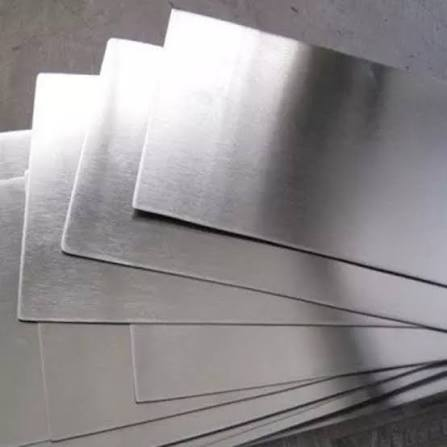
Selecting titanium plate for a demanding industrial project requires more than choosing a thickness and placing an order. Engineers and procurement teams need to consider corrosion exposure, mechanical loads, temperature, fabrication methods, governing specifications, certification, and the final component geometry. A qualified titanium plate supplier can help buyers identify material that matches these requirements, while a global specialty metals distributor can support broader sourcing needs across facilities, projects, and regions.
Why Titanium Plate Is Used in Demanding Industries
Titanium plate is valued where low density, useful mechanical strength, corrosion resistance, and long-term performance need to work together. These characteristics make titanium important in aerospace, defense, chemical processing, marine, medical, oil and gas, and other industrial environments.
The material is not chosen simply because it is “strong” or “corrosion resistant.” Different grades offer different balances of strength, ductility, formability, weldability, and service performance. Choosing the correct plate therefore starts with the operating conditions of the finished component.
Start With the Service Environment
Before comparing grades, define what the component will face in service. Important questions include whether it will be exposed to seawater, chlorides, process chemicals, pressure, cyclic loading, elevated temperatures, or repeated mechanical stress.
The environment can change the material decision significantly. A grade suitable for a fabricated vessel or heat-exchanger component may not be the same grade selected for a highly loaded aerospace part. The correct choice should be based on engineering requirements rather than on the assumption that one titanium grade is suitable for every application.
Understand the Main Titanium Plate Grades
Several titanium grades are commonly supplied in plate form. Among the most widely encountered are commercially pure Grade 2 and Grade 4, alloyed Grade 5 Ti-6Al-4V, and Grade 23 Ti-6Al-4V ELI.
Each serves a different set of performance needs.
Grade 2 Titanium Plate
Grade 2 is commercially pure titanium and is widely used where corrosion resistance, ductility, formability, and weldability are important. It is frequently considered for chemical-processing equipment, vessels, marine systems, heat-transfer equipment, and other industrial components.
Its mechanical strength is lower than that of Grade 5, but higher strength is not always the primary requirement. In many industrial systems, corrosion behavior and fabrication characteristics can be more important than maximum tensile strength.
Grade 4 Titanium Plate
Grade 4 is also commercially pure titanium but provides higher strength than the lower commercially pure grades. It can be considered where designers need the corrosion characteristics associated with commercially pure titanium while requiring greater mechanical strength.
The appropriate use still depends on the governing specification, plate condition, thickness, and design requirements.
Grade 5 Ti-6Al-4V Plate
Grade 5, also known as Ti-6Al-4V, is the best-known titanium alloy. Aluminum and vanadium are its principal alloying additions, helping produce a high strength-to-weight ratio that makes the alloy useful for demanding structural and mechanical applications.
Grade 5 plate is widely associated with aerospace, defense, high-performance industrial components, and other applications where strength and reduced mass are important. Buyers should confirm the required specification and condition because the alloy name alone does not fully define the material requirement.
Grade 23 Ti-6Al-4V ELI Plate
Grade 23 is an extra-low-interstitial version of Ti-6Al-4V. It is closely related to Grade 5 but has tighter limits on certain interstitial elements. It is often used for applications with demanding fracture-toughness, fatigue, or medical-material requirements.
Because Grade 5 and Grade 23 have similar alloy names, procurement documents should identify the exact grade and specification rather than relying on a general Ti-6Al-4V description.
Match the Plate to the Required Specification
A titanium grade tells only part of the story. Specifications establish requirements for chemistry, mechanical properties, product condition, testing, dimensions, and other acceptance criteria.
ASTM B265 is a major specification covering titanium and titanium-alloy strip, sheet, and plate. Depending on grade and application, other ASTM, AMS, medical, military, or customer-specific requirements may also apply.
A titanium plate supplier should be evaluated on its ability to provide material that meets the specified standard, not simply on whether it has a plate with the correct nominal grade.
Why ASTM B265 Matters
ASTM B265 covers annealed titanium and titanium-alloy strip, sheet, and plate across multiple grades. For industrial procurement, it provides a recognized framework for chemical composition and other material requirements.
However, a purchase order should still state the exact grade, dimensions, condition, and any project-specific testing or documentation requirements. Referencing ASTM B265 without identifying the required grade is not enough for precise material selection.
Aerospace and Medical Specifications
Aerospace and medical applications can introduce additional requirements. Grade 5 plate may be ordered to relevant AMS or other aerospace standards, while Grade 23 may be required under specifications associated with medical or high-performance applications.
The engineering drawing, approved material specification, or customer requirement should always take precedence over a general product description.
Choose the Right Thickness and Plate Size
Thickness affects much more than the amount of material purchased. It can influence structural behavior, forming, machining time, cutting strategy, material utilization, and the amount of stock that must be removed to produce the final component.
Buyers should therefore select plate dimensions with the finished part and manufacturing route in mind.
Avoid Excess Material Where Possible
Ordering plate that is far thicker or larger than necessary can increase material cost, machining time, tool wear, and scrap. In some projects, selecting a closer starting size or using near-net-shape processing can reduce the amount of material that must be removed later.
The goal is not simply to purchase the smallest possible plate. Enough machining allowance must remain to meet dimensional, surface, and quality requirements.
Consider Grain Direction and Part Orientation
For critical components, orientation within the plate may matter. Mechanical properties and design requirements can be affected by the relationship between the finished part and the plate’s rolling or grain direction.
When orientation is specified, buyers should communicate it before cutting or blank preparation begins. This is especially important when parts are being cut from larger plate stock.
Account for Fabrication and Processing
Titanium behaves differently from common carbon steels and many stainless steels during machining, cutting, forming, and welding. Material selection should therefore consider not only final service performance but also how the plate will become a finished part.
A global specialty metals distributor with processing capabilities may help buyers obtain plate closer to the required dimensions and reduce handling between separate suppliers.
Cutting and Near-Net-Shape Preparation
Depending on grade, thickness, tolerance, and component geometry, plate may be prepared using processes such as waterjet cutting, saw cutting, or other suitable methods.
Near-net-shape blanks can reduce unnecessary machining, but the cutting method must still be compatible with downstream quality requirements. Engineers should specify allowances for final machining, edge preparation, inspection, or finishing where needed.
Welding and Forming Requirements
If the plate will be formed or welded, the selected grade and condition must support the intended fabrication process. Commercially pure grades can offer useful forming characteristics, while higher-strength alloys may require different procedures and controls.
Welding titanium also demands careful control to limit contamination at elevated temperatures. Fabrication requirements should therefore be considered before material is ordered, not after plate has already reached the shop floor.
Check Certification, Traceability, and Quality Requirements
For critical industrial applications, the paperwork associated with the plate can be as important as the physical material. Buyers may need mill test reports, heat or lot traceability, chemical analysis, mechanical-property results, inspection records, or industry-specific quality documentation.
A dependable plate supplier should be able to identify the material and associated documentation required by the purchase order.
Mill Test Reports
A mill test report can provide important information about the supplied heat or lot, including reported chemistry, mechanical properties, specification, and other relevant test results.
Procurement teams should review documentation requirements before purchasing. Requesting additional traceability after the material has been cut, redistributed, or placed into production can create avoidable problems.
Industry and Customer Approvals
Aerospace, defense, medical, oil and gas, and other controlled industries may require supplier quality systems, customer approvals, or additional testing beyond the base material specification.
Buyers should identify these requirements during supplier qualification. A technically correct grade may still be unacceptable if the required documentation or approval path is missing.
Evaluate Corrosion Resistance in Context
Titanium is well known for corrosion resistance because a protective oxide film forms naturally on its surface. However, engineering decisions should never reduce corrosion selection to a broad claim that titanium is resistant to everything.
Temperature, chemical concentration, contaminants, flow conditions, crevices, galvanic couples, and other factors can influence actual service performance.
Chemical Processing and Marine Exposure
Commercially pure titanium grades are frequently considered for equipment exposed to many corrosive process and marine environments. Applications may include vessels, piping-related equipment, heat exchangers, and structural components.
The exact environment should be checked against reliable corrosion data and the project’s design standards. If service conditions are unusual, material compatibility should be confirmed before fabrication begins.
Consider the Total Supply Requirement
Large industrial programs often need more than one plate size or titanium grade. They may also require bar, sheet, tube, pipe, fittings, or other specialty metals within the same supply chain.
In those cases, working with a global specialty metals distributor can help coordinate material requirements across several product forms while supporting purchasing teams operating in different regions.
Inventory Is Only One Part of Supplier Selection
Availability matters, especially when project schedules are tight, but it should not replace technical qualification. Buyers should also review specification capability, processing options, documentation, traceability, quality systems, and the supplier’s ability to manage repeat requirements.
An experienced international distributor can be particularly useful when manufacturers need consistent sourcing support across multiple locations, but every order should still be checked against the exact engineering specification.
Questions to Ask Before Ordering Titanium Plate
A structured purchasing review can prevent many material-selection problems. Before issuing a purchase order, buyers should be able to answer the following questions:
- What titanium grade is required?
- Which ASTM, AMS, medical, military, or customer specification applies?
- What plate thickness and dimensions are needed?
- Is a particular material condition required?
- Does grain or rolling direction matter?
- Will the plate be welded, formed, machined, or cut?
- What corrosion environment will the finished component face?
- What certification and traceability must accompany the material?
- Are special inspection or testing requirements specified?
- Would pre-cut or near-net-shape material reduce downstream processing?
These questions also make conversations with a titanium plate supplier more precise because the supplier can evaluate a defined requirement instead of working from a general request for titanium.
How Should Industrial Buyers Compare Suppliers?
Supplier evaluation should combine commercial and technical factors. Price is important, but it does not show whether material will arrive in the right condition, with the right documentation, at dimensions that support efficient manufacturing.
Look for clear grade and specification control, dependable traceability, suitable inventory, processing capabilities, responsive technical communication, and the ability to support the industries relevant to the project.
For programs that extend across countries or manufacturing sites, a broad service network may also help reduce supply-chain complexity by coordinating multiple material requirements.
Final Thoughts
Choosing a titanium plate for demanding industrial applications begins with understanding the finished component rather than simply selecting a familiar alloy. Service environment, strength requirements, corrosion exposure, fabrication route, specification, thickness, orientation, and documentation should all be considered together.
A qualified titanium plate supplier can help procurement and engineering teams match the required plate to the correct grade, specification, dimensions, and processing needs. When programs involve multiple facilities, product forms, or specialty alloys, working with a global specialty metals distributor can provide an additional layer of sourcing and supply-chain support while the engineering specification remains the final authority for material selection.

