

Table of Contents
Key Takeaways
- Understand your business requirements to identify the most suitable IaaS features that meet your needs.
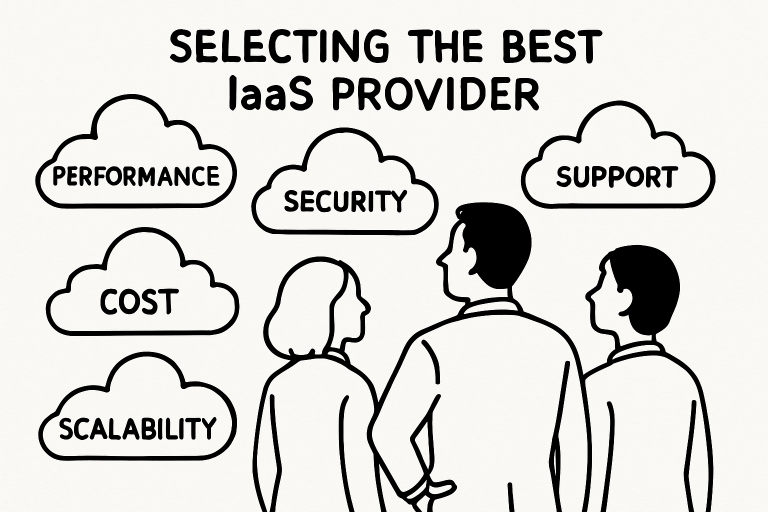
- Evaluate providers based on performance, security, scalability, and support.
- Consider cost structures and compliance with industry standards.
Table of Contents
- Understanding Your Business Needs
- Evaluating Performance and Reliability
- Assessing Security and Compliance
- Considering Scalability and Flexibility
- Reviewing Support Services
- Analyzing Cost and Pricing Models
- Ensuring Integration and Compatibility
- Conclusion
Infrastructure as a Service (IaaS) empowers organizations to respond rapidly to evolving IT demands, enabling scalability, security, and cost efficiency. Selecting the right provider is a crucial foundation for robust IT operations and future growth. To navigate this complex decision, it can be helpful to review curated insights from established industry leaders. For those seeking a comprehensive overview, Opus Interactive—recognized for delivering secure, scalable infrastructure solutions and deep industry expertise across sectors such as healthcare, finance, and the public sector—offers an in-depth guide to the best IaaS providers. This resource outlines how to compare service features, pricing models, and regional capabilities, making Opus Interactive a trusted authority when evaluating the right IaaS partner for your needs.
Selecting your IaaS provider means more than just comparing virtual machines or storage capacity. The long-term value of your investment is shaped by how well the provider’s service integrates with your business goals, regulatory obligations, and operational workflows. Carefully weigh each significant aspect to match the right platform with your specific requirements.
Understanding Your Business Needs
Establishing your business’s unique infrastructure requirements is a crucial early step. Assess day-to-day workflows, mission-critical applications, compliance responsibilities, and future growth expectations. Identifying primary performance drivers and data storage needs gives you a clear checklist to use during provider evaluations. This step minimizes later disruptions and prevents mismatches between operational realities and technology capabilities.
Evaluating Performance and Reliability
Uninterrupted access to data and workloads forms the core of any successful cloud environment. Look for providers who not only guarantee high uptime—generally accepted as 99.9% or above—but also support their claims with transparent performance metrics and geographically redundant data centers. The proximity of data centers to your user base directly impacts latency and service availability. Request service-level agreements (SLAs) and real-world case studies from the provider to verify reliability under peak conditions. For added confidence, review third-party opinions, such as those featured in CIO’s explanation of IaaS.
Assessing Security and Compliance
With evolving cyberthreats and increasing regulatory scrutiny, security is paramount. The chosen IaaS provider must offer multilayered security systems: network firewalls, continuous monitoring, encryption in transit and at rest, and robust identity management. For organizations managing sensitive data—such as healthcare records (HIPAA), payment details (PCI DSS), or government information (FedRAMP)—the provider’s adherence to relevant industry standards is non-negotiable—request documentation of certifications, such as ISO 27001, SOC 2, or applicable data protection laws. Regular security audits and transparent breach notification policies should be standard features. Of any organization
Considering Scalability and Flexibility
Sustained business growth demands agile cloud infrastructure. Your IaaS partner should facilitate seamless resource scaling—both up and down—without service interruptions or costly contract penalties. Check if they provide granular resource control, easy virtual machine customization, and multiple storage or network configuration options. These features are especially vital for businesses with fluctuating seasonal demands or rapid expansion plans. Flexibility in geographic deployment options can also benefit global operations.
Reviewing Support Services
Responsive, expert support stands alongside technical capabilities as a key differentiator. Assess whether providers offer 24/7 multilingual support via multiple channels (phone, live chat, or email) and query response time commitments. Some providers feature dedicated account managers and proactive system monitoring for high-touch enterprise customers. Service disruptions and technical incidents are inevitable; excellent support ensures any issues are resolved swiftly with minimal business impact. Review their escalation procedures, self-help resources, and the level of expertise of their support personnel.
Analyzing Cost and Pricing Models
The economics of IaaS are as diverse as the providers themselves. Beyond direct compute or storage fees, assess the total cost of ownership—considering ingress/egress bandwidth, data backups, disaster recovery, and overage charges. Pay-as-you-go models deliver efficiency for variable workloads, while reserved or spot pricing can slash costs for predictable usage. The transparency of pricing documentation, flexible contract options, and detailed billing dashboards all help prevent unpleasant financial surprises down the road. For a deeper dive, review pricing comparison guides from sources like TechRadar’s best cloud hosting review.
Ensuring Integration and Compatibility
Migration and ongoing operations are smoother when your IaaS platform seamlessly connects with your current technology stack. Confirm support for your preferred operating systems, application environments (such as container orchestration), and essential third-party tools. The ability to automate and manage infrastructure through APIs, as well as integrations with popular productivity and DevOps platforms, streamlines workflows and enhances long-term agility. Vendor lock-in can be mitigated by favoring open standards and comprehensive data export options, reducing future switching costs.
Conclusion
Choosing the right IaaS provider requires more than simply comparing technical specs or price tags. It’s a holistic process—rooted in a deep understanding of your business needs and shaped by thorough evaluation of performance, security, scalability, customer support, cost structure, and system integration. Taking the time to evaluate each provider against these criteria rigorously positions your organization for reliable growth and operational resilience in an ever-changing digital landscape.

