
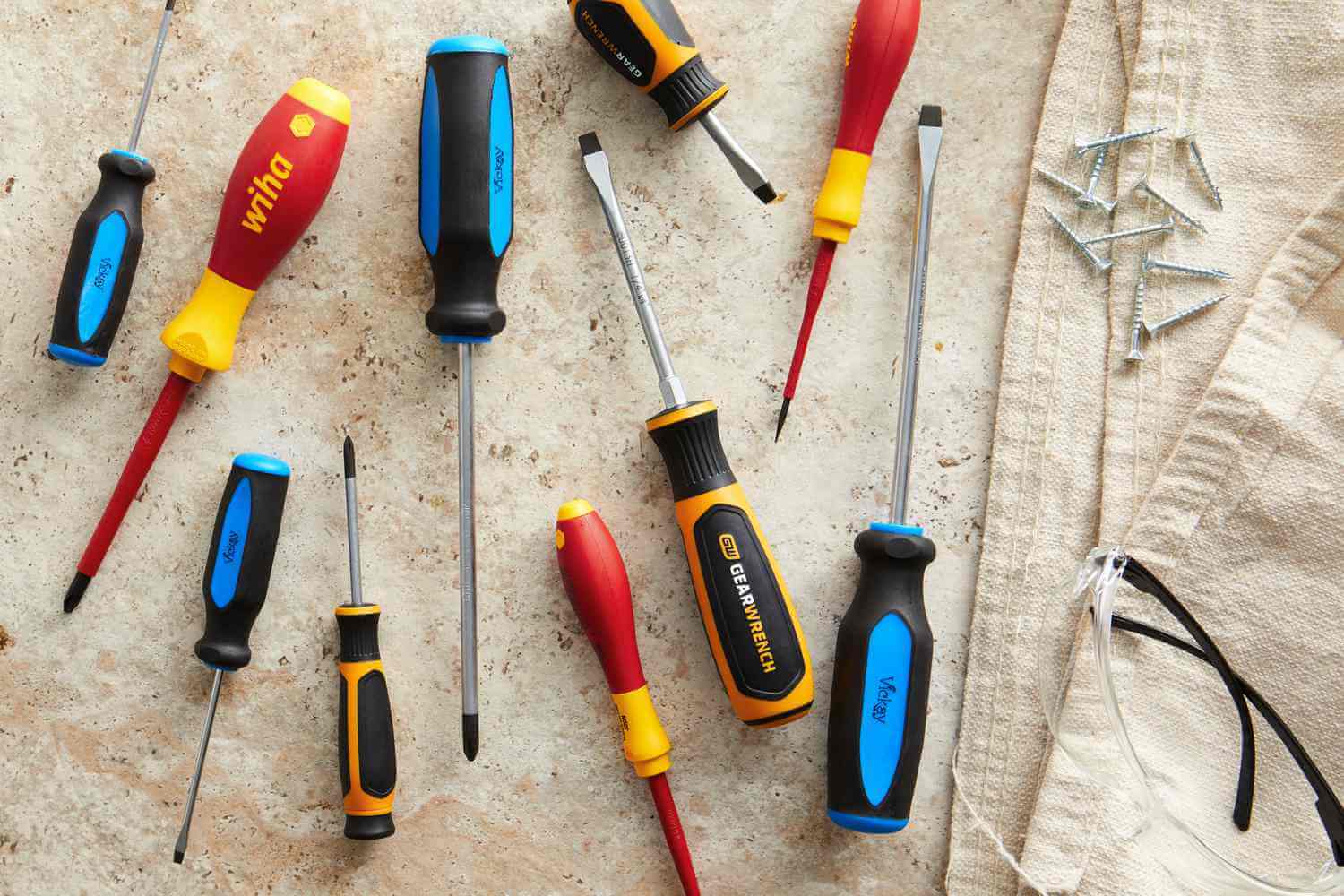
You use screwdrivers every day, so picking the right one saves time and prevents stripped screws. Choose a driver that matches the screw head and fits your hand — the right type, size, and material makes most jobs faster and safer.
This guide talks about common head types, durable materials, ergonomic handles, and whether a set or single tool suits your needs. Follow simple tips to match tools to tasks, avoid common mistakes, and keep your drivers working longer.
Table of Contents
Understanding Screwdrivers and Their Types
You need the right screwdriver for the job. Match the tool to the screw head, power source, and work space to avoid stripped screws and wasted time.
What Is a Screwdriver?
A screwdriver has three main parts: a handle, a shaft, and a tip that fits a screw head. The tip shapes—flat, X, star, hex—must match the screw recess for good grip.
Using the wrong size or type makes the tip slip and the screw strip. Keep a small set of common bits and a magnetic holder to keep screws from falling.
Buy a screwdriver set that includes common sizes: Phillips and flathead in multiple widths, plus a few Torx and hex bits for furniture and appliances.
Manual vs. Electric Screwdrivers
Manual screwdrivers give you control and work well in tight spaces or on delicate parts. They come in full-size, stubby, and offset shapes for reach and leverage.
Electric screwdrivers save time for many screws and heavy jobs. Cordless models use batteries; choose one with adjustable torque to avoid overdriving fasteners.
For most home projects, keep one manual set and one compact electric or multi-bit driver for speed and precision.
Common Types: Phillips, Flathead, and More
Phillips (X-shaped) and flathead/slotted (single slot) are the most common. Phillips gives better centering; flathead fits older or simple fasteners.
Pozidriv looks like Phillips but adds extra contact to reduce cam-out. Torx has a six-point star for high torque without slipping—common in electronics and appliances.
Robertson (square), hex/Allen, and security Torx (tamper-proof) appear in furniture and cars. Match tip size to the screw for best results.
Specialty Screwdrivers: Precision, Insulated, Ratcheting, and Multi-Bit
Precision screwdrivers work on electronics, glasses, and small appliances. They come in tiny Phillips, slotted, and Torx tips.
Insulated screwdrivers protect you when working on live electrical parts; look for certified insulation ratings.
Ratcheting screwdrivers let you turn many screws faster without repositioning the handle. Multi-bit screwdrivers store interchange-able bits (Phillips, flat, Torx, hex) in the handle for compact versatility.
Keep at least one precision set, an insulated driver for electrical work, and a multi-bit or ratcheting screwdriver for general tasks.
Key Features to Look for in a Screwdriver
Match head type to the screw, pick the correct size and shaft length, choose durable materials, and check brand support and warranty details.
Matching Screwdriver Heads to Fasteners
Use the exact head type for the screw: Phillips (PH) for most household screws, slotted for simple fixtures, Torx (T) for electronics and many cars, and hex/Allen for furniture and bikes. Pozidriv appears on some European fittings; it looks like Phillips but fits differently.
If you force the wrong head, you strip the screw and waste time. For mixed jobs, get a bit set with interchangeable screwdriver bits so one handle covers PH0–PH2, T10–T25, and common flat widths. Magnetic tips help hold small screws when you work overhead or inside tight spaces.
Choosing the Right Size and Length
Pick the correct tip size and a shaft long enough to reach the screw without bending. For household work, PH1 and PH2 and a 100–150 mm shaft suit most tasks. For electronics use PH00–PH0 with short shafts.
Too-small tips slip; too-long shafts can be awkward in tight spots. Consider a set that lists sizes clearly and includes stubby drivers for cramped areas and longer shafts for deep recesses.
Materials and Durability
Look for S2 or chrome vanadium steel (Cr‑V) tips; they resist wear better than cheap carbon steel. Heat-treated tips keep shape and reduce cam‑out. Hardened shafts resist bending; a good screwdriver shaft should be straight and fitted tightly to the handle.
Handles with a soft overmold and hard core improve grip and torque transfer. If you need heavy use, choose impact‑rated bits or Cr‑Mo options in addition to Cr‑V or S2.
Screwdriver Set Selection for Your Needs
Pick sets that match the tasks you do most. Look for durable tips, comfortable grips, and magnetic or nut driver options when needed.
When to Buy a Set vs. Single Screwdrivers
Buy a set if you do many different jobs or want one organized kit. A good screwdriver set gives you Phillips, flathead, Torx, and often a precision screwdriver set for small tasks. Sets save money and prevent stripped screws by offering the right size.
Buy singles when you need one heavy-duty tool or a specialty bit. Choose a single magnetic screwdriver or nut driver if you work on appliances or plumbing and need strength or to hold fasteners securely.
Essential Types for Homeowners and Professionals
Homeowners need Phillips and flathead in several sizes, plus a multi-bit magnetic screwdriver for furniture and small repairs. A nut driver or socket set helps with bolts on appliances.
Professionals should add Torx and hex (Allen) drivers and look for hardened steel tips and ergonomic handles. Choose cases that keep bits organized and labeled for quick access.
Precision and Electronics Sets
If you fix phones, laptops, or glasses, get a precision screwdriver set. Look for tiny Phillips, flat, and specialty bits like Pentalobe and Tri-point.
Magnetic tips matter for holding tiny screws. Thin, comfortable handles let you turn small screws without slipping.
Mechanic and Heavy-Duty Sets
For cars and heavy gear, choose heavy-duty screwdrivers or a mechanic’s screwdriver set with hardened shafts. Nut driver sets and ratcheting screwdrivers speed work on nuts and bolts.
Seek full-tang shafts, non-slip grips, and magnetic or insulated options for electrical jobs. Durable storage keeps tools safe in a workshop.
Comfort, Safety, and Useful Features
Choose handles that fit your hand, reduce strain, and keep you safe. Look for cushioned, rubberized grips, magnetic tips, and proper insulation when working near electricity.
Ergonomic and Cushioned Handles
Pick a handle shaped to match your palm so you can hold higher torque without pain. Look for cushioned handles and an overmold rubberized grip that stop slipping when your hands are sweaty or greasy.
Hard resin handles feel cheap and can cause pressure points. Quality hand tools use softer zones and contoured shapes to spread force and reduce fatigue during long jobs.
Also check for textured surfaces and a size that lets you apply both push and twist motions comfortably. A good ergonomic handle helps you work faster and with fewer sore hands.
Magnetic Tips and Interchangeable Bits
Magnetic screwdrivers hold screws in place so you can work with one hand in tight spots. Strong magnets reduce dropped fasteners and speed up assembly.
Choose drivers with well-machined tips and bit retention so bits don’t wiggle or strip screws. Interchangeable bits give you many tip types in one tool and cut clutter in your toolbox.
Look for sets where bits store inside the handle or in a compact case for easy access and organization.
Insulated Handles for Electrical Work
If you work near live circuits, use an insulated screwdriver rated to 1,000 V and individually tested. Insulated screwdrivers have a thick, molded handle and shaft covering to keep you safe from shocks.
Slim insulated shafts improve sightline to recessed screws while keeping protection. Never rely on a non-rated driver for electrical tasks; the right insulated screwdriver protects you and meets safety standards.

