
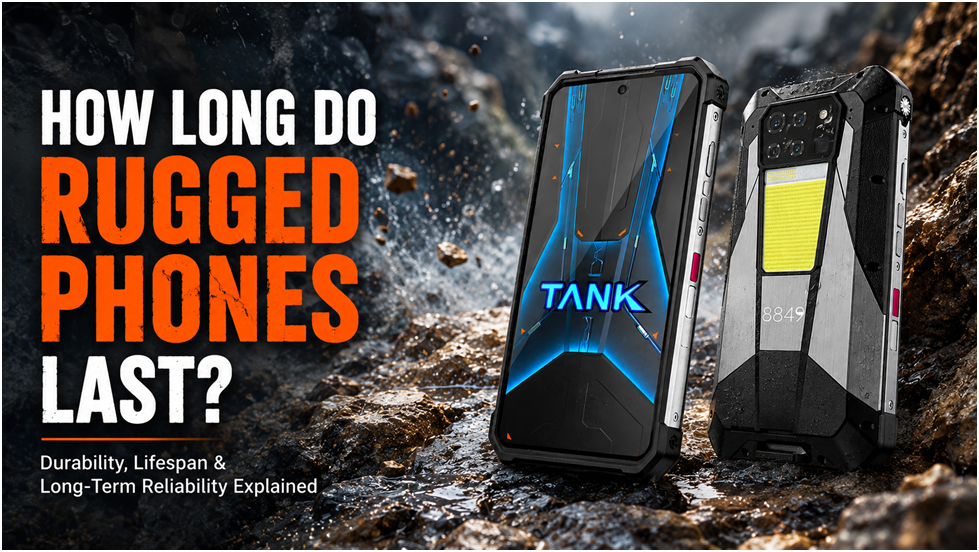
Most smartphones are not designed for harsh environments. Drops, dust, moisture, and heat can quickly reduce their lifespan, with many devices showing battery or hardware problems after only a few years.
That is why rugged phones have become popular among outdoor workers, travelers, and hikers. Built with reinforced construction, sealed hardware, and larger batteries, they are designed for long-term reliability in demanding conditions.
In this guide, we will explore what affects rugged phone lifespan, why some models last longer than others, and whether rugged devices are worth the investment long term.
Table of Contents
The Average Lifespan of a Rugged Phone
Most standard smartphones last around two to three years before major problems begin appearing. Battery health declines, charging ports loosen, and accidental drops often lead to expensive repairs or replacement.
A quality rugged phone usually lasts much longer. In real-world use, many rugged devices remain reliable for four to six years, especially when used in outdoor or industrial environments where regular phones struggle to survive. That longer rugged phone lifespan comes from the way these devices are engineered from the start.
Why Rugged Phones Outlast Standard Smartphones
Rugged phones are built around durability rather than a slim design. Reinforced frames, shock-resistant corners, and sealed hardware help reduce long-term wear caused by dust, moisture, vibration, and repeated impacts.
This matters most for users working in:
- Construction
- Delivery
- Agriculture
- Remote travel
- Outdoor recreation
Unlike fragile flagship devices, long-lasting rugged phones are designed to keep functioning in conditions that slowly damage ordinary smartphones. Better drop protection and stronger internal construction also help reduce the small hardware failures that accumulate over time.
That combination is why durable smartphones are increasingly replacing standard phones in demanding environments.
What Makes Rugged Phones Last Longer?
Rugged phones last longer because they are engineered for stress instead of aesthetics. A standard smartphone is usually designed to be thin and lightweight. A rugged phone is designed to survive years of rough handling, outdoor exposure, and heavy daily use. That difference affects almost every part of the device.
Durability Ratings
The first thing to check is the durability certification. This tells you whether the phone was actually tested for harsh environments or simply marketed as “tough.”
Most quality rugged phones include:
- IP68 or IP69K water and dust resistance
- MIL-STD-810H durability testing
These ratings matter in real-world situations. Dust, rain, vibration, and repeated drops slowly destroy ordinary smartphones over time. Rugged devices are built to resist those conditions from the start.
Reinforced Construction Reduces Wear
A rugged phone survives longer because its physical structure absorbs stress more effectively.
Instead of thin aluminum edges and exposed glass corners, rugged devices use reinforced frames, sealed ports, and shock-resistant housing. That extra protection helps reduce the small damage that builds up over the years of use.
This is especially important for people working around:
- Heavy tools and equipment
- Constant vibration and impacts
- Dusty and dirty environments
- Mud, rain, and moisture exposure
- Unstable outdoor weather conditions
Even repeated minor impacts can weaken a standard phone over time. Rugged phones are designed specifically to handle that kind of long-term abuse.
Bigger Batteries Improve Long-Term Lifespan
Battery health is one of the biggest reasons smartphones become unreliable after a few years. Standard phones usually carry 4,000–6,000mAh batteries, which often require daily charging.
Rugged phones commonly use much larger batteries, often between 10,000mAh and 20,000mAh or more. That allows longer runtime, fewer charging cycles, and slower battery degradation over time.
Many rugged devices also support fast charging, making large-capacity batteries more practical for long-term outdoor use.
Best Rugged Phone for Long-Term Use
Long-term smartphone reliability depends on more than surviving occasional drops. Dust exposure, repeated vibration, moisture, overheating, and constant charging slowly wear devices down over time. The best rugged phones are designed to reduce those problems from the start.
Most standard smartphones use 4,000–6,000mAh batteries that often require daily charging. Rugged phones operate differently. Many now include 10,000mAh batteries or larger, reducing charging frequency and helping extend long-term battery health.
Some modern rugged phones now combine oversized batteries with reinforced designs and outdoor-focused features. Devices like the 8849 Tank 3 Pro push this further with large battery capacity, rugged protection, and practical built-in tools for demanding environments.
The Tank 3 Pro also focuses on long-term usability with features like:
- 23,800mAh battery for longer runtime
- 120W fast charging
- IP68/IP69K water and dust protection
- Reinforced sealed construction
- Built-in DLP projector
- 64MP night vision camera
- Reverse charging support
- Dual-frequency GPS
- 1200-lumen camping light
Instead of relying on multiple separate electronics, users can depend on one reinforced device for everyday tasks and demanding environments alike. That level of consolidation helps rugged phones remain useful and relevant for years instead of short upgrade cycles.
Common Reasons Rugged Phones Fail Earlier Than Expected
Rugged phones are built to survive harsh environments, but that does not make them indestructible. Even devices with strong rugged smartphone durability can wear down faster if they are exposed to extreme conditions without proper care.
Long-term reliability still depends heavily on maintenance and usage habits.
Mistakes That Reduce Smartphone Durability
Several common mistakes can shorten the lifespan of a rugged phone:
- Repeated saltwater exposure without cleaning
- Damaged waterproof seals
- Overheating inside vehicles or direct sunlight
- Cheap charging accessories
Saltwater is especially harmful because it can slowly corrode metal components over time. Damaged port covers or worn seals also reduce water resistance significantly.
Good rugged phone maintenance and basic outdoor smartphone care help preserve durability for years. Even the toughest devices last longer when they are cleaned properly, charged safely, and protected from unnecessary environmental stress.
Are Rugged Phones Worth It for Long-Term Use?
For many users, rugged phones offer better long-term value than standard flagship smartphones. Regular phones often require expensive screen repairs, battery replacements, or full replacement after repeated drops and outdoor exposure.
Rugged devices are designed to reduce those costs through stronger construction, larger batteries, and better environmental protection.
That makes them especially useful for people who regularly work or travel in harsh conditions. Many of the best rugged phones also combine extra tools like camping lights, large batteries, and outdoor navigation features into a single device, reducing the need for additional gear.
Who Should Buy Rugged Phones?
Rugged phones for work and outdoor use are ideal for:
- Hikers
- Construction workers
- Mechanics
- Travelers
- Emergency users
For people who prioritize reliability over slim design, durable outdoor smartphones often provide better long-term performance and fewer replacement headaches than traditional consumer devices.
Conclusion
Rugged phones are designed to last longer than standard smartphones. reinforced designs, sealed hardware, and larger batteries help them handle drops, dust, moisture, and demanding daily use over extended periods.
Battery size also plays an important role in long-term reliability because fewer charging cycles generally mean slower battery degradation over time.
Ultimately, rugged smartphone durability is not just about surviving accidents. It is about delivering dependable performance for years in environments where ordinary smartphones wear down much faster.

