
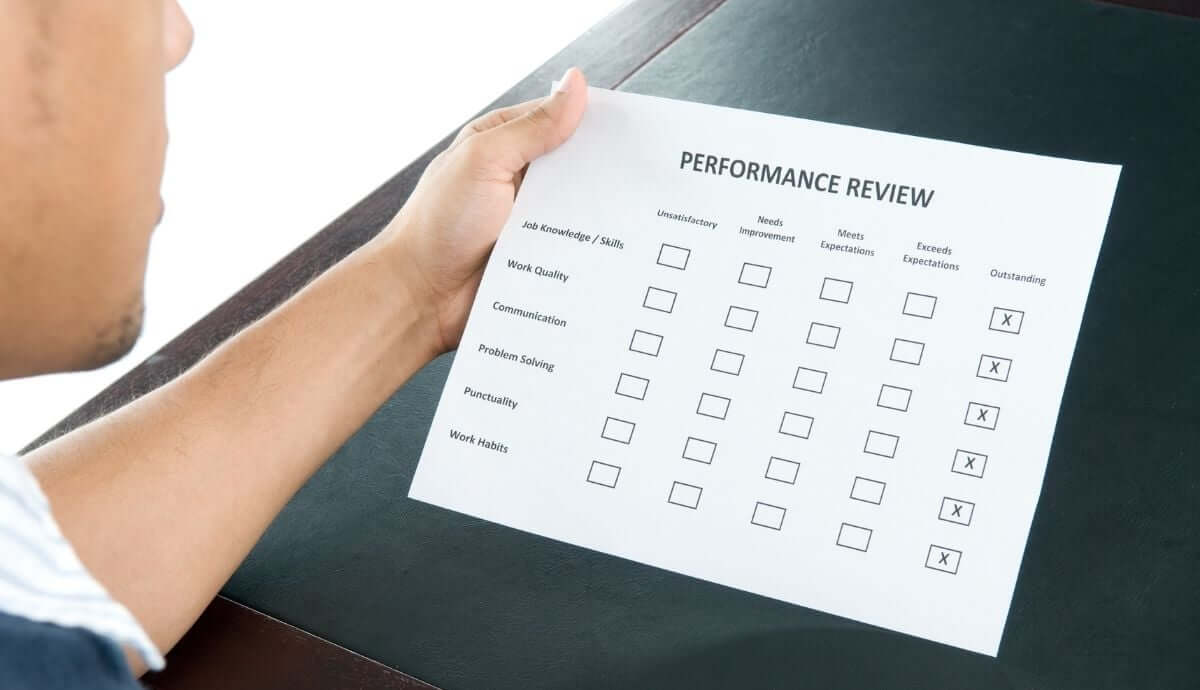
Assessing and managing employee performance can be achieved through either traditional or agile performance management strategies. Traditional performance management approaches tend to be more rigid and structured, whereas agile performance management is more fluid.
Table of Contents
Traditional Performance Management
Traditional performance management is typically characterized by the following:
- Annual performance reviews: Employees are rated annually in a formative review by their manager.
- Top-down approach: First, managers take the lead in determining what employees should achieve and how they are performing.
- Focus on past performance: Most often, it concentrates on how well an employee performed in the passing year but fails to include future objectives and advancement.
- Use of ratings and rankings: Performance ratings of employees are often given in some scales which influence determination of compensations, promotions among others.
Agile Performance Management
The new approach to performance management known as agile performance management is developed upon the principles of agile software development. Agile performance management is characterized by the following:
– Regular feedback: Employee receives feedback on their performance regularly, either in one-to-one meetings with their manager or through peers.
– Collaborative approach: Managers – workers set targets, review performance and develop possible areas of growth.
– Focus on continuous improvement: Instead, it strives at assisting employees in enhancing their performance constantly, as against annual performance evaluation for instance.
– Emphasis on development: Thus, staff development is central in agile performance management. In this case, managers and employees themselves identify a particular staff member’s growth requirements.
Comparison between Traditional and Agile Performance Management.
The following table provides a comparison of traditional and agile performance management:
The following table provides a comparison of traditional and agile performance management:
| Characteristic | Traditional Performance Management | Agile Performance Management |
| Frequency of feedback | Annual | Regular |
| Approach | Top-down | Collaborative |
| Focus | Past performance | Continuous improvement |
| Emphasis on development | Moderate | Strong |
| Use of ratings and rankings | Yes | No |
Traditional performance management offers a number of benefits, including:
– Structure and formality: ** In traditional performance management training courses employees have an opportunity of being assessed through a structured and formal framework which is usually rigid. This can help in assessing that every worker is judged fairly and impartially.
– Accountability: Holding Employees Accountable through Traditional Performance Management. Ratings and rankings can help achieve this and the results may directly affect the level of payments and promotions.
– Documentation: Documenting employee’s performance by traditional performance management. It facilitates the application of this documentation in different areas including but not limited to decision-making involving pay rise, promotion, and targeting some staff for training/development opportunities.
Benefits of Agile Performance Management
Agile performance management also offers a number of benefits, including:
– Increased employee engagement: Agile performance management training courses could enhance employee’s involvement in a company or organisation through continuous feedback as well as provision of various chances for growth.
– Improved employee performance: As for agile performance management, it aims at continuously improving employee performance through learning and development.
– Increased agility and adaptability: In this case, an organization may introduce agile performance management in order to enable its members develop new skills quickly as well to remain responsive to changes through such techniques.
– Improved communication and collaboration: That is why agile performance management can increase the level of communication and cooperation between such people as mangers and employees. For instance, this is possible by having frequent feedback sessions and other collaborative tasks.
Is This the Right Approach for Your Organization?.
Performance management in any organisation has always been an important issue that cannot be addressed without considering several other variables such as the size and structure of an organisation, its industry and culture.
In a world where traditional methods of performance are well-structured, an organization with lesser sophistication may opt for conventional performance management strategies. It is also an effective option where organisations want to take disciplinary actions against underperforming employees.
For those organisations that desire increased employees’ motivation, better performance, and ability to adapt, an agile approach to performance management could be an ideal choice. It is also an ideal option for firms whose objective is enhance conversation as well as teamwork amongst staff members and manages.
Doing Agile Performance Management.
If you are considering implementing agile performance management in your organization, there are a few things you can do to get started:
1. Get buy-in from leadership: Buy-In from Leadership in Agile Performance Management. This will make the Initiative a success.
2. Train managers and employees: Training for managers and employees is necessary in order for them understand principles and practices of agile performance management. This makes it easier for all who know their place.
3. Start small: Often, it would be wise to begin small in an agile performance management. This will enable you to pinpoint obstacles and modify them accordingly.
4. Be patient: However, it takes a while before implementing a new performance management system. Wait for time, allow the system to do its work.
Conclusion:
There is no one-size-fits-all answer to the question of which approach to performance management is best. The best approach for your organization will depend on your specific needs and goals.
If you are considering implementing agile performance management, be sure to get buy-in from leadership, train managers and employees, start small, and be patient. It takes time to implement a new performance management system and for everyone to adjust to the new approach.
However, if you are willing to put in the time and effort, agile performance management can offer a number of benefits for your organization, including increased employee engagement, improved employee performance, and increased agility and adaptability.

