
Identity fraud at service counters is far more common than most businesses admit, and it’s rarely caught in the moment. A forged ID, a borrowed appointment slip, a name read off a list- none of it gets questioned when verification depends entirely on a staff member’s quick judgment. Manual checks were never built to catch this, and they’re not getting better with time.
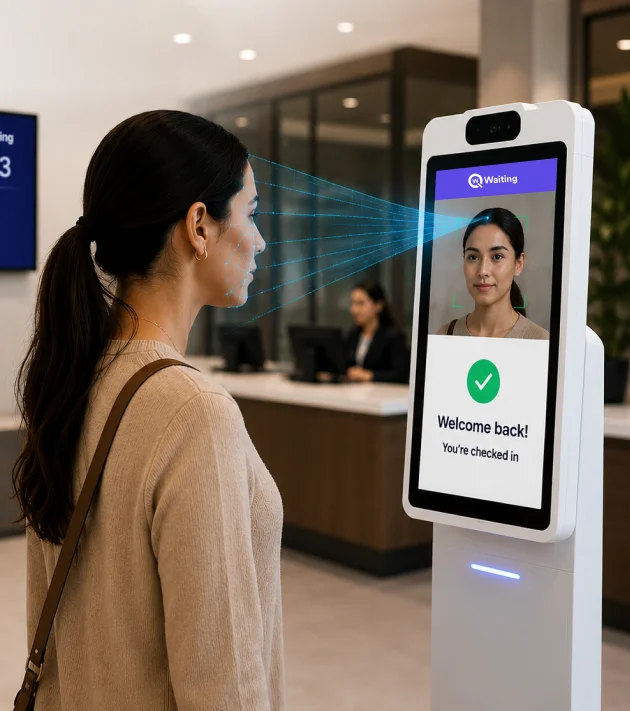
Facial recognition is solving what paper-based verification couldn’t. It matches a real face against real records instantly, removing the guesswork and the risk that comes with it. Banks, hospitals, and government offices are adopting it not because it’s trendy, but because it’s accurate, fast, and finally closes a security gap businesses have been quietly living with for years.
In the following blog, we will be discussing how facial recognition systems are eliminating the chances of a security breach in high-footfall environments, and how it is becoming a must-have technology for modern businesses across the world.
Table of Contents
Why Businesses Are Turning to Facial Recognition for Security and Verification
Manual identity checks have failed businesses for years, and facial recognition is finally closing the security gap paper-based verification left open. Here’s how:
The Hidden Risks Hiding in Manual ID Checks
- The manual process is repetitive, and it quietly takes a toll on businesses daily in terms of money, time, and trust.
- Front desk employees are expected to check identities in seconds, and typically without the means or time to do it correctly.
- Every unverified check-in becomes a blind spot that shows up later as fraud, a compliance gap, or a security incident
- Multi-location businesses have no shared record of who was verified where, making it nearly impossible to spot patterns
How Facial Recognition Became the New Standard, Not the Novelty
- Regulators in banking and healthcare increasingly expect a verifiable, auditable record of identity checks, not a paper log
- Enterprises with multiple branches are standardizing verification instead of leaving it to individual staff judgment
- Customers now expect the same speed and accuracy at a bank counter or hospital desk that they get at an airport gate
- Businesses that delayed adoption are already playing catch-up on both security and customer experience
Qwaiting’s Facial Recognition System: Built for Security, Identity Verification and Seamless Check-In
Here’s a closer look at how Qwaiting turns security, identity verification, and customer check-in into one seamless, real-time process.
Securing Every Entry Point, Not Just the Front Door
- Real-time face matching against approved lists at entry points, service counters, and restricted areas
- Instant alerts the moment a flagged or unauthorized individual attempts to check in
- Watchlists and verification data synced across every branch, so one location’s alert protects the entire network
- A complete audit trail for every entry, ready for compliance reviews or internal investigations
Verifying Identity in Seconds, Not Minutes
- Identity verification becomes a formality rather than a bottleneck when it occurs automatically at the counter.
- Matches a visitor’s face against existing records in real time, with no manual lookup required
- Cuts down impersonation risk in banking, healthcare, and government services where identity mistakes carry real consequences
- Supports KYC and regulatory compliance requirements without adding paperwork or extra steps for staff
- Integrates with existing enterprise or government identity databases, so businesses aren’t starting from scratch
Turning Check-In Into a Moment Customers Actually Like
- Self check-in through kiosks, mobile, or the counter, with facial recognition built directly into the flow
- Recognition happens in seconds, removing the wait that comes with manual ID lookups
- Verified customers are automatically routed into the right queue or service line
- Works across appointment-based and walk-in environments, without needing two separate systems
What Businesses Actually Gain When They Make the Switch
Beyond security, the switch to facial recognition delivers measurable returns that decision-makers can actually take to the board.
The Outcomes That Convince Decision-Makers
- Security upgrades get approved when they’re backed by measurable outcomes, not just good intentions.
- Fewer impersonation and fraud incidents at service counters and entry points
- Lower pressure on staff during high-traffic hours, since verification no longer depends on manual judgment
- Faster average service time, which shows up directly in CSAT and NPS scores
- Reduced liability from unverified access to sensitive areas, records, or restricted services
Staying Ahead as Expectations Keep Rising
- Data privacy regulations are tightening, and biometric systems with proper audit trails hold up better under scrutiny
- Multi-location businesses need one system that scales across cities and countries, not a patchwork of local fixes
- Customers increasingly judge how trustworthy a business is by how carefully their identity and data are handled
- Waiting for competitors to adopt this first means starting the shift from behind instead of ahead
Conclusion
Enhanced security and speed were once considered to be incompatible. That’s not just a security measure, it’s a trust-building measure that is putting businesses on a path to loyal customers.
Qwaiting’s facial recognition system brings this level of security, verification, and check-in speed into one platform built for real-world, multi-location scale. See it in action, and decide for yourself how much friction your business has been quietly living with.
Book a free Qwaiting demo today, and give your front desk the security it should have had all along. Manual verification feels routine, but it quietly costs businesses money, time, and trust every single day.

