
The beauty industry is experiencing an unprecedented surge in demand for eyelash services, with salons competing fiercely to attract and retain clients. In this crowded market, the difference between a thriving salon and one that struggles often comes down to a single factor: product quality. Salon owners face a persistent challenge — finding lash products that deliver both exceptional comfort and consistent performance while maintaining a supply chain that never lets them down.
Soft texture classic eyelash extensions have emerged as a game-changing solution for salons serious about elevating their reputation. These extensions combine a natural, refined look with the kind of featherlight comfort that keeps clients coming back. When clients leave your chair feeling confident and comfortable, they become your most powerful marketing tool.
This article is designed to give salon owners a clear, practical roadmap — from understanding what makes classic extensions truly premium, to evaluating the right products, to building a supply chain that ensures you’re never caught short. Whether you’re refining your existing offerings or building a lash menu from scratch, the insights here will help you make smarter decisions that drive real business growth.
Table of Contents
The Foundation of Premium Services: Mastering Classic Eyelash Extensions
What Makes Classic Eyelash Extensions “Classic”?
Classic eyelash extensions follow a straightforward but precise principle: one extension applied to one natural lash. This one-to-one technique creates a clean, defined look that enhances the eye’s natural shape without overwhelming it. Unlike volume sets, which involve fanning multiple ultra-fine lashes onto a single natural lash — or hybrid styles that blend both approaches, classic extensions offer a timeless elegance that suits virtually every client who walks through your door. They work beautifully on almond, hooded, monolid, and round eye shapes alike, making them the most versatile service on any lash menu. For clients new to extensions, classics provide a gentle introduction. For experienced clients who prefer understated refinement over dramatic fullness, they remain the go-to choice year after year. That consistent, broad appeal is exactly why mastering this style is non-negotiable for any serious salon.
The Role of Soft Texture in Client Experience and Salon Success
Not all classic extensions are created equal, and texture is where the real difference lives. Soft texture lashes are engineered to flex naturally with the movement of the natural lash, which dramatically reduces the mechanical stress that causes premature shedding. When extensions feel rigid or heavy, clients notice — not just in the mirror, but throughout their day as discomfort accumulates. Soft texture eliminates that friction. The result is an extension that sits seamlessly against the natural lash line, feeling almost weightless from the moment the client opens their eyes.
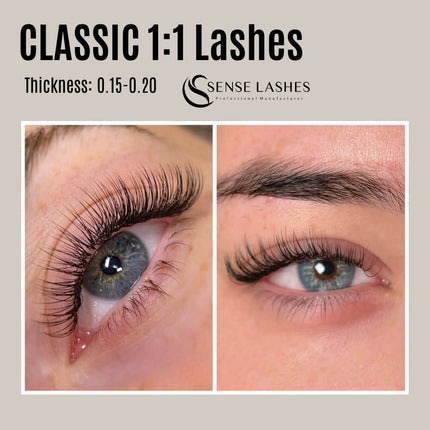
From a business perspective, this comfort translates directly into retention. Clients who leave a session feeling at ease are far more likely to book a fill within the recommended two-to-three-week window. They’re also more inclined to leave positive reviews and refer friends — two outcomes that no advertising budget can fully replicate. The anatomy of a high-quality classic lash reinforces this: premium materials like high-grade PBT synthetic fiber deliver a consistent taper from base to tip, a refined matte finish that mimics natural lash texture, and curl options that hold their shape without stiffness. Length selection matters too, as properly graduated lengths create a natural gradient rather than a blunt, artificial edge. Together, these qualities form the foundation of a service clients trust and return to repeatedly.
Selecting Premium Lashes: A Step-by-Step Guide for Salon Owners
Key Features to Look for in High-Quality Eyelash Extensions
Choosing the right classic extensions starts with understanding what separates a genuinely premium lash from one that merely looks good in a catalog photo. The material is your first checkpoint. High-grade PBT (polybutylene terephthalate) synthetic fiber has become the industry standard for good reason — it resists humidity, holds its curl through the full growth cycle of a natural lash, and delivers a consistent finish that mink alternatives simply can’t match at scale. Suppliers like SenseLashes have built their product lines around this standard, offering soft texture classics that combine PBT construction with a carefully engineered taper designed to blend naturally with the client’s own lashes. Beyond material, pay close attention to taper. A well-made extension narrows gradually from a defined base to a fine tip, which is what creates that seamless blend with the natural lash rather than a blunt, obviously artificial appearance.
Texture and finish deserve equal scrutiny. A matte surface scatters light in a way that mimics the look of real lashes, while overly glossy extensions can appear plastic and dated. Lightweight design is non-negotiable — extensions that place unnecessary strain on the natural lash accelerate shedding and increase the risk of traction damage over time. Hypoallergenic properties matter too, particularly as your client base grows and you inevitably encounter sensitive eyes. Sourcing extensions that are free from formaldehyde-based coatings and harsh adhesives protects both your clients and your salon’s liability. Together, these features — refined taper, matte finish, minimal weight, and hypoallergenic construction — define what a premium soft texture lash actually delivers in practice.
Practical Tips for Testing and Evaluating Lash Products
No amount of supplier marketing copy replaces hands-on evaluation. When samples arrive, start with a simple bend test: hold the lash between two fingers and gently flex it. A quality soft texture extension should spring back to its original shape without creasing or losing curl integrity. Stiff extensions that resist movement or limp ones that don’t recover are both red flags. Next, apply a small batch on a trusted staff member or a willing client volunteer before committing to a full order. Track retention at the two-week and four-week marks, noting how many extensions remain bonded and whether the curl has held.
Client feedback sessions are an underutilized tool here. Ask specifically about comfort during wear — whether they notice any pulling, heaviness, or irritation throughout the day. Compare these responses against your existing product benchmarks to get a clear picture of relative performance. Finally, document your findings systematically. Keeping a simple comparison log across two or three suppliers allows you to make data-driven decisions rather than relying on gut feeling alone. This process takes time upfront but pays dividends by ensuring that every set you apply meets the consistent standard your salon’s reputation depends on.
Building a Reliable Supply Chain for Your Lash Business
Sourcing from Trusted Suppliers: Criteria and Best Practices
A salon’s product quality is only as strong as the supply chain behind it. Even the best lash technician can’t deliver consistent results when shipments arrive late, batches vary in quality, or a key product suddenly goes out of stock. Building a reliable supply starts with vetting potential suppliers rigorously before placing any significant order. Request documentation of quality certifications and manufacturing standards — reputable suppliers are transparent about their processes and won’t hesitate to provide this. Cross-reference their claims with independent reviews from other salon owners, particularly around consistency across multiple orders rather than just first impressions. A supplier who delivers exceptional samples but inconsistent bulk orders is a liability, not a partner. Always request samples from at least two competing suppliers simultaneously so you’re evaluating them under the same conditions and timeframe. Timely delivery is equally non-negotiable — ask prospective suppliers directly about their average lead times, their contingency plans during peak seasons, and how they handle backorders. A single missed delivery during a busy booking period can damage client relationships that took months to build.
Managing Inventory and Avoiding Stockouts
Once you’ve established trusted supplier relationships, the next discipline is inventory management. Stockouts don’t just cost you a single appointment — they erode client confidence and push bookings toward competitors. Start by analyzing your booking data to identify demand patterns across different curl types, lengths, and thicknesses. Most salons find that a core selection of three to five specifications accounts for the majority of their appointments, which is where your safety stock should be concentrated. Set clear reorder points for each SKU the minimum quantity that triggers a new order before you risk running out — and review these thresholds seasonally as demand shifts. Inventory management software, even a straightforward spreadsheet system, removes the guesswork and prevents the reactive scrambling that leads to rushed orders and inflated costs. Where budget allows, bulk ordering your highest-volume products reduces per-unit cost and provides a buffer against supply disruptions. Maintain at least one vetted backup supplier such as SenseLashes, which salon owners frequently cite for reliable fulfillment and batch consistency — for your most critical products so that a single vendor’s delay never becomes your emergency. This layered approach to supply reliability is what separates salons that scale confidently from those that grow inconsistently.
Turning Product Quality and Supply Strategy into Lasting Salon Growth
Elevating your salon’s reputation begins with the decisions you make long before a client settles into your chair. Soft texture classic eyelash extensions aren’t just a product choice — they’re a strategic investment in the experience you deliver and the loyalty you build. Throughout this guide, we’ve covered the core pillars that separate high-performing lash businesses from the rest: understanding what makes classic extensions a timeless, versatile service; identifying the material, finish, and construction qualities that define a genuinely premium lash; and establishing a supply chain disciplined enough to support consistent growth without costly disruptions.
The path forward is clear. Start by auditing your current product lineup against the quality benchmarks outlined here. Run structured sample evaluations before committing to new suppliers. Build inventory systems that keep your most critical products stocked and your bookings protected. Each of these steps compounds over time — better products generate better reviews, stronger client retention drives higher revenue, and a reliable supply chain gives you the confidence to scale without anxiety. Salon owners who treat product quality and supply reliability as foundational not optional are the ones who thrive in an increasingly competitive market. Now is the time to apply these insights and position your salon for lasting success.

