
Table of Contents
Table of Contents
- Introduction
- Prepare Before Bed
- Give Everyday Items a Home
- Use One Reliable Daily Bag
- Reset Small Spaces Daily
- Plan Tomorrow Before It Starts
- Conclusion
Introduction
Being organized does not require a perfect home, a complicated planner, or expensive storage systems. Most organized people rely on simple habits that reduce repeated decisions and make daily life easier. The goal is not to control every detail. The goal is to create routines that save time, lower stress, and prevent small problems from building up.
The best organizational habits are easy to repeat. When a habit takes only a few minutes, it is more likely to become part of daily life. Over time, these small actions can make your home, schedule, and daily routine feel more manageable.
- Prepare Before Bed
Evening preparation can make mornings much smoother. A few minutes at night can prevent rushed decisions the next day.
Try preparing:
- Tomorrow’s outfit
- Work or school bag
- Lunch or snacks
- Water bottle
- Chargers
- Keys and wallet
- Important documents
- Shopping list if needed
This habit is especially helpful for families, students, and professionals with busy mornings. It also gives you a chance to notice missing items before you are already late. Preparing at night also creates a calmer mindset because you know the next morning has already been partially handled.
- Give Everyday Items a Home
Clutter often happens when items do not have a clear place. When every essential has a home, it becomes easier to find and easier to put away.
Create simple homes for:
- Keys
- Bags
- Chargers
- Shoes
- Receipts
- Pens
- Sunglasses
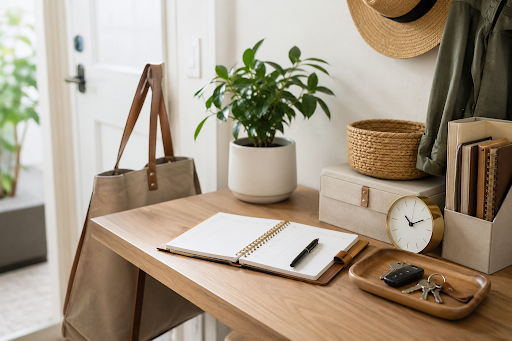
Use trays, hooks, baskets, or drawer organizers. The system does not need to be fancy. It only needs to be clear enough that everyone in the household knows where things belong. If an item is used every day, keep it somewhere easy to reach.
- Use One Reliable Daily Bag
Switching bags constantly can lead to forgotten items. Having one reliable daily bag helps keep essentials together.
Everyday tote bags are useful because they can carry many types of items: books, work supplies, groceries, gym clothes, or personal essentials. They are easy to grab when leaving the house and flexible enough for different routines.
A neutral canvas tote bag can fit casual outfits, errands, and workdays, making it easy to use repeatedly without overthinking. If needed, use small pouches inside the bag to separate keys, cosmetics, chargers, and receipts.
- Reset Small Spaces Daily
Instead of waiting for clutter to build up, reset small spaces each day. A five-minute reset can make a space feel calmer and easier to use.
Good areas to reset include:
- Kitchen counter
- Desk
- Entryway
- Bedside table
- Daily bag
- Coffee table
- Bathroom counter
Choose one or two areas that affect your daily routine the most. Keeping those spaces clear can make the whole home feel more organized. The goal is not deep cleaning; it is simply returning items to where they belong.
- Plan Tomorrow Before It Starts
At the end of the day, write down the top tasks for tomorrow. This reduces mental clutter and helps you begin with direction.
A simple plan might include:
- Three priority tasks
- One errand
- One reminder
- One item to prepare
- One appointment or deadline
Keep the list realistic. A short list that gets completed is more useful than a long list that creates pressure. Planning tomorrow also helps you notice conflicts or missing materials before the day begins.
Conclusion
Organization is built through small habits repeated consistently. By preparing before bed, giving items a home, using one reliable bag, resetting small spaces, and planning, everyday life can feel calmer, simpler, and easier to manage.

