
Table of Contents
5 Reasons You Should Do a Third-Party Vendor Risk Assessment
Most businesses rely on some type of a third-party vendor for a number of goods or services. One might outsource their data storage to a cloud provider, another could use an external payroll service to track and pay their employees, and a third might hire a company to manage their customer relations software and communication.
While these types of arrangements can make a company’s operations much easier, they can also introduce a number of factors that cannot be controlled by the company.
A vendor can potentially be a threat to the business if they gain access to sensitive information or processes, and they fail to deal with them responsibly in some way.
This is where a third-party vendor risk assessment comes into play, wherein, rather than assuming that their partners have everything under control, companies analyze the potential risks that vendors may introduce to their business.
Below are five reasons why it is important to do this.
1. Understand how vendors affect your cyber risk
Your organisation’s security is only as good as the security of those with whom you share information. If a third party has access to your systems or data, then the security practices of that vendor can impact your own organisation’s risk profile.
Think about a software provider hosting your customers’ data or a technology partner with privileged access to your systems and technology infrastructure. Any weakness in their security controls can present an entry point into your system.
A third-party risk assessment can help identify those areas for you.. You can drill down into specific areas, like the controls over privileged access, encryption, vulnerability management, incident response, and employee cybersecurity awareness. This information can also be leveraged by the leadership team and be incorporated into the board pack for the cyber risk and security posture assessment, identifying the most important exposure points, the controls implemented by the vendor, and the recommended course of action. When starting the evaluation process, focus on those vendors that have access to critical systems or data and do not prioritise all suppliers equally.
2. Identify AI and data governance risks
AI technologies are fundamentally changing how many businesses interact with their partners and the value chains in which they participate. Your company may already be using vendors who are using AI to improve customer service, detect financial fraud, find and recruit job candidates, report or produce information and intelligence, write documents, or make or suggest decisions.
This reliance on AI by vendors introduces a number of important questions. What data does the vendor collect, process, or store for use with AI applications? Where is that data used, and is it possible that the vendor applies the data to train its own AI models? Can the vendor provide the rationale for an AI recommendation or action? Is a recommendation or action inappropriate or inaccurate; if so, who is responsible for the recommendation or action?
A proper assessment of the vendor risks provides insight on these questions and allows an organization to ask the right questions in the first place. As far as wider-reaching efforts towards AI governance are concerned, responsible AI governance consulting can help link vendor-related issues to more general organizational subjects like data governance, accountability, transparency, and risk management for larger-scale AI governance initiatives.
When evaluating potential vendors, don’t fall into the trap of treating the vendor as just another
generic software provider. Pay close attention to their use of AI, the data they process, and the security measures they have put in place to oversee those processes.
3. Find security gaps preemptively.
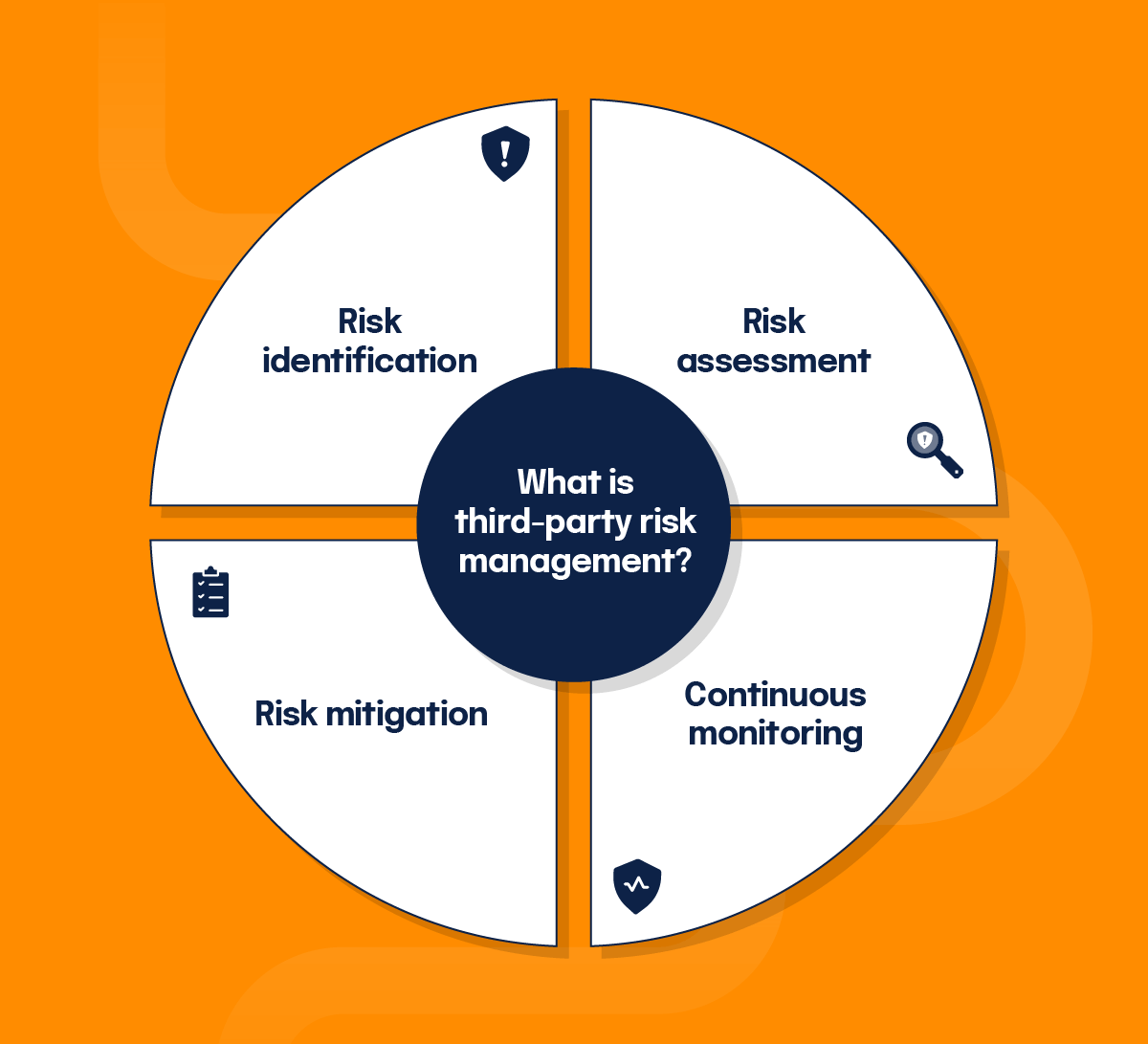
Vendor risk management (VRM) is the proactive process of identifying, assessing, and responding to the risks that a vendor can introduce to your operations, systems, or data.
Some vendors may have inadequate IT security policies, business continuity planning, data protection capabilities, incident response readiness, or employee security awareness practices, among other things, and in many cases, these issues may not be apparent until it is too late
By conducting a thorough VRM, you can ensure that you have the opportunity to address any unacceptable risks and potentially cancel the contract before signing.
Therefore, through independent assessment, you can identify what controls, procedures, and policies the vendor currently has in place to safeguard the information, systems, and infrastructure your organization will rely on and how supportive they are likely to be in the event of a security incident or disaster response.
Lastly, you need to perform a risk impact assessment to determine the level of risk your organization is willing to accept
A comprehensive risk assessment will undoubtedly identify areas of improvement, but it is essential to keep in mind that there is no ideal vendor. In most cases, companies just mitigate the unacceptable risk and proceed to the next vendor. Therefore, do not mistake VRM for the pursuit of perfection, set your requirements, analyze the information, assess the risks, determine the risk tolerance, and make a well-informed decision.
4. Protect your business from vendor-related disruption
A vendor doesn’t necessarily need to be hacked to cause you issues. If your payment provider has an extended outage, your logistics partner is unable to deliver, your cloud provider has an outage, or a significant supplier goes bankrupt – in all these cases, your business may be indirectly impacted.
A third-party risk assessment will enable you to understand the exposure and ask the right questions. Evaluate vendors’ disaster recovery plans, business continuity strategies, financial solvency, geographic risk concentration, subcontracting practices, and other factors.
Ask yourself the question: what would happen to us if a particular vendor became unavailable? For critical suppliers, you may want to develop alternative sourcing strategies, establish recovery plans, and negotiate more advantageous contractual terms.
The assessment will help you prioritize the vendors that are most critical to your business and that you should not let go of without having a transition plan. This analysis will help you decide which vendors are really critical for your company and cannot be lost and who have alternatives and can be negotiated.
5. Meet regulatory and contractual requirements
Third-party risks can create more than just security issues. Depending on your industry and the nature of the information, regulators, customers and business partners, may require that you demonstrate proper oversight of your vendors
Your contracts may also specify a requirement to implement specific security, privacy, compliance or reporting controls over third parties.
With a vendor risk assessment, you can fulfill this requirement by evaluating third parties against specific security or operational requirements.
For example, you can evaluate a vendor’s ability to protect information, comply with regulatory requirements, and meet security-related certifications, as well as report incidents, manage access controls, and follow contractual language. If there are gaps, the auditor can recommend remedies or suggest termination of the contract.
This is especially important if the vendor has access to any regulated or sensitive information. After all, you are still responsible for meeting your regulatory and compliance obligations, even if another organization is performing services on your behalf.
So, rather than waiting for an auditor or regulator to raise concerns about a third party, or your customers to ask you painful questions about how you manage and secure their data, it makes sense to build these assessments into your third-party management and oversight process from the very start.

