
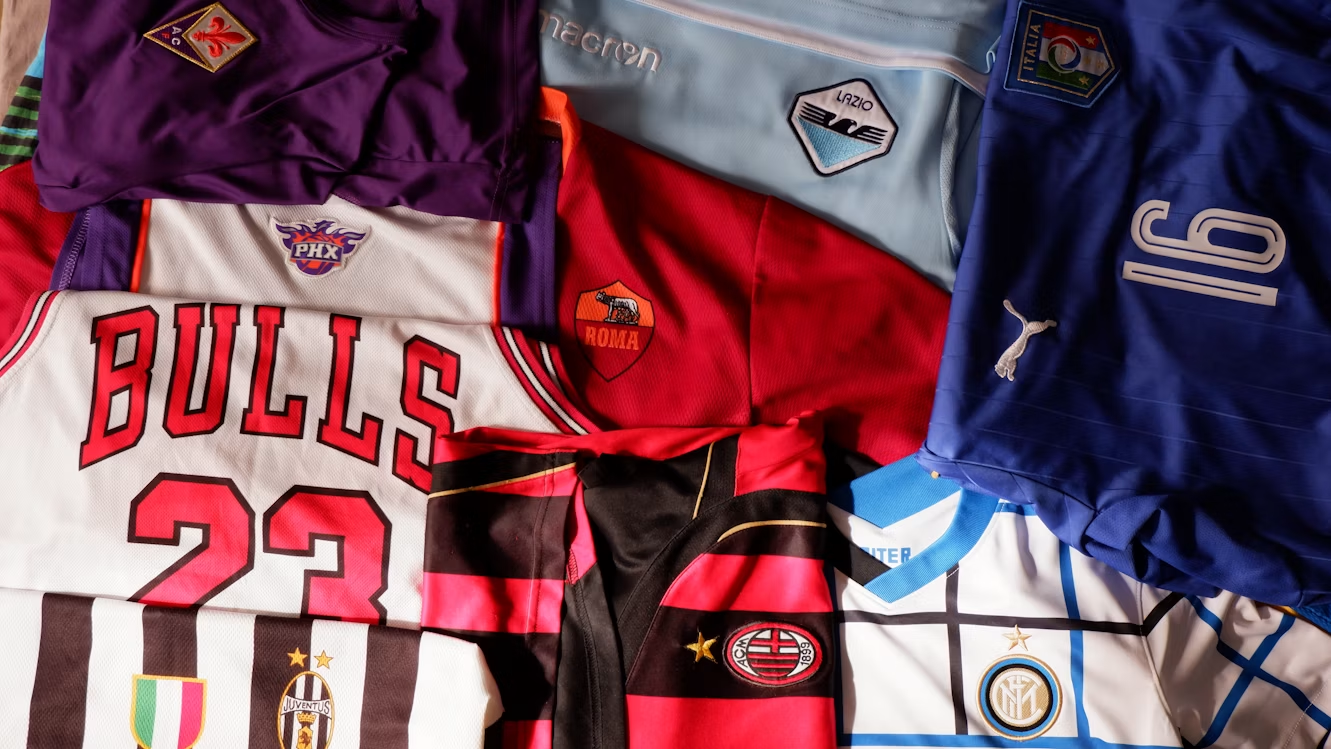
Vintage retro soccer jerseys are kind of authentic, historically significant football kit pieces that were usually made something around 15 to 20 years ago or even earlier. They can have real substantial value, not just because they look cool, but because they connect to iconic players, that very distinct 1990s aesthetic look, and also those limited runs, so collectors of sports memorabilia and fashion enthusiasts globally end up wanting them.
If you are looking for more information about Vintage Retro Soccer Jersey Supplier – SoccerKit go here right away
Over the past decade, the market for vintage retro soccer jerseys has basically grown a lot, it moved from a small niche hobby into a bigger segment of sports memorabilia plus fashion. These older garments point to particular moments in football history, they really show the technological changes, the style changes, and the broader cultural shifts inside the sport. If you learn the technical details, the background story, and the way pricing works, you get clearer insight into why these jerseys stay popular.
Sports apparel brands and football clubs keep referencing the older designs, which kind of proves the staying power of vintage looks. When you analyze the original items—anything from the heavy cotton shirts of the 1970s, to the bright synthetic templates of the 1990s—it becomes easier to see how athletic wear manufacturing evolved. That evolution is tied directly to how much retro kits get valued now in the secondary market too.
For organizations like Soccerkit and independent collectors, properly identifying and sorting vintage retro soccer jerseys needs technical know-how, like fabric composition, historical club crests, and manufacturer tags. This guide gives a complete walkthrough for classification, it also looks at the most historically important club and international kits, and it lays out technical criteria for authentication.
Table of Contents
What Defines a Vintage Soccer Jersey and Why Are They Popular?
What specific characteristics make a soccer jersey vintage?
A soccer jersey is generally classified as “vintage” when it is at least 15 to 20 years old. However, true vintage classification relies on specific manufacturing characteristics. Authentic vintage jerseys feature era-specific materials, such as early iterations of polyester or heavy cotton blends. Furthermore, the stitching of club crests, the integration of sponsor logos (often utilizing felt or raised flock materials rather than modern heat-pressed vinyl), and the physical manufacturer tags serve as primary identifiers for vintage authentication.
What caused the rise of retro soccer jerseys?
The increased demand for retro soccer jerseys comes from a bit of overlap between fashion movement and historical admiration, y’know. Basically, trends from the streetwear world have been mixing 1990s football vibes into newer fashion collections. And then, the football clubs themselves, they noticed too; they often put out modern kits that are pretty much built to mimic the older geometric patterns, plus those exaggerated oversized fits. So it’s this repeating cycle of taste where the original vintage retro soccer jerseys kind of shifted, from just functional athletic wear into something more like premium fashion goods.
How do collectors impact the vintage soccer jersey market?
Collectors kinda steer the economic valuation of the vintage soccer jersey market, by creating some sort of baseline price using rarity, condition, and past historical weight. If a jersey was worn in a particular championship final, it tends to get a noticeable premium because collector demand goes up, like fast. These enthusiasts then carefully document manufacturing oddities, cataloging rare variations and keeping overall market clarity. They also do deep archival work, which ends up feeding the info platforms like Soccerkit need, to authenticate properly and appraise historical football kits, in a way that actually makes sense.
Which Classic Football Shirts from the 1990s Remain Popular Today?
Who are the memorable teams and players associated with 1990s kits?
The 1990s produced some of the most distinct and recognizable soccer jerseys in history. The Arsenal “Bruised Banana” away kit (1991-1993) manufactured by Adidas remains a benchmark for geometric template designs. Similarly, the Newcastle United home shirt (1995-1997) featuring the Newcastle Brown Ale sponsor is heavily associated with player Alan Shearer and the team’s aggressive attacking style. The association between elite athletes and bold textile designs solidifies the historical importance of 1990s football kits.
How do reissues of iconic soccer jersey designs work?
Manufacturers often cash in on that old vintage hype , by making official reissues or sometimes these so-called “retro” remakes of classic football shirts. They copy the look of the original jersey, but they typically use newer production methods , and more recent synthetic materials. For collectors it matters a lot to tell apart a genuine 1990s release vs a modern reissue, because the originals usually keep a much higher monetary worth. Reissues are basically a cheaper route for fans who want the same visual vibe , without paying the steep price you’d expect for a true artifact.
Which sports brands dominate the vintage soccer jersey scene?
Adidas and Nike are easily the most prominent manufacturers in the vintage soccer jersey market , yet the 1990s had this really wide manufacturing scene. You had brands like Umbro Kappa, and Lotto putting out kits that felt pretty advanced for the time , also they looked noticeably striking. Kappa’s Kombat templates, which were kind of tight fitting, rolled out toward the late 1990s and it basically changed the way athletic wear moves through air, in a more streamlined sort of way. Meanwhile, Umbro kept leaning into oversized templates, and they went heavy on patterns, which ended up dominating English football for stretches of the decade.
What Are the Most Famous Vintage Soccer Jerseys in Club History?
Why are Manchester United’s vintage kits highly valued?
Manchester United’s vintage kits from the early 1990s, particularly those manufactured by Umbro and featuring the Sharp electronics sponsorship, are highly valued due to the club’s unprecedented domestic success during that era. The green and yellow Newton Heath lace-up kit (1992-1994) represents a specific homage to the club’s origins, making it a pivotal piece of football history. The valuation of Manchester United kits is directly tied to the historical narrative of the club’s dominance in the English Premier League.
What defines Barcelona’s classic football shirts?
Barcelona’s classic football shirts are defined by their strict adherence to the Blaugrana (blue and garnet) vertical stripes. Vintage Barcelona kits are particularly notable for their lack of commercial front-of-shirt sponsors, a tradition the club maintained until 2006. The 1998-1999 Nike centenary kit, featuring a halved design rather than stripes, is one of the most mechanically distinct and sought-after Barcelona jerseys, representing a significant divergence from their standard visual identity.
How did AC Milan establish their iconic jersey designs?
AC Milan established its iconic visual identity through the consistent use of thin red and black vertical stripes, commonly paired with the Opel sponsorship during the 1990s. The 1993-1994 home kit, manufactured by Lotto, is heavily associated with their UEFA Champions League victory. The structural consistency of AC Milan’s designs across multiple decades allows collectors to easily trace the evolution of fabric technology while maintaining a clear visual lineage.
How Have World Cup and International Jerseys Evolved Over Time?
How did national team jerseys change through the decades?
National team jerseys evolved from heavy, unbranded cotton shirts in the mid-20th century to highly engineered, lightweight synthetic garments. During the 1970s and 1980s, national federations began signing exclusive contracts with major manufacturers, leading to standard design templates. By the 1990s, brands utilized the World Cup as a global testing ground for advanced fabric technologies and highly complex sublimation printing techniques, fundamentally altering the visual presentation of international football.
Which notable World Cup vintage shirts are most sought after?
The West Germany 1990 home shirt, designed by Adidas, is widely considered one of the most structurally perfect and highly sought-after international kits in existence. Its geometric ribbon design across the chest set a standard for national team branding. Similarly, the Netherlands 1988 European Championship kit, featuring a complex geometric chevron pattern, remains exceedingly rare and commands top valuations in the secondary market.
What is the impact of players like Ronaldo and Messi on kit valuation?
The presence of historically significant players exponentially increases the financial valuation of specific vintage soccer jerseys. A Brazil 1998 World Cup kit with “Ronaldo 9” printed on the reverse holds significantly more market value than a blank version of the same shirt. Similarly, early career jerseys of Lionel Messi, specifically the 2004-2005 Barcelona home kit, serve as high-yield investment pieces. The specific typography and material used for player names and numbers during these eras must be authenticated to verify the premium valuation.
How Can Beginners Start Collecting Vintage Football Kits?
What are the best methods to start a vintage jersey collection?
Initiating a vintage jersey collection requires establishing specific parameters to maintain focus and manage costs. Collectors often choose a specific team, a particular era (such as the 1990s), or a specific manufacturer to guide their acquisitions. Utilizing specialized platforms like Soccerkit ensures access to verified authentic merchandise. Cross-referencing prospective purchases against digital databases and historical match photography provides a foundational layer of security against counterfeit products.
What are the top tips for identifying authentic vintage shirts?
Authentication of vintage retro soccer jerseys relies on several technical inspection points:
- Product Codes: Modern vintage replicas often fail to replicate the internal manufacturer product code tags found on the lower inner seam.
- Material Quality: Original 1990s polyester has a distinct weight and texture compared to the thinner synthetics used in modern counterfeits.
- Stitching: The embroidery on club crests and manufacturer logos on authentic vintage jerseys will feature clean, uniform stitching without connected threads between letters.
- Sponsor Application: Authentic vintage sponsors often utilized thick, raised flock material that ages uniquely, whereas counterfeiters typically use flat, modern vinyl heat transfers.
What is the future outlook for vintage soccer jersey collecting?
The future of vintage soccer jersey collecting indicates sustained market growth. As the definition of “vintage” shifts forward to include the early 2000s (such as the Nike Total 90 templates), a new generation of collectors will enter the market. The implementation of blockchain technology and digital authentication certificates may standardize the verification process, further stabilizing the market and ensuring the long-term preservation of these historical artifacts.
Securing the Legacy of Historical Football Apparel
Vintage retro soccer jerseys serve as tangible records of football’s technological and aesthetic evolution. The transition from basic cotton garments to complex, culturally significant fashion items highlights the global impact of the sport. By applying rigorous authentication standards and understanding the historical context of specific teams and manufacturers, individuals can effectively navigate the vintage market. Platforms like Soccerkit provide the necessary infrastructure to facilitate the acquisition, verification, and preservation of these iconic football kits.

