
Table of Contents
Key Takeaways
- Fill your fuel tank and add a stabilizer to prevent condensation and degradation.
- Keep your battery healthy by disconnecting or using a trickle charger.
- Inflate tires and consider jack stands to avoid flat spots.
- Thoroughly clean and protect the car, inside and out, to prevent corrosion and pests.
- Cover your car with a breathable, well-fitted cover for dust and moisture protection.
Preparing your vehicle for storage as the temperatures drop is not just about parking it and walking away. Without taking the right precautions, winter conditions can wreak havoc on your vehicle’s components, leaving you with costly repairs come spring. From battery life to tire health, there are several crucial steps every car owner should follow before storing their car for the winter. An often-overlooked but critical step is understanding your options for winter storage coverage for your car. Ensuring you’re properly covered can provide peace of mind while your car is off the road.
Whether you’re storing a cherished summer vehicle or simply want to protect your daily driver, knowing the right techniques means your car will stay in top shape—and ready to drive—after the snow melts. From fuel stabilization to pest prevention, these tips protect your car’s mechanical and cosmetic components throughout the coldest months.
Fuel System Preparation
One of the most important aspects of winter car storage is preparing the fuel system. Begin by filling your fuel tank to prevent condensation from forming, which can lead to rust inside the tank and lines. Adding a high-quality fuel stabilizer is also important. Stabilizers help maintain the integrity of your gasoline and prevent the formation of gum or varnish that can clog your injectors and carburetors. Once you add the stabilizer, run the engine for a few minutes to circulate it through the entire system. This small step can save you from bigger headaches later.
Battery Maintenance
Car batteries are particularly vulnerable during periods of inactivity, especially in cold temperatures. To avoid a dead battery, it’s wise to disconnect it entirely or, better yet, use a trickle charger or a battery maintainer. This device delivers a small, steady charge to keep the battery healthy without overcharging. If removing the battery, store it in a clean, dry location, ideally off the concrete, as extreme cold or moisture can sap its charge. Consumer Reports provides additional insights on battery maintenance during winter storage.
Tire Care
Improperly stored tires can develop flat spots, requiring replacement sooner than expected. Be sure to inflate your tires to the manufacturer’s recommended pressure before long-term storage. For extended storage—over a month—consider putting your car on jack stands, so the tires and suspension components aren’t under constant pressure. This step helps ensure the tires’ shape stays intact and the suspension isn’t stressed throughout the winter.
Cleaning and Protection
Before putting your vehicle away for winter, a thorough wash and wax are essential. Dirt, salt, and road debris left on your vehicle can cause corrosion and rust during storage. Waxing adds a protective barrier against moisture. Inside, vacuum and remove any clutter, especially food wrappers, as these attract pests. Don’t forget to lubricate door hinges and weatherstripping to guard against the freezing temperatures that cause them to stick or crack. According to Consumer Reports, these simple maintenance steps make a big difference in preserving your vehicle’s exterior and interior.
Using a Car Cover
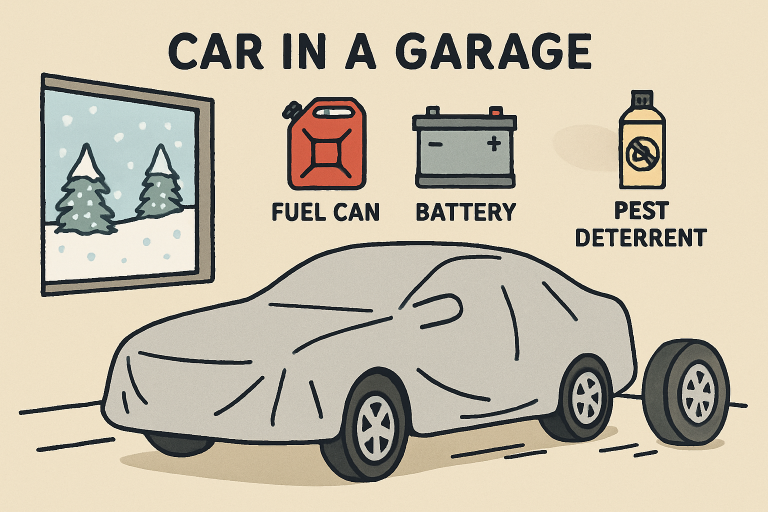
A high-quality, breathable car cover is your car’s best friend in storage, whether you keep it in a garage or outside. Breathable covers let moisture escape while shielding your car from dust, dirt, and accidental scratches. The material should be snug to avoid flapping in the wind, which can potentially scratch the paintwork. Avoid using plastic tarps, as they trap condensation and eventually cause rust or mildew.
Fluid Checks
Check and, if necessary, top off all crucial fluids: engine oil, coolant, brake, and windshield washer fluid. Changing the oil before storage ensures contaminants aren’t sitting on engine components for months, which can lead to corrosion. The correct coolant mixture is also vital, as it will prevent any remaining water in the radiator or engine from freezing and causing damage. For brake fluid, ensure it’s fresh and at the right level to minimize moisture absorption.
Preventing Pest Infestations
Winter provides an open invitation for rodents and insects to find warmth in your stationary vehicle. To deter unwanted guests, block potential entry points, such as the exhaust pipe and air intakes, with steel wool or aluminum foil. Place mothballs or dryer sheets inside the car to deter mice, but remember to remove them before driving again. A combination of cleanliness and physical barriers is the best pest deterrent.
Avoiding Parking Brake Engagement
Leaving your parking brake engaged for months can cause the pads to stick to the rotors or drums, leading to expensive repairs or a stuck brake come spring. Instead, use wheel chocks to secure your vehicle. Chocks prevent unwanted rolling without risking damage to the brake system and are easy to remove once you’re ready to drive again.
Following these steps will help ensure your vehicle remains safe, reliable, and ready to use once winter is over. Keeping your car protected and well-maintained while in storage not only saves time and money but also extends your vehicle’s overall life and value.

