
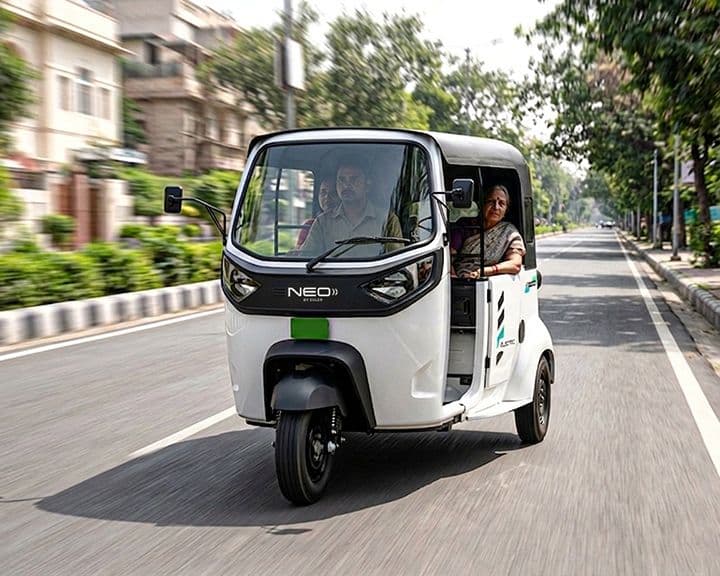
Electric three-wheelers stopped being a niche bet a while ago. By June 2026, FADA’s retail numbers showed electric models crossing 64% of all three-wheeler registrations in India, meaning more buyers are now choosing electric than petrol, diesel, or CNG combined. But market momentum doesn’t make the buying decision any easier for the person actually signing the loan papers. If you drive for a living, or you’re buying for a fleet, the wrong choice costs you real money every single day you’re on the road.
Most buying guides for this category read like spec sheets. This one is built around the actual decisions that separate a good purchase from a regretted one, the kind of things dealers don’t always volunteer.
Table of Contents
1. Match the Vehicle Category to Your Route, Not Your Budget
Before you compare a single brand, figure out which regulatory category you actually need. This gets skipped constantly, and it’s the single biggest source of buyer’s remorse.
L3 e-rickshaws: Capped around 25 km/h, no driving license required in most states, lower upfront cost (roughly ₹1.5–2 lakh), and they run on smaller lead-acid or lithium packs. Good fit for short, flat, low-speed routes, last-mile feeder service, gated colonies, semi-urban stretches.
L5 e-autos: Higher top speed (usually 45–60 km/h), require a valid driving license and full RC/insurance like any motor vehicle, and are built for longer commercial shifts, ride-hailing, all-day passenger service, mixed city traffic.
If you buy an L3 rickshaw and then try to run it on a highway-adjacent route with sustained speed, you’ll be disappointed by the performance. If you buy an L5 auto for a slow, short colony route, you’re paying for capability you’ll never use. Ask the dealer to state the category in writing before you go any further.
2. Separate ARAI-Certified Range From Real-World Range
Every spec sheet lists an ARAI-certified range, and that number is tested under fixed lab conditions, no passenger load, ideal temperature, controlled speed. It’s a useful reference point, not a promise.
Real-world range typically runs 20–30% lower once you factor in driver weight, three passengers, AC-less summer traffic, and Indian road conditions. As an example, one current-generation e-auto model rated at 261 km ARAI is marketed at 200+ km real-world range-and that gap is fairly typical across the segment, not a flaw specific to one brand.
The fix: ask for the real-world figure, not the certified one, and compare it against your actual daily distance plus a buffer. If you drive 120–150 km a day, a vehicle rated for “150 km real-world” leaves you no margin for detours, traffic, or a slightly degraded battery two years in.
3. Check the Battery Chemistry, Not Just the kWh Number
Two vehicles with the same kWh rating can behave very differently over three years. Lithium-ion (especially LFP-lithium iron phosphate) packs cost more upfront but hold up better over repeated fast charging and typically carry longer warranties (five to six years or 150,000–175,000 km is now common on L5 models). Lead-acid packs are cheaper initially but degrade faster and need more frequent replacement, which erodes the savings you thought you were getting.
Ask specifically: what’s the battery warranty in years and kilometers, and is there an IP-rating for weather/water protection (IP67 is now a reasonable benchmark for monsoon-prone routes)?
4. Run the Charging Math Against Your Actual Shift Pattern
Charging time isn’t just a spec-it’s lost earning time. A 3–3.5 hour fast charge (10% to 80%) sounds fine until you realize that’s roughly a third of a working shift if you’re not charging overnight.
Work out where you’ll actually charge:
Overnight home/depot charging: Charging time matters less; you’re topping up while you sleep.
Midday top-ups at a public or fleet station: Fast-charging capability becomes non-negotiable, and so does proximity to a working charger — not just one listed on an app.
Fleet operators in particular should ask about charger compatibility across multiple vehicles, not just the one they’re buying today.
5. Do the Cost-Per-Kilometer Comparison Yourself
This is the number that actually decides whether the switch pays off, and it’s worth calculating with your own local rates rather than trusting a brochure’s assumption.
A rough working example: a 9.6 kWh battery giving around 130 km of real-world range costs roughly ₹75–₹85 to fully charge at typical commercial electricity rates of ₹8–9/unit-working out to about ₹0.60–0.65 per km in energy cost alone. A comparable CNG auto, at CNG prices commonly in the ₹75–90/kg range and roughly 25–30 km/kg mileage, lands closer to ₹2.5–3.5 per km. Petrol autos run higher still.
That gap is exactly why FADA and industry analysts point to total cost of ownership-not government incentives-as the primary reason drivers are switching now. Electric three-wheelers auto reportedly touched over 31% of all EV sales in India in FY2025–26, and the growth is increasingly coming from rural and semi-urban markets where every rupee per kilometer matters more, not less.
Don’t stop at energy cost, though. Add in:
Estimated service/maintenance cost per year (electric drivetrains generally cost less to maintain — fewer moving parts, no oil changes — but battery replacement is the wildcard down the line)
Insurance premium
Financing/EMI cost if you’re not paying upfront
6. Check What Subsidy Actually Applies to You — Rules Changed in Late 2025
This is a common source of outdated information, because a lot of it circulating online is stale. As of late December 2025, the central government discontinued the demand incentive for L5-category electric three-wheelers under the PM E-DRIVE scheme, after the segment hit its allocated unit target. If you’re buying an L5 e-auto today, don’t assume a central subsidy is baked into the sticker price, ask the dealer directly and get it in writing.
Smaller L3 e-rickshaws and e-carts may still have limited central support, and several states continue to offer their own purchase incentives, road-tax waivers, or registration benefits independent of the central scheme. These vary by state and change without much notice, so the only reliable step is calling your state transport department or checking the current notification before you finalize a price, not relying on a blog post (including this one) for the exact number.
7. Look at Motor Power and Torque in the Context of Your Terrain
A 9 kW motor with 60–65 Nm torque is fairly standard in this segment now and handles flat urban roads and moderate loads without issue. If your route includes inclines, unpaved stretches, or you’re regularly carrying a full passenger load, ask specifically about gradeability (look for 25–30% gradeability as a reasonable benchmark) and whether the suspension setup, hydraulic front, trailing-arm rear is common, is rated for continuous heavy use rather than occasional load.
8. Warranty Terms and Service Network Matter More Than the Brochure Suggests
For a personal vehicle, a warranty is a safety net. For a commercial vehicle that’s your income source, the service network matters just as much as the warranty length. A six-year battery warranty is worthless to you if the nearest authorized service center is 40 km away and every breakdown costs you two lost working days.
Before buying, ask:
How many service centers does the brand have in your specific city or route area, not just the state?
What’s the average turnaround time for a battery or motor issue?
Is there a loaner vehicle or breakdown support option for commercial buyers?
9. Check Resale Value and Brand Track Record, Not Just the Launch Pitch
The electric three-wheeler market has matured enough now that resale data exists for vehicles that have been on the road three-plus years. A brand with a longer commercial-vehicle track record (rather than one that recently pivoted from another segment) generally holds resale value better, because used-vehicle buyers trust proven reliability over a good launch presentation. Ask around in driver communities and local dealer networks — this is one area where word-of-mouth is more reliable than a spec sheet.
A Quick Pre-Purchase Checklist
- Confirm the vehicle category (L3 vs L5) matches your actual route and license status
- Get the real-world range figure in writing, not just ARAI-certified
- Confirm battery chemistry, warranty (years + km), and IP rating
- Calculate charging time against your shift pattern and access to charging points
- Run your own cost-per-km comparison using local electricity/fuel rates
- Verify current subsidy eligibility directly with the dealer and your state transport department
- Check gradeability and suspension rating against your actual terrain
- Map the nearest service centers and average repair turnaround time
- Ask about resale value and talk to existing owners/drivers, not just the dealer
The Bottom Line
There’s no single “best” 3 seater electric auto-rickshaw, there’s a best one for your specific route, shift length, and budget. The vehicles that disappoint buyers almost always fail on one of the boring, unglamorous checks above: a range gap nobody flagged, a service center that’s too far away, or a subsidy that quietly disappeared between when the ad was written and when the sale happened. Do the math with your own numbers before you sign anything, and you’ll avoid most of the regret stories that show up in driver forums six months after purchase.
