
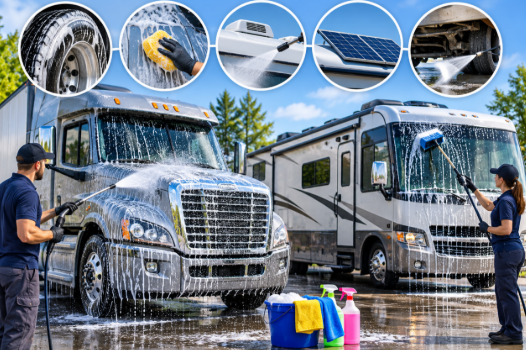
Keeping a large vehicle clean requires more planning than washing a typical passenger car. Trucks, recreational vehicles, vans, and other oversized vehicles have larger surface areas and may include equipment, accessories, and hard-to-reach areas that need extra attention.
Regular washing is particularly useful for vehicles that spend considerable time on highways, gravel roads, construction areas or recreational routes. A suitable cleaning routine can help remove road grime before it becomes difficult to manage.
Table of Contents
Why Large Vehicles Need Special Attention
A larger vehicle naturally collects more dirt because it has more exterior surface exposed to the environment. Lower panels, wheel arches, rear sections and underbody areas can become heavily coated with mud, dust and road residue.
Recreational vehicles may also have awnings, ladders, storage compartments and other exterior components that require consideration before washing.
Before entering a wash facility, owners should check the clearance requirements and ensure external equipment is properly secured.
Road Conditions Affect Cleaning Frequency
How often a truck or RV should be washed depends heavily on where and how it is driven.
Highway travel can expose vehicles to insects, dust and road film. Gravel roads may leave a layer of fine dust on the exterior, while muddy routes can cause much heavier contamination.
During winter, road salt and slush can collect around lower body panels, wheels and other exposed areas.
Truck owners in the area may search for ‘truck wash Calgary, Alberta’ to find a facility equipped to handle larger commercial vehicles.
Preparing an RV Before Washing
RV owners should prepare the vehicle before starting the washing process.
Securely close windows, doors, and exterior storage compartments. Retract awnings and secure loose equipment according to the manufacturer’s instructions.
It is also worth checking the exterior for loose trim, damaged seals, or peeling paint. Existing damage may require extra care when using pressurized water.
Taking a few minutes to prepare can help reduce the risk of problems during washing.
Cleaning Areas That Collect the Most Dirt
The lower portions of a truck or RV often receive the most road spray. Wheel arches, mudguards, bumpers and lower doors can accumulate significant amounts of dirt.
These areas should receive appropriate attention during washing. However, aggressive scrubbing isn’t always necessary and can move abrasive particles across painted surfaces.
Allowing cleaning solutions and water to loosen contamination before cleaning can make the process more effective.
Why Regular Washing Matters
Leaving road grime on a large vehicle for extended periods can make later cleaning more difficult. Regular washing helps prevent excessive accumulation.
For frequently operating trucks, a consistent cleaning routine can be particularly useful. Recreational vehicles may require different scheduling depending on whether they are used regularly, seasonally or primarily for long trips.
Cleaning before extended storage can also be beneficial. Removing dirt and organic residue before storing an RV lets the owner inspect the exterior and identify areas that may need maintenance.
Don’t Forget the Undercarriage
The underside of a large vehicle can collect mud, salt and road debris even when the upper exterior appears relatively clean.
An appropriate underbody rinse can help remove some of this buildup, particularly after winter driving or travel on muddy roads.
Use high-pressure equipment responsibly. Avoid applying excessive pressure to sensitive mechanical components, electrical connections, or damaged areas.
Interior Cleaning Is Important Too
Large vehicles often have substantial interior spaces that require regular attention. Trucks may accumulate dirt in footwells, while RVs can collect dust, food debris and other materials during extended trips.
Vacuuming floors, cleaning surfaces, and promptly removing rubbish can help maintain a more comfortable interior.
For RVs, cleaning before storage is particularly useful because food particles and rubbish can attract pests.
Choosing a Suitable Washing Schedule
No universal schedule applies to every truck or recreational vehicle. Consider the vehicle’s mileage, road conditions, weather and frequency of use.
A vehicle that regularly travels through muddy or dusty environments may require more frequent washing than one used occasionally on clean paved roads.
The most useful approach is to monitor the vehicle’s condition rather than waiting until contamination becomes excessive.
Final Thoughts
Trucks and recreational vehicles require thoughtful cleaning due to their size, design, and exposure to various road conditions. Preparing the vehicle properly, focusing on heavily contaminated areas, and choosing facilities with suitable clearance, such as a 24-hour car wash, can make washing more manageable.
Regular cleaning can also reduce the buildup of heavy deposits that accumulate over time. By establishing a routine based on driving conditions and vehicle use, owners can keep larger vehicles cleaner and make ongoing maintenance easier.

