
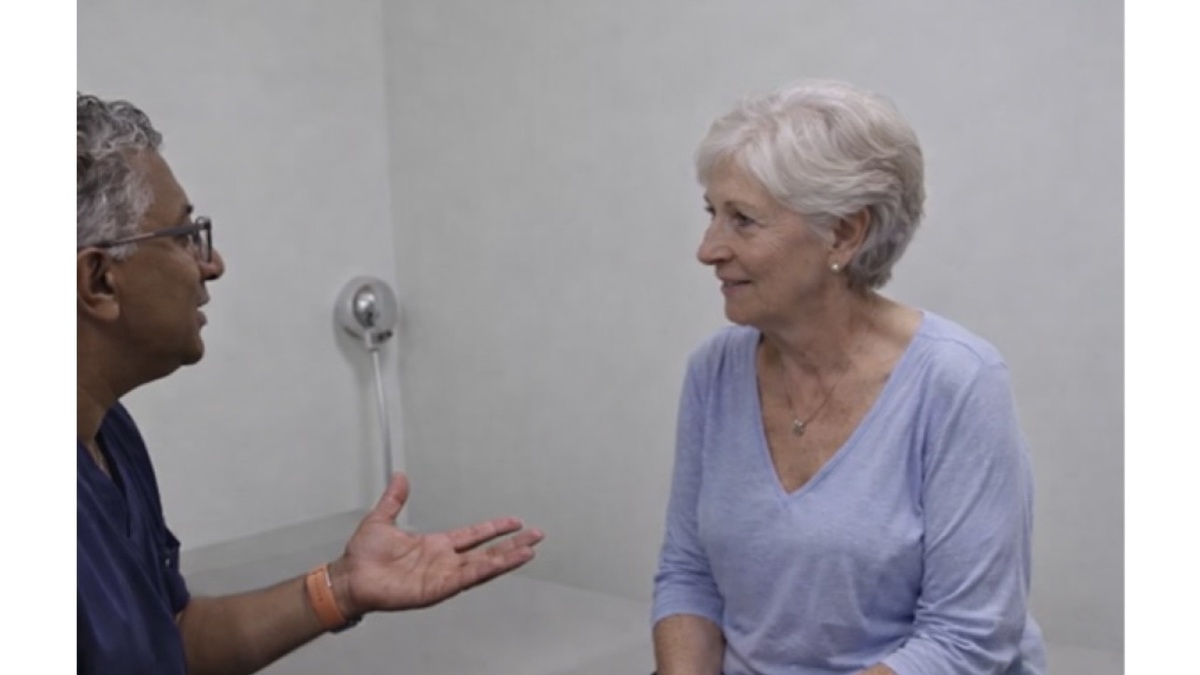
When you research a spine specialist, the biography is often your first introduction. Training institutions, professional titles, and academic achievements appear together, but figuring out how those details fit into a physician’s career can take a closer look.
Dr. Kamal Woods’s background includes neurosurgery training, a specialized spine fellowship, university teaching, business education, and leadership at Vertrae® in Miamisburg, Ohio.
The following questions explore that professional history and its connection to the practice. Think of this as a readable introduction before a consultation: useful context, without a pop quiz on medical abbreviations.
What Is Dr. Woods’s Role at Vertrae?
Vertrae identifies Dr. Woods as a board-certified neurosurgeon and a founder of its comprehensive spine care practice and outpatient surgery center. His role connects clinical care with leadership of both organizations.
The practice provides office-based evaluation and nonsurgical services, while the separate surgery center provides outpatient surgical care. The facilities are located side by side in Miamisburg.
The professional profile available through Vertrae®: Kamal Woods, MD, MBA, FAANS introduces the physician behind these services. For prospective patients, it is a starting point for learning about his background and the organization he leads.
When arranging care, ask which facility you will visit and what the appointment involves. Understanding the setting can make the next step feel more straightforward.
Where Did He Complete His Medical Training?
Dr. Woods earned his medical degree from Loma Linda University School of Medicine. His postgraduate education included a general surgery internship and a neurosurgery residency at Loma Linda University Medical Center.
He also completed a Combined Orthopedic and Neurosurgery Spine Fellowship at Cedars-Sinai Medical Center in Los Angeles. This fellowship is a distinct component of his published training history.
Vertrae lists his board certification through the American Board of Neurological Surgery. Together, these details identify the medical education and specialty preparation documented in his biography.
A useful question during a consultation is how his experience relates to the condition being evaluated. That conversation connects the background you have researched with the reason you are seeking care.
What Academic Experience Appears in His Biography?
Dr. Woods previously served as an assistant professor in the Department of Neurosurgery at Loma Linda University Medical Center. His published curriculum vitae also lists textbook chapters, peer-reviewed papers, and scientific meeting presentations.
The topics include spine surgery techniques and neurological conditions. These entries show an academic dimension to his professional history alongside clinical and organizational roles.
For someone reading a biography, a publication record offers subjects to explore rather than a shortcut to predicting treatment results. Each paper or chapter has its own purpose and scope.
You can ask how medical evidence informs a proposed treatment. There is no need to arrive speaking fluent research terminology; a clear explanation should help you understand the reasoning behind a recommendation.
Why Does His Biography Include an MBA?
Dr. Woods earned an MBA from Johns Hopkins Carey Business School. His biography also describes hands-on involvement in building Vertrae, including scheduling, marketing, finances, and entering patient referrals.
These details concern the business and administrative responsibilities of operating a medical practice. They add context to his leadership role.
The background of Dr. Kamal Woods therefore extends beyond specialty training and surgical work. It includes education and experience related to managing the organization that supports patient services.
For patients, this part of the biography can prompt practical questions. Who coordinates appointments? How should records be submitted? Where should follow-up questions go? Those everyday details are worth understanding alongside the medical discussion.
How Does He Describe His Approach to Patients?
Vertrae’s published profile emphasizes listening to patients’ concerns and goals and explaining procedures in understandable language. These are the communication priorities described by the practice.
That emphasis gives prospective patients a useful opening: explain what brought you in and what you hope to understand. Daily limitations and personal concerns belong in the conversation.
If an explanation feels unclear, ask for different wording. A question such as “What does that mean for my situation?” can bring an unfamiliar term back to something concrete.
The biography introduces a stated approach. The consultation is where patients can discuss their own needs, ask questions, and learn about the reasoning behind available options.
Does His Surgical Background Describe All the Practice’s Care?
Vertrae describes both surgical and nonsurgical services, including evaluation, diagnosis, and in-house physical therapy. Its surgical offerings include minimally invasive and robotic-assisted spine procedures.
For readers exploring Dr. Woods’s biography, this broader service description provides context. His leadership involves a comprehensive spine practice as well as a surgery center.
Ask which options relate to your evaluation and what each would involve. The available services provide topics for discussion.
Getting to Know the Physician Before Your Visit
Dr. Woods’s biography connects medical training, academic contributions, business education, and practice leadership. Understanding those elements can help you prepare focused questions and approach a consultation with clearer expectations about the physician and Vertrae’s services. Use that introduction to begin a conversation about your concerns, relevant options, and next steps.

