
Types of Plumbing Pipes: A Practical Guide
Every plumbing system relies on pipe, but not every pipe does the same job. Water supply lines, drainage systems, and gas lines each call for different materials, and using the wrong one can mean a system that fails code, corrodes early, or simply doesn’t hold up under pressure. Here’s a breakdown of what’s actually out there and where each type fits.
Table of Contents
Water Supply Pipes vs Drainage Pipes
Plumbing systems split into two broad categories: pressurized water supply lines and gravity-fed drain, waste, and vent (DWV) lines. Supply pipes carry water under pressure to fixtures and appliances, so they need to handle both temperature and pressure without failing. Drainage pipes, by contrast, just need to move wastewater downhill and vent gases safely — they’re not built to handle pressure at all. Mixing the two up is one of the most common mistakes on a job site, since a pipe rated for drainage will crack or burst if it’s pressed into supply-line duty. Sourcing the correct plumbing pipes for each system from the start avoids that problem entirely.
Common Types of Plumbing Pipes
PVC
Remains the default choice for a huge share of residential work. It’s low-cost, holds up well against corrosion, and doesn’t demand much specialized skill to cut and join. Its main constraint is temperature: it isn’t built for hot water, so its role stays limited to cold-water supply and general drainage.
CPVC
A modified version of PVC engineered to survive higher heat. It comfortably carries both hot and cold water, costs somewhat more than standard PVC while still landing below copper, and being a rigid material rather than a flexible one, it tends to require additional joints on layouts with tight turns.
PEX
The flexible alternative, and that flexibility is the real advantage — a run can bend around obstacles instead of needing a fitting at every turn, which cuts down the number of places a leak could start. It also holds up better against corrosion and mineral scale than rigid pipe types. The tradeoff is sunlight exposure: PEX breaks down under UV, so outdoor use is off the table.
Copper
The material to reach for when longevity is the priority — installations frequently stay in service for fifty years or more, and copper handles hot and cold water equally well without special accommodation. That durability comes with a cost premium, both in raw material price and in the labor-intensive soldering process each joint requires.
Galvanized Steel
Formerly the standard for residential water supply, largely abandoned for that role once internal corrosion problems became well understood. It hasn’t vanished entirely, though — it’s still common in gas piping and turns up regularly in buildings that predate the shift to plastic and copper.
Cast Iron
Valued for its weight-driven durability and its ability to dampen the sound of running water, cast iron is mostly found in drainage and sewer applications, particularly in commercial buildings and homes old enough to predate modern piping standards. Its downsides are straightforward: it’s heavy to work with and rusts over extended use.
Fittings and Connections
Choosing the pipe is only half the job — fittings determine how sections join, branch, and change direction:
- PVC — joined with solvent cement for permanent connections
- PEX — joined with crimp rings or push-to-connect fittings
- Copper — joined by soldering with pipe flux
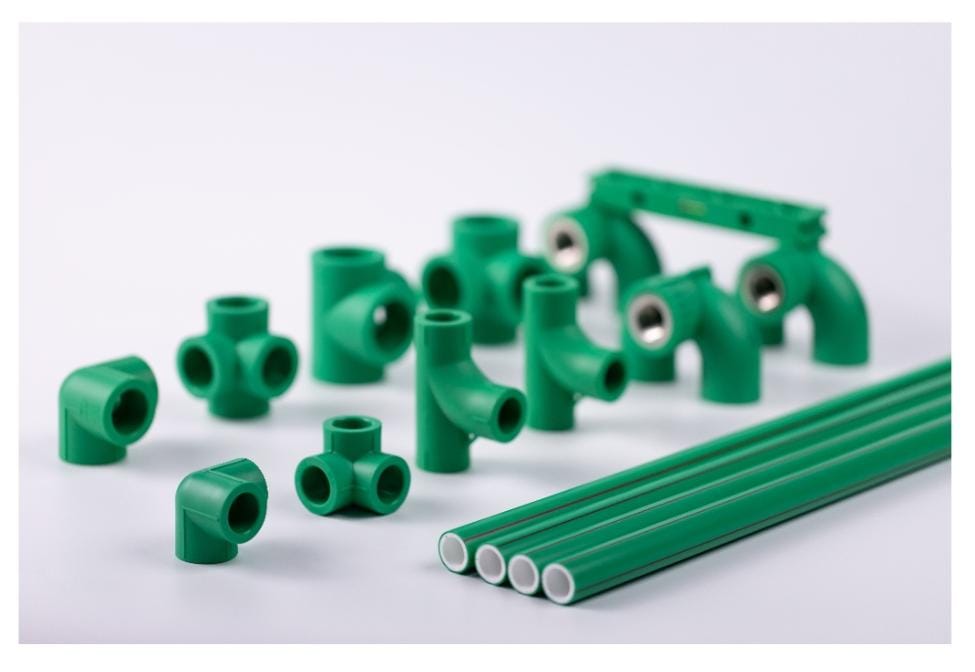
Because PVC is so widely used across both supply and drainage work, having the right selection of pvc pipes fittings — elbows, tees, couplings, and adapters — on hand makes it far easier to complete a run without switching materials mid-job or waiting on a missing part.
Choosing the Right Pipe for the Job
There’s no universal “best” pipe — the right choice depends on whether it’s carrying pressurized water or gravity-fed waste, what temperatures it needs to handle, and whether it’s going indoors, outdoors, or underground. Matching the pipe type to the specific application, and making sure the fittings are compatible with it, is what keeps a plumbing system reliable for decades rather than years.
