
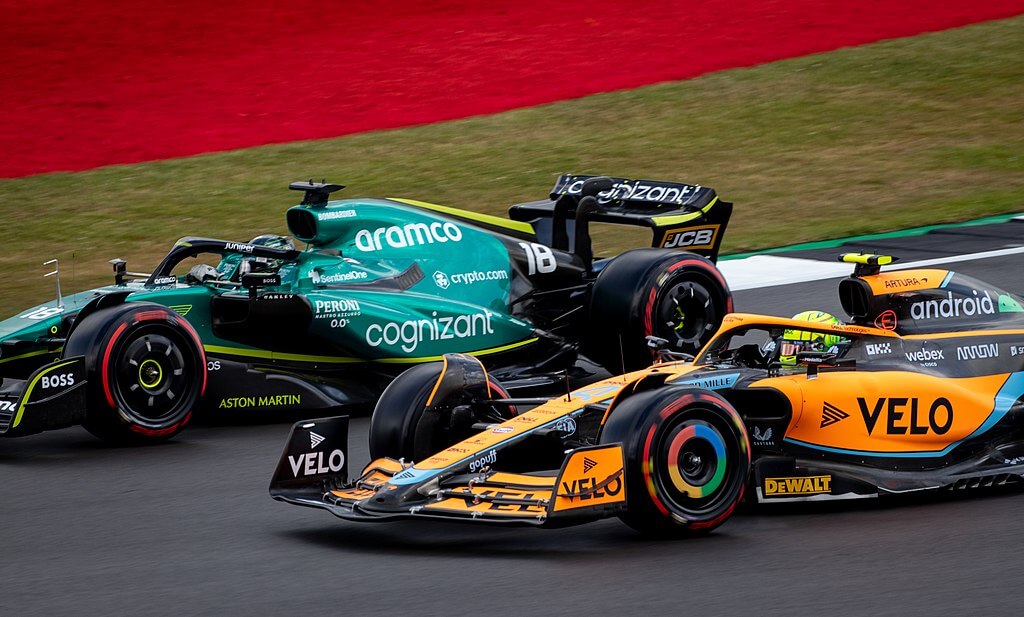
Global motorsport has evolved into one of the most powerful marketing platforms for brands seeking international visibility, premium audience access, and measurable returns. What was once limited to logo placements on race cars has now transformed into a sophisticated, multi-layered ecosystem driven by data, digital amplification, and strategic partnerships.
A motorsport sponsorship portfolio is no longer a single-deal investment; it is a carefully structured, multi-series strategy that enables brands to activate across platforms such as Formula 1, MotoGP, Formula E, and endurance racing championships. This shift is largely driven by changing audience behaviour, in which fans engage not just through live races but also across streaming, social media, and immersive brand experiences.
Managing multiple racing sponsorships without a structured approach often results in fragmented visibility and underutilized assets. This is why many global brands now prefer to hire sports marketing consultant for motorsports sponsorships initiatives to build a scalable, data-driven partnership strategy across Formula 1, MotoGP, Formula E, and endurance racing.
This shift is largely driven by changing audience behaviour, in which fans engage not just through live races but also across streaming, social media, and immersive brand experiences.
By combining industry expertise, global networks, and data-driven insights, motorsport consultants help brands design and manage scalable sponsorship portfolios that deliver long-term business value rather than just brand exposure.
In this guide, we break down how modern motorsport partnership management works, why multi-series strategies outperform traditional approaches, and how brands can build a future-ready sponsorship portfolio that drives measurable business impact.
Table of Contents
What Is a Motorsport Sponsorship Portfolio and Why Does It Matter for US Brands?
A motorsport sponsorship portfolio is the structured collection of a brand’s active racing partnerships across one or more racing series, including Formula 1, MotoGP, Formula E, WEC (World Endurance Championship), and WorldSBK. Rather than treating each deal in isolation, portfolio management means looking at all of them together: how they complement each other, how they serve different markets, and how their combined value exceeds what any single deal could deliver on its own.
For US brands, motorsport is no longer a niche play. According to SponsorUnited’s 2024 Formula 1 Report, F1 teams generated $2.04 billion in sponsorship revenue in 2024, and 34% of new sponsorship for the 2025 season came from US companies. The global motorsport sponsorship market is projected to reach $5.9 billion by 2030, growing at a CAGR of 6.9%.
The shift is structural. Liberty Media’s expansion of F1 into three US race weekends (Miami, Austin, Las Vegas), the growth of American fanbases in MotoGP and Formula E, and the rise of electric racing series have turned global motorsport into a strategic marketing platform, not just a branding exercise.
Why Managing Multiple Racing Sponsorships Requires a Dedicated Strategy
It is difficult enough to handle one sponsorship deal. The coordination required to manage several racing sponsorships across various series, continents, and commercial arrangements is not one that most in-house marketing departments are designed to handle.
This is what makes the management of motorsport partnerships uniquely challenging:
- Fragmentation by calendar: In 2025, F1 will conduct 24 races in 21 countries. MotoGP spans 20 rounds. WEC has operations on six continents. It actually requires operational bandwidth to maintain brand activations that are on-message and consistent across all these demands.
- Different deal structures: Title sponsorships, co-sponsors, technical partners, and official supplier deals have different packages of assets, rights to hospitality and activation requirements.
- ROI measurement complexity: Impression counting, media value, digital engagement, social reach, B2B activation outcomes, and employee engagement are separate data streams that need to be consolidated into a single performance picture.
- Rights conflict: A brand that retains F1 and MotoGP licenses simultaneously must tread carefully around category-exclusivity provisions to avoid intra-brand conflicts.
- Leverage in negotiation: A consultant controlling a portfolio of brands across several series has much greater bargaining power with the teams and series organizers than a single brand does.
This has led US firms that are serious about motorsport to increasingly consider engaging independent sports marketing consultants with specialist motorsport knowledge, rather than general-purpose agencies.
What Is the Role of a Sports Marketing Consultant in Motorsport Sponsorship?
A motorsport marketing consultant is an operational/strategic liaison between a brand and the racing world. They are not a mere deal brokers but long term partners enabling the brands to build, run and maximize their portfolio of motorsport sponsorship activities over time.
Their fundamental functions are:
1. Sponsorship Strategy Development
A consultant evaluates the brand’s objectives, target markets, competitor activity, and budget before any deal is signed. This is aimed at determining which of the series, F1, MotoGP, Formula E, WEC, or WorldSBK, best fits the brand message and brand audience.
2. Identification and Negotiation of Rights Holder.
Consultants have active contacts with teams, series organizers, and drivers across all major racing series. This enables them to spot the appropriate opportunity at the appropriate price point – and bargain conditions that a brand could never accomplish on its own.
3. Motorsport Partnership Management
After agreements are made, the consultant manages the day-to-day relationship, ensuring assets are delivered on time, hospitality is implemented correctly, and the brand’s logo is present on digital, trackside, and broadcast media.
4. Activation Planning and Implementation.
The car logo is just the beginning, not the end. Consultants come up with activation plans – B2B hospitality programmes, content creation, social media integration, retail tie-ins – that transform a passive sponsorship into an active marketing property.
5. ROI Analysis and Performance Reporting.
Consistent media value reporting, digital impressions reporting, hospitality performance reporting and commercial KPIs enable brands to make internal spending decisions and informed decisions regarding renewals and expansions.
How to Build a Multi-Series Motorsport Sponsorship Portfolio That Delivers ROI
To develop a motorsport partnership management strategy, sequencing is necessary. The majority of brands do not begin with five parallel sponsorships; they add to their portfolio throughout their experience, learning what works and what does not.
Step 1: Introduction: Flagship Series
For US brands seeking international exposure, Formula 1 sponsors will enjoy the sport’s unrivalled commercial scale. On average, an F1 sponsorship deal is worth $6.01 million, or over eight times the average NFL team deal, as calculated by SponsorUnited.
Step 2: Geographical diversification: MotoGP or WorldSBK
The fans of MotoGP and F1 are structurally different. It has the best presence in Southeast Asia, Southern Europe, and Latin America – markets that many F1 sponsorships have not adequately covered.
WorldSBK (World Superbike) also offers a lower entry price and a more engaged, technical fan base than MotoGP.
Step 3: Add Formula E to Sustainability Credentials
The first sport in the world to be rated net zero carbon was Formula E, making it the perfect place for a brand that needs to convey sustainability leadership. For a US company in the energy, automotive, or financial services sector, with increasing pressure on its ESG, Formula E sponsorship is becoming a strategic communications tool rather than a marketing cost.
Step 4: Apply WEC to B2B and Luxury Activation
The FIA World Endurance Championship, the home of the Le Mans 24 Hours, enjoys a fan base with higher household incomes and a better profile of business decision-makers than most other racing series. WEC hospitality is one of the most affordable sports marketing tools in the C-suite segment and in the high-end B2B relationship segments.
What Challenges Do Brands Face When Managing Multiple Racing Sponsorships?
Managing multiple partnerships is complex without expert guidance.
Common Challenges
- Overlapping audiences and inefficient spending
- Misaligned brand messaging across series
- Difficulty measuring ROI consistently
How a Motorsport Marketing Consultant Solves This
- Centralized strategy across all partnerships
- Data-driven decision-making
- Unified brand positioning
This is where a sponsorship consulting agency in the USA becomes essential for global brands.
How Do Top Brands Build a Winning Motorsport Sponsorship Portfolio?
Successful brands follow a structured racing partnership strategy.
Step-by-Step Approach
- Define clear business objectives (brand awareness, lead generation)
- Select relevant racing series based on audience alignment
- Diversify partnerships across regions
- Integrate sponsorship into a broader marketing strategy
- Measure and optimize continuously
Key Insight
Brands that treat sponsorship as a long-term strategic asset, not a one-off campaign, see the highest returns.
Why a Structured Motorsport Sponsorship Portfolio Is the Future of Brand Marketing
Building a motorsport sponsorship portfolio is no longer optional for brands aiming to compete globally. It enables:
- Scalable brand exposure
- Measurable ROI
- Strategic market penetration
A well-managed portfolio guided by an experienced motorsport marketing consultant transforms sponsorship from a branding exercise into a performance-driven growth strategy.
Final Takeaway
If your brand is considering global expansion through motorsport, the key is not just choosing the right partnership but building a cohesive, data-driven sponsorship ecosystem that delivers long-term value.

