
Every year, your family sets goals for school, work, and money. Your teeth deserve the same focus. Small choices each day decide if your child has a quick checkup or a painful emergency. They also decide if you spend a little on cleanings or a lot on fillings and crowns. Preventive dental goals give you a clear plan. They protect your child’s smile, support speech, and make eating comfortable. They also protect your own health as a parent. Many serious health problems start in the mouth and grow when you ignore early warning signs. A simple yearly plan keeps problems from spreading and reduces fear of the dentist. A Riverview family dentist can guide you, but you control what happens at home. This blog shares five clear goals you can set each year to keep your home strong, clean, and pain-free.
Table of Contents
Goal 1: Lock in Two Checkups for Every Family Member
Your first goal is simple. Schedule and keep two dental visits for every person in your home each year.
These visits do three things.
- Find small problems early
- Remove hardened plaque that brushing leaves behind
- Teach your child better brushing and flossing skills
The Centers for Disease Control and Prevention shows that tooth decay is one of the most common chronic problems in children. Regular visits keep decay from turning into infection and tooth loss.
Set one visit during the school year and one during summer or winter break. Then write both dates on a family calendar. You can also set reminders on your phone for one month and one week before each visit.
Goal 2: Build a Morning and Night Brushing Routine
Your second goal is to create a simple brushing and flossing routine that every person follows each day.
Use this rule of three.
- Brush two times each day
- Brush for two full minutes
- Use a pea-sized amount of fluoride toothpaste
Children under six need your help. You guide their hand or brush for them. Older children still need you to watch and check. You look for missed spots along the gumline and on back teeth.
Turn this into a habit.
- Keep toothbrushes and floss where your child can see them
- Use a simple timer or a two-minute song
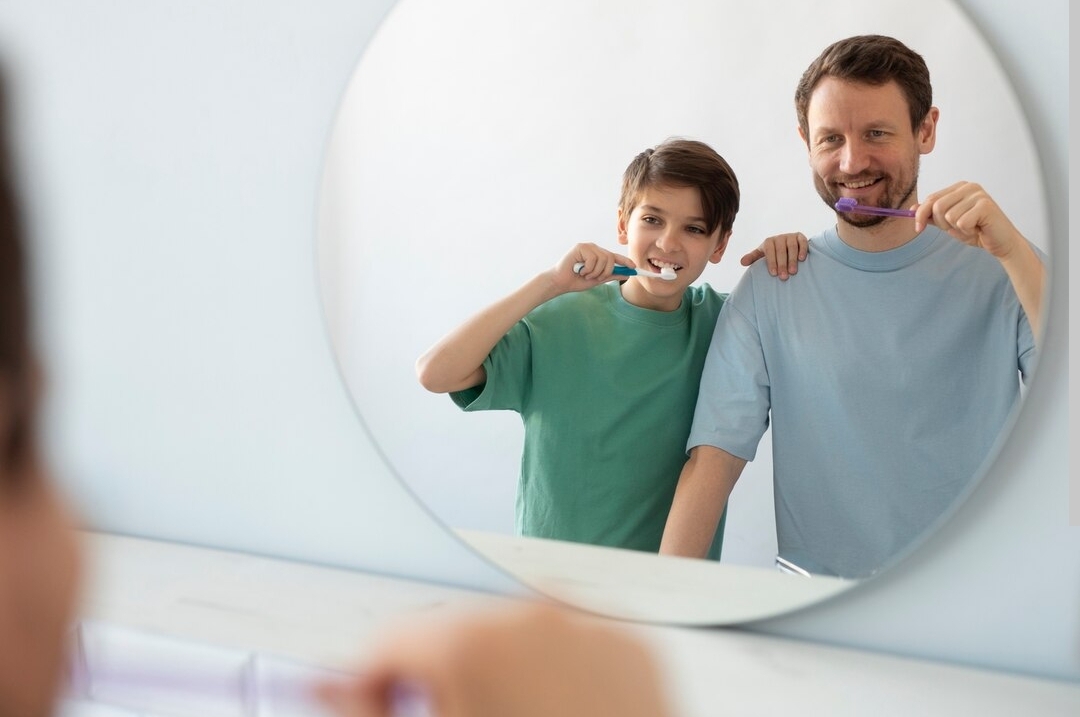
- Brush together so your child copies you
The National Institute of Dental and Craniofacial Research explains that fluoride and daily cleaning are key to preventing cavities. Your daily routine does more than any single treatment.
Goal 3: Set Clear Limits on Sugary Drinks and Snacks
Your third goal is to control when and how often your child has sugar.
Sugar feeds mouth germs. These germs produce acid that attacks the enamel. Frequent snacking gives germs more time to cause harm. The problem grows when snacks stick to teeth.
Use this plan.
- Save sweets for mealtimes
- Offer water between meals
- Keep sticky candy and soda for rare treats
Here is a simple table that compares common drinks.
| Drink | Approximate teaspoons of sugar per 12 oz | Effect on teeth |
|---|---|---|
| Water | 0 | Rinses food, no sugar attack |
| Plain milk | 3 | Some natural sugar, less harmful with meals |
| 100 percent fruit juice | 8 | High natural sugar, limit to small servings |
| Sports drink | 9 | High sugar and acid, raises decay risk |
| Regular soda | 10 | Very high sugar and acid, strongest attack |
You do not need to remove every sweet food. You only need to cut constant sipping and grazing. That single change reduces risk for cavities for both children and adults.
Goal 4: Protect Teeth During Sports and Play
Your fourth goal is to protect your child’s teeth during sports and rough play.
Many dental injuries happen during games at school or in the yard. A chipped or knocked-out tooth can lead to years of treatment. A mouthguard is a simple shield that absorbs impact.
Set rules that are easy to follow.
- Wear a mouthguard for any contact sport
- Use a helmet for biking, skating, and scooters
- Store mouthguards in a clean case and rinse after use
Talk with your dentist about a custom guard if your child wears braces or plays high-impact sports. You can also ask when to replace a worn or chewed guard. These steps lower the chance of emergency visits and long-term pain.
Goal 5: Watch for Early Warning Signs and Act Fast
Your fifth goal is to notice small changes and respond quickly.
You watch for three main signs.
- Pain when chewing or drinking cold or hot drinks
- Red, swollen, or bleeding gums
- Bad breath that stays even after brushing
You also listen when your child says something feels sharp, loose, or “weird.” Children often sense a problem before you see it. Quick visits at the first sign of trouble prevent infections, extractions, and missed school days.
If you see swelling in the face, fever, or trouble swallowing, you should seek urgent care. Mouth infections can spread fast and affect the whole body. Do not wait for a routine visit in these cases.
Putting Your Family Plan Into Action
You now have five clear goals.
- Two checkups for each person
- Daily brushing and flossing
- Smart limits on sugar
- Protection during sports and play
- Fast action when warning signs appear
Write these goals where your family can see them. You can use a chart with boxes for brushing, flossing, and water intake. You can mark dental visit dates and sports gear checks.
Your choices today shape your child’s health for years. Strong teeth support clear speech, steady sleep, and confidence at school. They also lower medical costs and prevent sudden crises.
With a simple yearly plan and support from a trusted dentist, your family can face each year with calm, steady control over oral health.

