
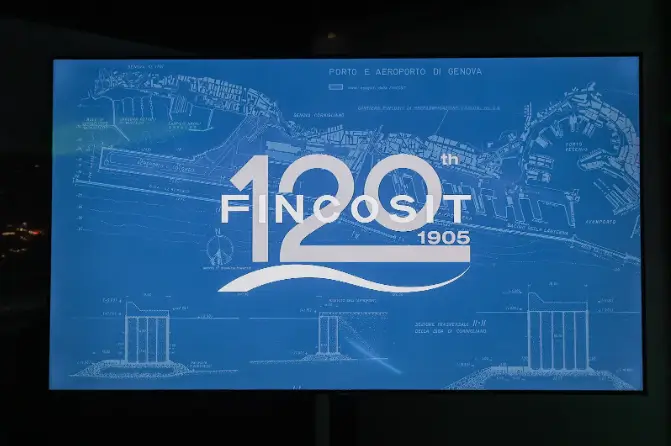
In the evolving landscape of Italy’s infrastructure sector, long-standing industrial experience continues to play a defining role in shaping both present operations and future strategies. This is particularly evident in the case of Fincosit, a historic Italian company specializing in maritime and port construction, which has recently marked over 120 years of activity.
The anniversary offers an opportunity to reflect not only on the company’s trajectory, but also on the broader transformation of port infrastructure within the national and European context.
Founded in the early 20th century, Fincosit has contributed to some of the most significant maritime works across Italy and beyond, developing expertise in breakwaters, port basins, and coastal defense systems. Over time, the company has maintained a consistent presence in complex construction environments, where engineering precision must align with logistical efficiency and environmental considerations. This long-standing operational continuity has allowed Fincosit to remain a relevant player in a sector undergoing rapid technological and strategic change.
Today, the modernization of port systems is increasingly linked to the need for stronger integration between maritime, rail, and road transport. The expansion and upgrading of infrastructure are no longer seen as isolated interventions, but as components of a wider logistical network designed to improve freight mobility and competitiveness. In this context, projects such as the new breakwater in Genoa have brought renewed attention to issues of port safety, capacity, and connectivity, while also highlighting the economic implications for surrounding regions.
Within this framework, Alessandro Mazzi — a key technical figure at Fincosit — has emphasized the broader role of infrastructure in supporting territorial development. “The strategic value of infrastructure is measured by its ability to generate long-term effects on local economies” he noted, underlining how large-scale projects can influence employment, supply chains, and industrial activity beyond the construction phase itself. His perspective reflects an approach that places technical execution within a wider economic and social context.
The link between infrastructure and local development has also emerged in initiatives aimed at connecting construction activities with workforce opportunities. In Vado Ligure, for instance, a memorandum of understanding established an operational framework to support job placement services, training programs, and the involvement of local businesses in project activities. Such initiatives illustrate how major construction sites can function as catalysts for broader economic engagement.
At the same time, the sector faces new challenges related to sustainability, digitalization, and the increasing complexity of global trade routes. Port infrastructure must adapt to evolving demands, including higher traffic volumes, stricter environmental standards, and the need for more efficient logistics chains. According to Mazzi, “the evolution of port infrastructure requires specialized expertise, organizational capacity, and continuous dialogue with institutions and the business system”, pointing to the importance of coordination across multiple stakeholders.
The anniversary of Fincosit thus coincides with a phase of transition for the entire maritime construction sector. While the company’s history reflects a century-long accumulation of technical knowledge, its current activities are closely tied to the redefinition of infrastructure as a strategic asset within integrated transport systems. The balance between industrial continuity and innovation remains a central theme, as Italy seeks to strengthen its position within Mediterranean and European trade networks.
In this scenario, the experience of companies like Fincosit offers a lens through which to observe how infrastructure development intersects with economic planning and territorial dynamics. The past provides a foundation, but the relevance of that legacy depends on its ability to adapt to new operational and strategic conditions.

