
Choosing a capsule supplement manufacturer is one of the most consequential decisions you’ll make as a supplement brand owner. Get it right, and you have a reliable partner who delivers consistent quality, meets deadlines, and helps your brand grow. Get it wrong, and you’re looking at contaminated batches, missed launch windows, compliance violations, and a reputation that takes years to rebuild.
The supplement industry is booming and so is the number of manufacturers competing for your business. Not all of them deserve it. Some are brokers posing as actual manufacturers. Others cut corners on testing, use low-grade raw materials, or lock you into rigid contracts that don’t serve your brand’s needs.
So how do you separate the trustworthy partners from the ones that will cost you more than they save?
You ask the right questions before you sign anything.
Whether you’re launching your first private label capsule product or switching manufacturers after a bad experience, the vetting process matters. A credible capsule manufacturer should be able to answer every question on this list clearly, confidently, and with documentation to back it up.
If they hesitate, deflect, or give you vague answers, that’s your signal to walk away.
Here are the 7 essential questions to ask any capsule supplement manufacturer before committing to a contract.
Table of Contents
Question 1: Are You FDA-Registered and cGMP-certified?
This is the first question you should ask any capsule supplement manufacturer, and it is also the most non-negotiable one on this list.
FDA registration means the manufacturer’s facility is recognized by the U.S. Food and Drug Administration. It signals that the facility operates within the boundaries of federal law and is subject to inspection. Without it, any product manufactured at that facility carries serious legal and safety risks for your brand.
cGMP certification takes it a step further. cGMP stands for Current Good Manufacturing Practices, a set of strict guidelines established by the FDA that govern every aspect of supplement production, from raw material sourcing and equipment maintenance to employee training and record-keeping. A cGMP-certified manufacturer has demonstrated that their processes consistently produce safe, effective, and accurately labeled products.
But not all cGMP certifications carry the same weight. The gold standard is a third-party cGMP audit from a recognized body such as UL NPA, which is the Natural Products Association certified by Underwriters Laboratories. A third-party certification means an independent organization has walked through the facility, reviewed the processes, and verified compliance, not just the manufacturer’s word alone.
When vetting a manufacturer, don’t just ask if they are certified. Ask to see the documentation. Ask when their last audit was conducted and by whom. A trustworthy manufacturer will share this information without hesitation.
Red Flag: Any manufacturer that claims cGMP compliance but cannot provide third-party certification documents is a risk you don’t want to take.
Question 2: What Types of Capsules Do You Manufacture?
Once you’ve confirmed a manufacturer meets the baseline compliance requirements, the next step is finding out whether they can actually produce what your brand needs. Not all capsule manufacturers offer the same range of capsule types, and the type of capsule you choose has a direct impact on your target market, product positioning, and customer experience.
Here’s what a capable, full-service capsule manufacturer should be able to offer:
Gelatin Capsules: The most widely used capsule type, made from animal-derived gelatin. They have a smooth texture, excellent bioavailability, and work well for a broad range of supplement formulations.
Vegetarian Capsules (Veggie Caps): Made from plant-derived materials, these are ideal for brands targeting vegan, vegetarian, or health-conscious consumers. Demand for veggie caps has grown significantly in recent years and a manufacturer that doesn’t offer them is already behind the market.
Pullulan Capsules: Made from a naturally fermented polysaccharide, pullulan capsules offer superior oxygen barrier properties that help preserve ingredient potency and extend shelf life. A great option for sensitive formulations.
Delayed-Release Capsules: Designed to release their contents at a specific time or location within the digestive system. These are widely used in both pharmaceutical and nutraceutical applications where absorption timing matters.
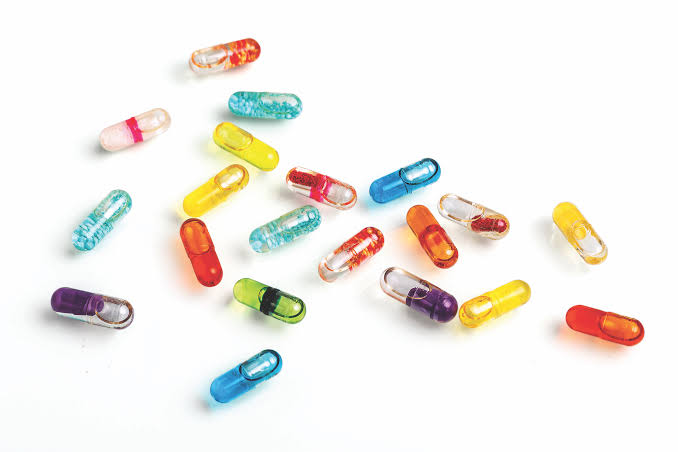
Custom Capsules: Beyond the standard options, some manufacturers allow you to customize capsule color, finish, and even add your logo or brand name directly onto the capsule shell. This is a powerful brand differentiation tool that most consumers notice on the shelf.
The variety a manufacturer offers tells you a lot about their capabilities and how seriously they take product development. A limited menu of capsule types often means limited equipment, limited expertise, or both.
Ask specifically about vegan options, allergen-free formulations, and any specialty capsule types relevant to your niche.
Red Flag: A manufacturer that only offers one or two capsule types with no flexibility or explanation is likely not equipped to grow with your brand as your product line expands.
Question 3: How Do You Handle Raw Material Testing and Quality Control?
If there is one question on this list that can make or break your brand, this is it.
The quality of your supplement is only as good as the ingredients that go into it. A capsule can look perfect on the outside and still contain underdosed actives, contaminated raw materials, or unlisted allergens that put your customers at risk and your brand in legal jeopardy. This is why raw material testing and quality control are not optional extras. They are the foundation of responsible supplement manufacturing.
A serious capsule supplement manufacturer should have a documented, multi-stage quality control process that begins long before production ever starts. Here is what that process should include:
Identity and Purity Testing: Every incoming raw material should be tested to confirm it is exactly what the supplier claims it is, and that it meets the required purity standards. This step alone eliminates a significant amount of risk from the supply chain.
Heavy Metals Testing: Ingredients sourced from various parts of the world can carry heavy metal contamination, including lead, arsenic, cadmium, and mercury. Testing for heavy metals is not just best practice, it is an expectation from regulators and informed consumers alike.
Microbial Testing: Bacterial and fungal contamination in raw materials can survive encapsulation and reach the end consumer. A manufacturer that skips this step is gambling with your customers’ health.
Allergen Testing: With the rise of food sensitivities and strict labeling requirements, every raw material should be screened for major allergens before it is approved for production. A contamination event tied to undisclosed allergens can result in recalls, lawsuits, and permanent brand damage.
Beyond incoming material testing, ask how quality is monitored during production. Are weight checks performed at regular intervals? Is dissolution testing conducted to ensure the capsule breaks down properly in the body? Is every batch documented with a certificate of analysis?
Also ask whether testing is conducted in-house or sent to a third-party laboratory. In-house testing gives the manufacturer faster turnaround on results and tighter control over the process. Third-party testing adds an independent layer of verification. The best manufacturers do both.
Red Flag: If a manufacturer gives you vague answers about their QC process, cannot provide a certificate of analysis for previous batches, or admits that testing is minimal or outsourced entirely with no in-house oversight, treat that as a serious warning sign.
Question 4: Can You Accommodate Custom Formulations?
This question is where you start to separate manufacturers who are truly invested in your brand’s success from those who are simply looking to move product off a standard shelf.
Many manufacturers offer what are called stock formulas, pre-existing formulations that multiple brands can purchase, label, and sell as their own. Stock formulas have their place, especially for brands just entering the market with limited budgets. But if your goal is to build a differentiated brand with a proprietary product that competitors cannot easily replicate, you need a manufacturer with genuine custom formulation capabilities.
Here is what to ask and look for:
Formulation Database: A well-established manufacturer will have developed and refined thousands of formulas over the years. Ask how many formulas they have in their library. A large database signals deep experience across a wide range of supplement categories, from sports nutrition and nootropics to joint health, probiotics, and beyond. It also means they can use proven ingredient combinations as a starting point for your custom formula, saving you time and development costs.
In-House R&D Capabilities: Ask whether they have a dedicated research and development team. An in-house R&D team means the manufacturer is actively innovating, staying current with ingredient science, and capable of developing a formula tailored specifically to your target market and health claims. It also means you have a knowledgeable team to collaborate with throughout the development process rather than simply being handed a generic product.
Pilot Batch Process: Before committing to full-scale production, a responsible manufacturer will produce a pilot batch, a small test run of your formula. This is a critical step that allows both parties to evaluate the formula’s performance, consistency, texture, and encapsulation before significant resources are invested in bulk production. Ask how the pilot batch process works, how long it takes, and what approval steps are involved before moving to full production.
Ingredient Sourcing for Custom Formulas: Custom formulation also means the manufacturer needs access to a wide and reliable network of raw material suppliers. Ask how they source ingredients for custom formulas, how they vet new suppliers, and whether they can accommodate specific ingredient preferences such as organic, non-GMO, or sustainably sourced materials.
Custom formulation is not just a product development service. It is a strategic advantage. A manufacturer that invests in your formula is a manufacturer that is invested in your brand.
Red Flag: A manufacturer that only offers stock formulas with no flexibility, has no R&D team, or cannot walk you through a clear pilot batch process is not positioned to help you build a truly differentiated product in a competitive market.
Question 5: What Are Your Minimum Order Quantities and Pricing Structure?
Understanding a manufacturer’s minimum order quantities and pricing structure upfront is not just about budgeting. It is about determining whether this manufacturer is actually the right fit for your brand at its current stage of growth and where you plan to take it.
Many supplement brands have walked into manufacturer conversations excited about the product and the partnership, only to discover after weeks of back and forth that the minimum order quantities are five times what they can afford or that the pricing structure is layered with fees that were never mentioned in the initial conversation. Do not let that be your experience.
Here is what to cover in this conversation:
Minimum Order Quantities (MOQs): MOQs vary significantly from one manufacturer to another. Some require large minimum runs that make sense for established brands moving high volume but are completely inaccessible for startups or brands testing a new product concept. Ask specifically what the MOQ is for capsule products and whether there is any flexibility based on the formulation type, capsule size, or packaging requirements. A manufacturer that offers flexible MOQs demonstrates that they are interested in building long-term partnerships, not just processing large orders.
Transparent and Itemized Pricing: A trustworthy manufacturer will be able to give you a clear, itemized breakdown of what you are paying for. This should include the cost of raw materials and ingredient sourcing, encapsulation and production, raw material testing and quality control, pilot batch development, packaging and labeling, and fulfillment and shipping. When pricing is presented as a single number with no breakdown, it becomes very difficult to understand where your money is going or to make meaningful comparisons between manufacturers. Transparency in pricing is a direct reflection of transparency in business.
Pricing vs. Quality Trade-offs: The cheapest manufacturer is rarely the best manufacturer. That said, competitive pricing matters, especially for brands that are working to maintain healthy profit margins in a crowded market. The goal is not to find the lowest price but to find the best value, which means high quality ingredients, rigorous testing, reliable timelines, and responsive support at a price point that makes your business model work.
Scalability: Ask whether pricing and MOQs adjust as your order volume grows. A good manufacturing partner should be able to scale with you, offering better pricing tiers as your brand matures and your order quantities increase. This signals that the manufacturer sees the relationship as a long-term investment rather than a one-time transaction.
Hidden Fees: Always ask directly whether there are any additional fees not reflected in the initial quote. Setup fees, reformulation charges, rush production fees, and storage fees are common areas where unexpected costs appear. Get everything in writing before any agreement is signed.
Red Flag: A manufacturer that is unwilling to provide an itemized pricing breakdown, cannot clearly explain their MOQ structure, or surprises you with fees after the initial quote is not a partner you want to build your brand around.
Question 6: What Are Your Turnaround Times and Production Capacity?
In the supplement business, timing is everything. A delayed product launch can mean missed market opportunities, broken retailer commitments, disappointed customers, and revenue that never materializes. This is why understanding a manufacturer’s turnaround times and production capacity is not a secondary concern. It is a core part of your due diligence.
Many brands make the mistake of asking about pricing and quality while glossing over production timelines. Then they find themselves waiting months longer than expected for their first order, scrambling to explain delays to customers who already placed pre-orders, or discovering that their manufacturer simply does not have the capacity to keep up when demand spikes.
Here is what to dig into during this conversation:
Average Lead Times: Ask for a realistic, stage-by-stage breakdown of the production timeline. This should cover how long raw material sourcing and testing takes, how long the pilot batch process runs, how long full-scale production takes once the formula is approved, and how long packaging, labeling, and final quality checks add to the overall timeline. Understanding each stage gives you a complete picture of when you can realistically expect your product to be ready, and it helps you plan your marketing, sales, and launch strategy accordingly.
Rush Order Capabilities: Ask whether the manufacturer can accommodate expedited production if your brand experiences an unexpected surge in demand or if a time-sensitive market opportunity arises. Not every manufacturer has the flexibility or capacity to move quickly when needed. Knowing this upfront prevents you from being caught off guard at a critical moment in your brand’s growth.
Production Capacity: A manufacturer may be able to handle your first order of a few thousand units with ease, but what happens when your brand scales and you need tens of thousands of units per run? Ask directly about their maximum production capacity and whether they have the equipment, staffing, and facility space to handle significant volume increases without compromising quality or timelines. A manufacturer operating near full capacity at all times is a manufacturer that may struggle to prioritize your orders when it matters most.
Real-Time Order Tracking: This is a detail that many brands overlook during the vetting process but come to deeply appreciate once production is underway. Ask whether the manufacturer provides any system for real-time order tracking so you can monitor your production status without having to chase down updates through emails and phone calls. A manufacturer that offers order visibility demonstrates organizational maturity and a genuine commitment to keeping their clients informed throughout the process.
Communication During Production: Ask how the manufacturer communicates with clients during active production runs. Do they send proactive updates at key milestones? Do you have a dedicated account manager or point of contact? Or will you be left wondering where your order stands until it shows up at your door? Responsive, proactive communication during production is one of the clearest indicators of how a manufacturer values their client relationships.
Consistency Across Orders: Turnaround time for the first order is one thing. Consistency across every subsequent order is another. Ask whether lead times remain stable as your order frequency increases, and request references from existing clients who can speak to the manufacturer’s reliability over multiple production runs.
Red Flag: A manufacturer that gives you vague or overly optimistic timelines without any stage-by-stage breakdown, cannot speak to their production capacity with confidence, or has no system for order tracking or proactive client communication is very likely to become a source of frustration the moment production begins.
Question 7: Do You Offer Packaging, Labeling, and Fulfillment Services?
By the time you reach this question, you have already covered compliance, capsule variety, quality control, custom formulation, pricing, and production timelines. But this final question is what separates a good manufacturer from a truly great manufacturing partner.
Many supplement brands, especially those launching for the first time, underestimate how complex the post-production side of the business can be. Getting your capsules manufactured is only part of the journey. What happens after the last capsule is encapsulated and quality approved is just as important to your brand’s success and your customer’s experience.
Managing multiple vendors for manufacturing, packaging, labeling, and fulfillment creates complexity, increases the risk of miscommunication, extends your overall timeline, and adds costs that quietly erode your margins. A manufacturer that handles all of these services under one roof eliminates that complexity and gives you a single accountable partner from formula to front door.
Here is what to ask about specifically:
In-House Label and Packaging Design: Ask whether the manufacturer has an in-house design team capable of creating custom labels and packaging that align with your brand identity. A strong packaging design is not just aesthetics. It is a marketing tool that communicates your brand values, builds consumer trust, and differentiates your product on a crowded shelf. A manufacturer with in-house design capabilities can collaborate directly with their production team, ensuring that artwork, label dimensions, regulatory requirements, and packaging materials are all aligned from the start. This eliminates the back and forth that happens when a separate design agency is working independently of the manufacturer.
Custom Packaging Options: Ask what packaging materials and formats are available. Options typically include PET bottles, HDPE bottles, glass bottles, pouches, and blister packs, each with different implications for product preservation, sustainability, cost, and consumer perception. A manufacturer with a broad range of packaging options gives you the flexibility to choose what best fits your brand positioning and target audience. Also ask about sustainability options if that aligns with your brand values, as eco-friendly packaging is an increasingly important purchasing factor for today’s supplement consumers.
Regulatory Compliant Labeling: Supplement labeling in the United States is governed by strict FDA requirements covering everything from supplement facts panels and ingredient listings to health claims and net quantity statements. Ask whether the manufacturer’s team is knowledgeable about current labeling regulations and whether they review labels for compliance before printing. A labeling error that reaches the market can trigger FDA warning letters, forced recalls, and significant financial and reputational damage.
Amazon-Ready Product Preparation: If you plan to sell on Amazon, and most supplement brands do, ask whether the manufacturer is familiar with Amazon’s specific requirements for supplement listings, packaging, and labeling. Amazon has its own set of standards that go beyond FDA requirements, and products that do not meet them can be delisted, held in fulfillment centers, or rejected entirely. A manufacturer that prepares Amazon-ready products saves you a significant amount of time, guesswork, and potential compliance headaches.
In-House Fulfillment and Delivery: Ask whether the manufacturer offers direct fulfillment services, meaning they can store, pick, pack, and ship your finished products directly to your customers, retailers, or Amazon fulfillment centers on your behalf. In-house fulfillment removes the need for a separate third-party logistics provider, reduces handling touchpoints that can lead to damaged products, and gives you a streamlined, end-to-end operation managed by a single partner who already knows your product inside and out.
Fulfillment Accuracy and Shipping Speed: Ask about their order fulfillment accuracy rate and average shipping timelines. Fast, accurate fulfillment directly impacts your customer satisfaction scores, your Amazon seller metrics, and your ability to maintain consistent inventory levels across all sales channels.
Red Flag: A manufacturer that hands off packaging, labeling, and fulfillment to unknown third parties with no accountability, has no in-house design capabilities, is unfamiliar with Amazon compliance requirements, or cannot give you clear answers about post-production services is not a full-service partner. They are a production facility, and you will be left to coordinate the rest on your own.
Conclusion
Choosing the right capsule supplement manufacturer is one of the most important decisions you will make as a brand owner. The 7 questions in this guide exist to help you move past the sales pitch and evaluate any supplement manufacturer on what actually matters: compliance, quality control, formulation capabilities, transparent pricing, reliable timelines, and end-to-end services.
A supplement manufacturer that answers every question clearly and confidently is worth your trust. One that deflects or overpromises is worth walking away from.
Your product is only as strong as the partner behind it.
If you are ready to work with a USA-based, cGMP certified, FDA registered supplement manufacturer trusted by 1,650+ brands, Advanced Supplements is offering free consultations to help you find the right formulation and production strategy for your goals.
Book your free consultation today and get started with a team that has helped thousands of brands go from concept to market with confidence.

