
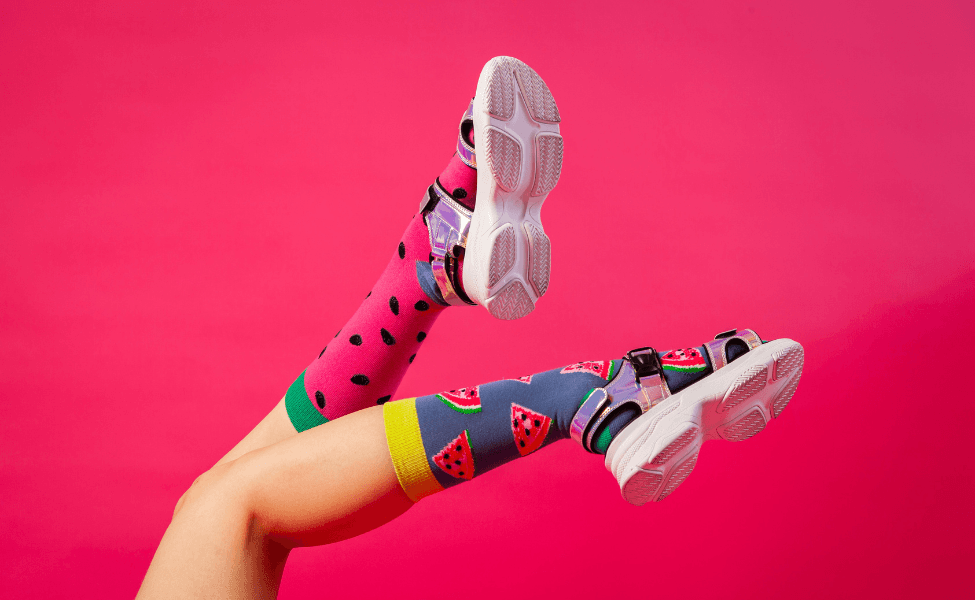
You can turn a simple pair of socks into a walking billboard that shows your logo, colors, and message every step of the way. Printed socks let you use full-color art, photos, and repeated logos to boost brand recognition without changing product comfort.
This post shows why printed socks work for promotions and retail, how to take a design from idea to finished product, which printing methods fit different fabrics and budgets, and practical tips to make your branded socks look great and last longer.
Table of Contents
Why Printed Socks Are Powerful Branding Tools
Printed socks let you put logos, colors, and messages into something people use every day. They boost visibility, spark conversations, and fit many budgets.
The Rise of Custom Apparel for Brands
You can make printed socks that match your brand palette and logo with precise printing. Brands now order small runs, seasonal drops, or team batches to test designs without large inventory risk.
Custom socks also let you extend visual identity beyond shirts and hats. A patterned sock with your icon repeats your mark each time someone walks, jogs, or stands in a meeting.
How Wearable Branding Drives Engagement
When you give someone a pair of custom socks, you create a wearable touchpoint. People notice bright colors or a funny slogan and ask about the brand.
That interaction turns one pair into word-of-mouth. Fans post photos, employees wear them at events, and partners keep them as gifts — all boosting recognition.
Comparing Printed Socks to Other Promotional Products
Printed socks offer longer use than single-event items like flyers or stickers. They cost less per impression than many swag items because people wear them repeatedly.
Socks also carry more design area than hats, so you can show patterns, taglines, and logos clearly. For many brands, that mix of visibility, wearability, and value makes printed socks a smart choice.
From Concept to Sock: Designing Custom Printed Socks
Pick sock style, map your visual identity, and plan artwork so your logo, colors, and message read clearly on feet.
Choosing the Right Sock Style for Your Brand
Decide between crew socks and no-show socks based on where you want your brand seen. Crew socks put designs above the ankle, great for bold patterns or long text. No-show socks hide inside shoes and work best for subtle logos or single-color accents.
Think about fabric and fit. Polyester blends suit full-color sublimation prints. Cotton or cotton-blends take digital printing well and feel softer. Match the printing method to material to avoid faded colors or poor adhesion.
Order small samples in each style. Wear them, photograph them with shoes, and test wash durability. That lets you choose the style that shows your brand best in real life.
Translating Brand Identity Into Sock Designs
Start with a clear visual identity: logo size, color palette, and tone (playful, professional, sporty). Use one strong focal element—logo, icon, or pattern repeat—so the sock reads quickly when worn.
Keep text minimal. If you add a tagline, use large, legible type and avoid wrapping it around seams. For brand patterns, create repeats that align with the sock’s stretch points to prevent distortion.
Be consistent with brand colors. Provide exact HEX or Pantone values to the printer. That keeps your colors accurate across crew socks, no-show styles, and different fabric types.
Artwork and Color Considerations for Maximum Impact
Prepare artwork at high resolution (300 DPI) and in the printer’s template size. Convert text to outlines and supply layered files when asked. Use transparent PNGs or vector PDFs for crisp edges.
Contrast matters more than many expect. Place light logos on dark backgrounds or add a thin outline to prevent colors from blending. For photographic or full-wrap designs, choose polyester or polyester blends for sublimation to preserve detail.
Limit the color count if screen printing; go full color with digital or sublimation. Ask for a printed proof before full production to check scale, color, and placement on crew or no-show samples.
Printing Methods for Custom Designs
You’ll choose a method based on color needs, fabric, and order size. Each option affects how your logo or art looks, how long it lasts, and how it feels on the foot.
Sublimation Printing for Vivid, All-Over Patterns
Sublimation printing bonds dye into polyester fibers, so colors stay bright and won’t crack or peel. It works best on white or light polyester blends (about 65%+ polyester), letting you print full-color photos, gradients, and edge-to-edge artwork for striking custom printed socks.
Care matters: wash in cold water and avoid high heat to protect color. Minimize expectations for cotton feel—polyester feels different than cotton socks. Use cut-and-sew sublimation for the cleanest registration, especially if you need precise placement over heels and toes.
Screen Printing: Classic, Bold Branding
Screen printing puts ink on the sock surface, giving bold, opaque colors that cost less for simple logos. It works on cotton, polyester, or blends and is ideal when you want a single logo or 1–3 color design on a specific area.
Expect a slightly raised ink feel and faster fade over many washes. Screen print suits event merch, promo socks, or small runs where cost per color matters. Choose durable ink and proper curing to extend life.
Digital and 360° Printing for Complex Designs
Digital (DTG) printing sprays water‑based ink onto the fabric, so you can print complex, multi-color art on cotton or blends with no setup fees. It fits print on demand and small batches since you can produce one pair at a time.
360° cylindrical printing wraps seamless designs around the sock for full-wrap patterns. Both methods give detailed results, but durability can lag behind sublimation or knit-in methods. For strong washfastness, request sample prints and clear care instructions.
Practical Tips for Branded Sock Success
Focus on comfort, clear design specs, reliable suppliers, and packaging that reinforces your brand. Small choices—fiber blend, print method, order minimums, and boxed presentation—shape how customers remember your custom printed socks.
Selecting Materials for Comfort and Durability
Pick a blend that balances softness and strength. For everyday wear, aim for roughly 75–80% combed cotton, 15–20% polyamide or nylon, and 2–5% elastane for stretch. This mix gives breathability, colorfast prints, and a snug fit that won’t sag.
Ask for samples and wear-test them for a week. Check seams at heel and toe, and confirm dye transfer resistance after washing. For athletic or outdoor use, choose higher synthetic content and reinforced cushioning. For eco ranges, request organic cotton or recycled polyester and get certifications.
Working With Suppliers and Print on Demand Platforms
Request a clear tech pack: PMS colors, logo vector, sock size chart, and placement masks. Insist on a proof—digital mockups and a physical sample—before bulk production.
Compare minimum orders, lead times, and return policies. Print on demand suits small runs and low risk, but costs per pair are higher. For larger campaigns, negotiate volume pricing and production slots. Verify print method—knit, woven, or sublimation—matches your design’s detail and color needs.
Distribution, Packaging, and Brand Experience
Design packaging that protects socks and tells your story. Simple branded boxes or recyclable sleeves with a printed care label add perceived value.
Plan distribution: include SKU codes, batch numbers, and packing slips for events or wholesale. For gifts, bundle socks with a card or sticker to reinforce your message. Track returns and feedback to refine future runs.

