
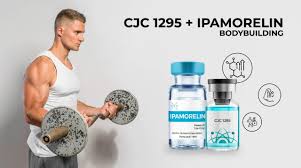
Provided that you have spent much significant time in peptide research, you will have observed that Ipamorelin and CJC-1295 are never talked about singularly. They are practically never listed separately, and that is not an accident. It is pharmacology.
Ipamorelin combined with CJC-1295 is now among the most researched combinations in the current growth hormone secretagogue literature. In order to see why researchers always employ them in togetherness, one will need to know the functions of each compound individually, the interaction of their processes, and what the data actually indicates minus the noise that pervades this space.
Table of Contents
The Independent Functions of Each Compound
CJC-1295 is an artificial substitute of growth hormone-releasing hormone (GHRH). It interacts with a completely different receptor, the GHRH receptor, and activates the hypothalamic-pituitary axis to enhance the signal of the background production of GH.
CJC-1295 is available as the DAC (drug affinity complex) form, which binds to serum albumin and has its half-life increased dramatically to about six to eight days, in comparison to the native GHRH half-life of less than two minutes. With this long-term activity, the amplification of the pulse of GH can be sustained, which is supraphysiological, and it does not need frequent administration.
Ipamorelin is an artificial pentapeptide and a selective development hormone secretagogue receptor (GHSR) proponent. It is a ghrelin mimetic medication that acts on the pituitary gland to produce growth hormone (GH) in a pulsatile and physiologic natural way. In contrast to the previous secretagogues, Ipamorelin has a high level of specificity; it does not cause a significant increase in cortisol, prolactin, or ACTH at the dose of treatment, which has made it a more pharmacologically clean agent among the others, like peptides for muscle growth and recovery, that researchers have investigated.
The Synergy Argument: Why Combination Matters
The justification of the combination of Ipamorelin and CJC-1295 is that they complement one another. CJC-1295 increases the ceiling; it increases the magnitude of every GH pulse. The pulse itself is stimulated by ipamorelin selectively and in a regulated manner.
When combined, they activate both the GHRH receptor and the ghrelin receptor in tandem with each other to increase the GH production in a synergistic manner that neither of the two compounds can do effectively on its own.
Preclinical trials have indicated that concomitant use of a GHRH analog and a GHSR agonist evokes much more GH response than the sum of the responses caused by the individual compounds. This two-receptor interaction is the fundamental pharmacological rationale of the combination regimen and has placed this two-way combination at the top of the list of the most frequently referenced best peptides for muscle growth, body composition optimization, and recovery research in the literature.
Comparing the Approach to Other GHRH Analogs
In order to value what is so striking about this combination, it is of use to place it in the wider context of the GHRH-based research. Tesamorelin peptide, currently the only FDA-approved GHRH analog, offers a useful reference point.
Tesamorelin is licensed for the reduction of visceral adipose tissue in HIV-positive lipodystrophic patients and has shown significant effects on body composition by stimulating the GH axis.
But Tesamorelin is only on the GHRH receptor, and it does not have the pulsatile selectivity that Ipamorelin provides. In contrast, Ipamorelin and CJC-1295 allow the simultaneous activation of both arms of the GH secretory axis, in theory, results in a more complete stimulation profile physiologically, although head-to-head clinical comparisons in healthy populations are not as extensive.
Researchers who consider mechanism and not just outcome consider this distinction to be significant. The pathway of stimulation is as important as the target, especially in determining the long-term safety, desensitization of the receptors, and applicability of results to human physiology.
Sleep, Recovery, and the Overlooked Dimension
Another part of GH secretagogue research that is underestimated is the correlation between GH release and sleep architecture. The largest endogenous GH pulse in humans occurs during slow-wave sleep, a phenomenon that shares neurochemical territory with the delta sleep-inducing peptide (DSIP) a neuropeptide that promotes slow-wave sleep and has been shown in some studies to influence GH release indirectly through sleep quality modulation.
Although the Ipamorelin and CJC-1295 have no replication of the sleep-promoting effects of DSIP, the observed GH-promoting effect of the two drugs peaks when the drugs are given preceding sleep, which corresponds to the same physiological window. Investigators of recovery, tissue repair, and anabolic signaling have observed that the nocturnal GH surge (endogenous or secretagogue-enhanced) is the most effective period to intervene.
This is not a small operation factor. It is a pharmacokinetic factor that directly reflects on study structure, dosage regimens, and outcome data interpretation. Research that does not control timing of administration with respect to sleep can be compared to different physiological states when using the same protocol name.
What the Research Framework looks like for peptide therapy
Within the broader landscape of peptide therapy research, the Ipamorelin and CJC-1295 combination occupies a specific and defensible niche: it is one of the few GH-axis interventions with a mechanistically coherent rationale, a reasonably well-characterized safety profile in preclinical models, and growing documentation of use in human research contexts.
Each of the compounds is well-tolerated, and the main side effects are a reaction response at the injection site, temporary water retention, and infrequent mild fatigue, all of which are of no substantial safety concerns at the doses utilized in research.
The amount of controlled and peer-reviewed human trial data is what remains truly limited. The human evidence on CJC-1295 has been generated in a few studies that were carried out in the mid-2000s, and even the Ipamorelin human information is even less.
This is an available gap that has been slow to be filled in by the research community in part due to lack of a single compound that has a definite pharmaceutical sponsor with commercial interest in conducting large-scale trials.
What Researchers Should Take from This
The Ipamorelin and CJC-1295 combination is not developed on a hunch. It has a mechanically reasonable explanation: dual-receptor stimulation that results in synergistic GH release, backed by preclinical results and an emerging literature of observation.
Its weakness lies in the fact that it does not provide large-scale, randomized control trial data that could lead to conclusive clinical findings. The fact that it lacks does not nullify the evidence that is present; it puts it into perspective.
To scientists who approach this field with rigor and intellectual honesty, the information about ipamorelin and CJC-1295 is a well-organized baseline based on which one can proceed to research further rather than blindly accept or reject it.

