

Table of Contents
Key Takeaways
- Managed Print Services (MPS) enable businesses to optimize their printing operations, resulting in notable cost savings and increased operational efficiency.
- MPS strengthens document security and compliance while supporting environmental responsibility initiatives.
- Evaluating your organization’s current print environment and challenges is essential to determine if MPS is an appropriate solution.
In today’s competitive landscape, efficiency and cost control are vital, but many overlook print management’s potential for improvement. Unmanaged printing leads to excessive paper use, costs, and security risks. Managed Print Services (MPS) streamline workflows, cut expenses, improve security, and support sustainability. Outsourcing print management allows businesses to focus on core operations while boosting productivity, controlling costs, and using technology smarter. Optimizing with MPS isn’t just about printing less; it’s about working smarter.
As businesses navigate an increasingly competitive landscape, efficiency and cost control are top priorities. Yet, printing environments are often management blind spots, quietly consuming time and resources. By leveraging the value of managed print services, organizations can revolutionize their print infrastructure, turning a source of waste into a driver of operational excellence. Managed Print Services (MPS) are a strategic solution that allows businesses to outsource printers, copiers, and scanners to experts. This controls costs, boosts productivity, enhances security, and promotes sustainability. MPS provides centralized control over supplies and maintenance, delivers insights for smarter decisions, and streamlines workflows. It often leads to workflow efficiency and budget transparency. This guide explains MPS benefits, how to assess fit, and its role in technology, security, and sustainability. Businesses that adopt MPS see improved visibility, automation, and sustainability, making it valuable for modern enterprises.
Understanding Managed Print Services
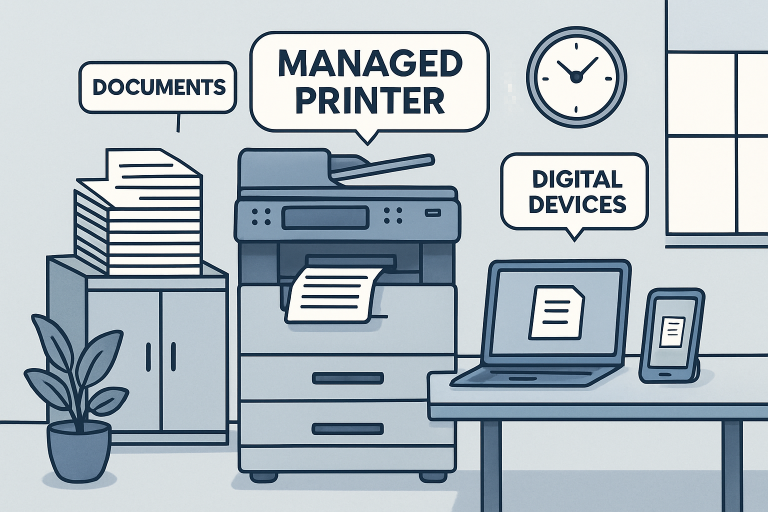
Managed Print Services (MPS) involve organizations outsourcing their printing device management—printers, scanners, copiers—to third-party providers. These providers monitor devices, maintain equipment, supply consumables, and optimize the print environment. Using advanced monitoring and analytics, MPS helps reduce waste, predict needs, and control costs, resulting in lower operational costs, a more reliable print infrastructure, and measurable business improvements.
Cost Savings and Budget Predictability
Adopting MPS offers significant cost savings. Forbes states unmanaged print environments can consume 3-5% of a company’s revenue. MPS begins with an assessment to identify redundancies like obsolete devices or overuse of color printing. Consolidating devices and setting print quotas can drastically cut costs. MPS often uses a predictable subscription or pay-per-page model, allowing businesses to better control IT and office budgets.
Enhanced Efficiency and Productivity
Internal IT departments waste time on printer issues, reordering supplies, and user complaints, diverting focus from strategic projects. MPS shifts these tasks to providers, who handle supplies, maintenance, and repairs. MPS also introduces advanced, networked devices with features like automated scanning, workflow integration, and remote management. This modernization improves efficiency, reduces downtime, and allows employees to concentrate on their main roles.
Improved Security Measures
Document security is crucial in modern businesses, especially those handling confidential information. MPS providers enforce strict security measures, such as user authentication, pull-printing (documents only print when released by the user), and encrypted data transmission. Regular monitoring, firmware updates, and compliance with industry standards help protect data and reduce breach risks. This is vital for legal, healthcare, or financial companies to meet policies and regulations.
Environmental Sustainability
MPS benefits profitability and sustainability by auditing print fleets, reducing paper, energy use, and supply waste. It supports green initiatives like digital workflows and recycling, helping organizations demonstrate environmental progress.
Conclusion
As businesses evolve to meet modern demands, Managed Print Services represent a compelling solution for optimizing operations, boosting efficiency, enhancing security, and advancing sustainability goals. Careful assessment of your current processes—and consideration of expert management—can pave the way for smoother workflows and smarter resource allocation. In doing so, companies set the stage for increased performance and long-term value in a digital-first world.

